The short answer
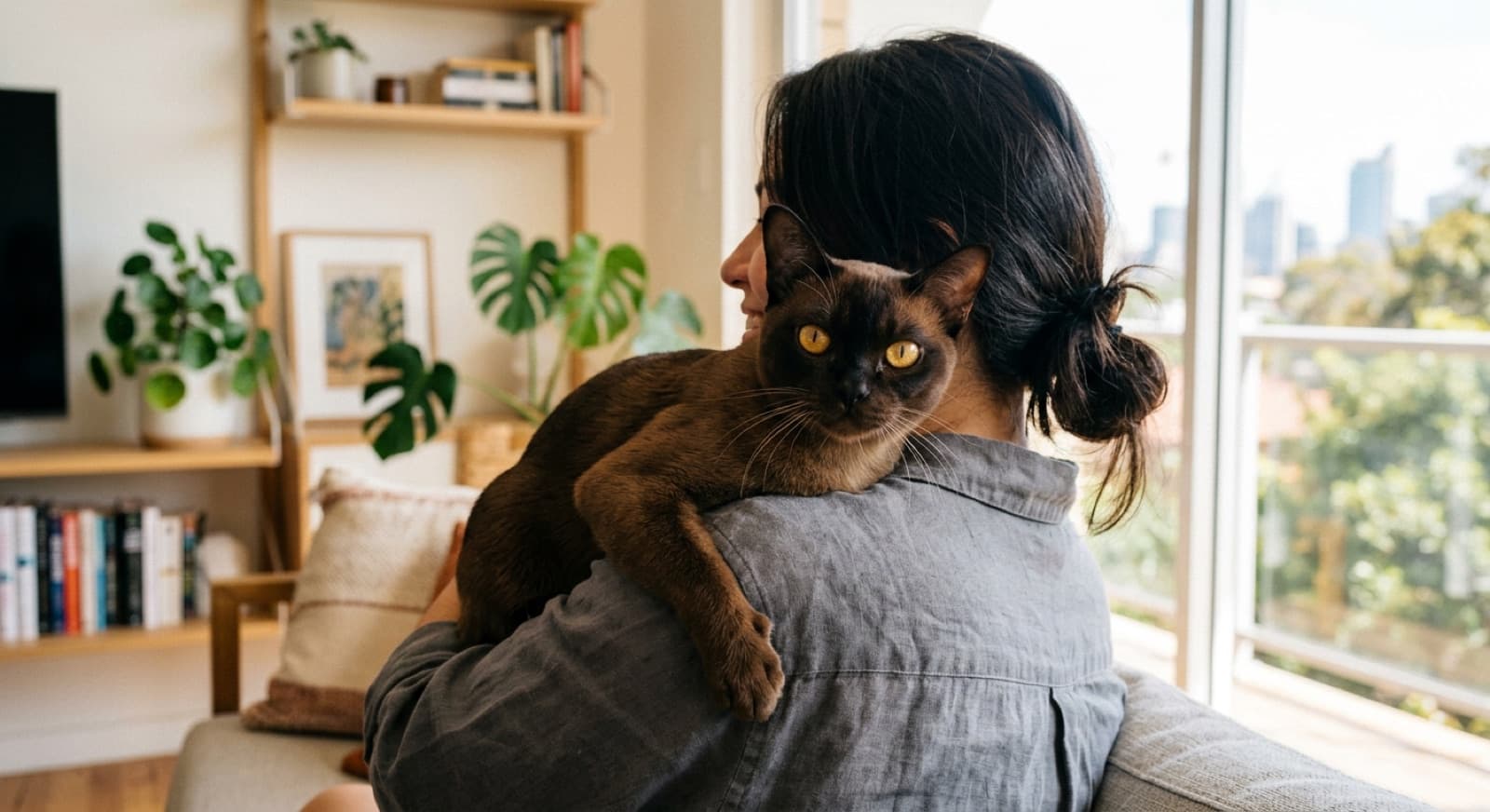
Burmese are among the most people-loving of all cats, intensely affectionate, playful into adulthood, and often called dog-like: they want laps, follow you around, and bond hard. Unlike the vocal Siamese they show it in a warm, cuddly, quiet way. That devotion is the breed's appeal and its main requirement: a Burmese needs company, closeness and daily engagement, and does not do well left alone all day. It suits a household where someone is often home, or one with a second cat, and it thrives on interaction and play. It is a poor fit for anyone wanting an independent, aloof cat. Give a Burmese the company it needs and it is one of the most loving companions there is.
The Burmese personality
The Burmese leads with affection. It is one of the most people-oriented breeds there is, forming intense bonds and wanting to be with its family constantly, on a lap, at your side, or following you from room to room. It stays playful and kittenish well into adulthood, loves games and interaction, and is intelligent and curious. What sets it apart from other very social breeds is the flavour of its devotion: where a Siamese is vocal and demanding, the Burmese is warm, cuddly and comparatively quiet, with a soft voice, showing its love by closeness rather than noise. It is the breed for someone who wants a cat that is genuinely part of the family. For the breed profile and any Burmese currently listed, see the Burmese breed page.
Why the Burmese needs company
This is the most important thing to plan for. Because the Burmese is so bonded to its people, it does not cope well with being left alone all day. A lonely, under-stimulated Burmese is prone to stress, over-attachment and attention-seeking behaviour, and it can become genuinely unhappy in a way a more independent breed would not. The breed is at its best in a household where someone is often home, or where a second cat provides company and play, and where it gets real daily closeness.
For many Burmese, a feline companion is the kindest answer, because two sociable cats keep each other company through the day, and the Burmese is usually very good with other cats. If you are out long hours and cannot provide company, this is a breed to think hard about, because the devotion that makes it so loving is the same trait that makes solitude difficult. The RSPCA Knowledgebase has good general guidance on keeping cats socially and mentally well.
Keeping a devoted cat happy
- Company. The single most effective thing for this breed. A home where the Burmese is not alone all day, or a second sociable cat, does most of the work of keeping it content.
- Interactive play. Daily sessions with wand toys suit a breed that stays playful for life, and give it the engagement it craves.
- Puzzle feeders and toys. Keep a curious mind busy and slow down a food-loving cat.
- Training and tricks. Many Burmese enjoy learning to fetch or walk on a harness, which is enrichment as much as exercise.
- Height, and a catio. Climbing towers and window perches, plus a catio or secure yard for safe outdoor stimulation, round out an indoor home.
- A lean weight. Burmese love food and can gain weight, so measured meals matter alongside all the play.
Is a Burmese right for your household?
Being honest about this before you adopt is the kindest thing for both you and the cat. A Burmese is a wonderful match for an owner or household that wants a close, affectionate, lap-loving companion and can give it time, attention and company, ideally a home where it will not be left alone all day, or one with a second cat. It suits people who want a cat fully woven into family life. It is a poor fit for anyone who wants an independent, aloof, low-maintenance cat, or anyone out for long hours with no feline company at home. Match the breed to your life honestly, and a Burmese repays it with some of the warmest, most devoted companionship any cat offers.
Meet a Burmese in Brisbane rescue
If you can offer company, closeness and a safe indoor home, a Burmese is one of the most affectionate cats there is. Browse Burmese and sleek affectionate crosses available across Brisbane and Queensland rescues.
See Available Burmese →Frequently Asked Questions
Are Burmese cats really dog-like?
In their devotion, yes, and it is the defining trait of the breed. Burmese bond intensely with their people, want to be with them constantly, follow them from room to room, greet them at the door, and love a lap. Many will play fetch, come when called, and generally involve themselves in whatever the household is doing, which is why the breed is so often compared to a dog. Unlike some highly social breeds, the Burmese is affectionate in a warm, cuddly, lap-loving way rather than a demanding one, and it has a soft, quiet voice rather than a loud one. It is, in short, a cat for people who want a genuinely close companion.
Why does a Burmese need so much company?
Because its whole personality is built around being with its people, so a Burmese does not cope well left alone all day. A lonely, under-stimulated Burmese is prone to stress, over-attachment and attention-seeking behaviour, and it can become genuinely unhappy in a way a more independent breed would not. The breed is at its best in a household where someone is often home, or where a second cat provides company through the day, and where it gets real daily interaction, closeness and play. If you are out long hours and cannot provide company, this is a breed to think carefully about, because the devotion that makes it so loving is the same trait that makes solitude hard.
Are Burmese good with children and other pets?
Generally very good, and their sociability is a real asset. Burmese are typically playful, affectionate and tolerant, which suits a family home with respectful children who will engage with the cat, and they often get along well with other cats and with cat-friendly dogs, partly because they crave company. As with any cat, teach children to handle the cat gently and give it a quiet retreat it can always reach, and make introductions to other animals slow and supervised. A Burmese with a playmate and plenty of attention is a happy cat, and for many owners a second Burmese or another sociable cat is the kindest way to keep it company.
How do I keep a Burmese happy and stimulated?
Company first, then enrichment and play. Because the breed stays playful and kittenish into adulthood, provide daily interactive play with wand toys, rotate puzzle feeders and toys, and give it climbing towers and window perches. Many Burmese enjoy learning tricks or walking on a harness, which is enrichment as much as exercise. But the single most effective thing for this breed is not being lonely: a home where the Burmese has company, whether human or a second cat, does most of the work. A catio or secure yard adds safe outdoor stimulation. Keep the cat lean too, with measured meals, because a food-loving Burmese can gain weight.
Is a Burmese the right cat for my household?
A Burmese is a wonderful match for an owner or household that wants a genuinely close, affectionate, lap-loving companion and can give it time, attention and company, ideally a home where it will not be left alone all day, or one with a second cat. It suits people who want a cat that is fully part of the family and thrives on closeness. It is a poor fit for anyone who wants an independent, aloof, low-maintenance cat, or anyone out for long hours with no feline company at home, because a Burmese needs more companionship than a self-contained breed. Being honest about this before you adopt is the kindest thing for both you and the cat.
Keep reading
Adoptable Burmese in Brisbane
The Burmese breed profile and any Burmese or crosses currently listed across Brisbane rescues.
Burmese Adoption in Brisbane
Where to look, why purebreds are rare in rescue, adopt-versus-buy cost, and avoiding scams.
Burmese Health Issues
Hypokalaemia, elevated diabetes risk, a head-defect breeding concern and other conditions, the DNA tests, and the signs to watch.
All Cat Adoption Resources
Guides on adopting, kitten care, indoor living and costs for cats in Brisbane and Queensland.