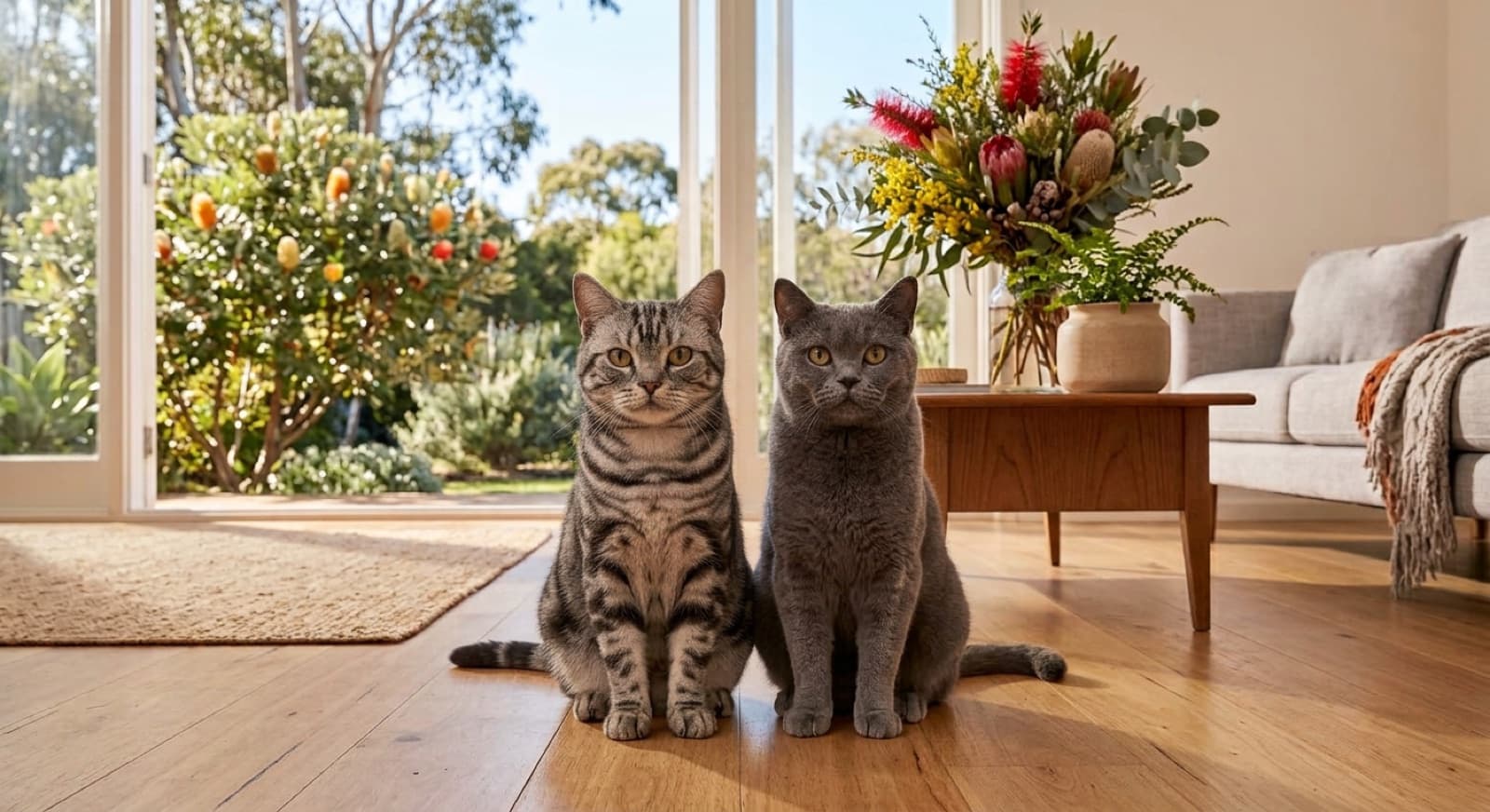
The short answer
An American Shorthair is a pedigree breed with documented lineage, a defined look and temperament, and papers. A domestic shorthair is not a breed at all; it is any short-haired cat of mixed or unknown ancestry, the everyday moggy, which makes up most pet cats and most cats in rescue. They are confused because they look alike (the breed came from ordinary working cats) and the names are used loosely. The practical differences: a pedigree gives predictability but is scarce and costly, especially in Australia where the American Shorthair is uncommon; a domestic shorthair gives variety, availability, generally good health from a broad gene pool, and a modest adoption fee. For most Brisbane adopters, a well-matched domestic shorthair is the better cat.
What each term actually means
American Shorthair: a pedigree breed.
The American Shorthair is a recognised breed developed from the working cats of early America and bred to a standard. That means a defined type: a sturdy, muscular, medium-to-large cat with a broad face, a dense short coat and a calm, adaptable, friendly temperament, most iconically the silver classic tabby. A true American Shorthair has documented lineage and registration papers, and comes from a registered breeder. In Australia the breed is genuinely uncommon.
Domestic shorthair: not a breed.
A domestic shorthair is simply any short-haired cat of mixed or unknown ancestry, the everyday moggy. It is a description, not a pedigree, and it covers the vast majority of pet cats and of the cats in rescue. Domestic shorthairs come in every colour, pattern, size and personality, because they are not bred to a standard, and their longer-coated relatives are the domestic medium hair and domestic longhair. Being drawn from a broad, diverse gene pool, they tend as a group to be healthy and robust.
Why they get confused
Two things drive the confusion. First, they look alike: because the American Shorthair was developed from ordinary working cats, a sturdy tabby moggy and a pedigree American Shorthair can be almost impossible to tell apart by eye. Second, the names are similar and used loosely, especially online, where any short-haired cat is casually called an American Shorthair. Rescues and shelters deliberately use domestic shorthair as the accurate label for a non-pedigree cat, precisely so they are not claiming a pedigree that is not there. So when a Brisbane rescue lists a cat as a domestic shorthair, it is being honest, and that is the correct description for the cat.
The practical differences for an adopter
| What matters | American Shorthair (pedigree) | Domestic shorthair (moggy) |
|---|---|---|
| Predictable look, size, temperament | Yes, bred to a standard | Varies; meet the individual cat instead |
| Papers and lineage | Yes, from a registered breeder | No; mixed or unknown ancestry |
| Availability in Australia | Uncommon and hard to find | Abundant in every rescue |
| Cost | High breeder price | Modest all-inclusive adoption fee |
| General health | Good, with a few breed conditions to know | Generally robust from a broad gene pool |
| Match the actual cat to your home | Harder; few available | Easy; foster notes and choice |
The health lines are worth a word. The pedigree American Shorthair is a healthy breed but has a few conditions to be aware of, covered in the health issues guide. Domestic shorthairs, drawn from a diverse gene pool, tend to be robust as a group, though every cat is an individual, which is exactly why a rescue vet-checks each one.
Why the moggy is usually the better choice
If you are drawn to the American Shorthair for its looks and its calm, friendly, easygoing nature, here is the encouraging truth: you can find a domestic shorthair with exactly those qualities in a Brisbane rescue right now. Often that is a stocky tabby that looks every bit the part, already desexed, vaccinated and microchipped, with a foster carer's honest notes on its temperament, for a fraction of a pedigree price, and adopting it gives a home to one of the many cats who need one. A well-matched domestic shorthair is not second best; for most people it is simply the better cat. The RSPCA Knowledgebase has good guidance on choosing a cat that suits your household.
If you specifically want a registered pedigree American Shorthair, you would need a reputable, verifiable breeder, and you should be realistic that the breed is uncommon in Australia and alert to online scams, which target scarce, sought-after breeds. For most Brisbane adopters, though, the answer is a wonderful domestic shorthair, and the rescues below are full of them.
Meet a short-haired cat in Brisbane rescue
Sturdy tabbies and easygoing short-haired cats of every kind are waiting in Brisbane rescues. Browse the short-haired cats available across Brisbane and Queensland rescues and match one to your home.
See Available Shorthairs →Frequently Asked Questions
Is my short-haired cat an American Shorthair?
Almost certainly not, unless it came with pedigree papers from a registered American Shorthair breeder. The American Shorthair is a specific pedigree breed with documented lineage, and it is genuinely uncommon in Australia. A short-haired cat with no papers, however sturdy and tabby it looks, is a domestic shorthair, an everyday moggy of mixed or unknown ancestry, which is the most common cat in the world. Plenty of domestic shorthairs look just like an American Shorthair, because the classic tabby moggy and the breed share a working-cat heritage, but looking like one and being a registered pedigree are different things. For a family pet, the label matters far less than the individual cat.
What exactly is a domestic shorthair?
A domestic shorthair is not a breed at all. It is simply any short-haired cat of mixed or unknown ancestry, the classic moggy, and it makes up the vast majority of pet cats and of the cats in rescue. The term is a description, not a pedigree: domestic shorthairs come in every colour, pattern, size and personality, because they are not bred to a standard. Their close relatives are the domestic medium hair and domestic longhair, the same thing with a longer coat. Because they come from a broad, diverse gene pool, domestic shorthairs as a group tend to be healthy and robust, which is one of their quiet advantages.
Why are American Shorthairs and domestic shorthairs confused?
Two reasons. First, they look alike: the American Shorthair was developed from ordinary working cats, so a sturdy tabby moggy and a pedigree American Shorthair can be hard to tell apart by eye. Second, the names are similar and often used loosely, especially online, where any short-haired cat may casually be called an American Shorthair. Rescues and shelters use domestic shorthair as the accurate, honest label for a non-pedigree cat, precisely to avoid claiming a pedigree that is not there. So a listing that says domestic shorthair is being straight with you; it is the correct description for the cat in front of you.
What are the practical differences for an adopter?
A pedigree American Shorthair comes with predictability, a known lineage, a defined look, size and temperament, and papers, and a matching price and scarcity, which in Australia means it is hard to find and expensive if you can. A domestic shorthair offers variety and availability instead: you cannot predict its exact adult look from the standard, but you can meet the actual cat and read a foster carer's notes on its real temperament, and there are many to choose from at a modest, all-inclusive adoption fee. For most people the domestic shorthair wins on every practical measure that matters, cost, availability, health and the chance to match the individual cat to your home.
Which should I adopt in Brisbane?
For the great majority of people, a domestic shorthair, and not as a compromise. If you are drawn to the American Shorthair for its sturdy build and calm, friendly, easygoing nature, you can find a domestic shorthair with exactly those qualities in a Brisbane rescue, often a stocky tabby that looks the part, already vet-checked, desexed and microchipped, for a fraction of a pedigree price. You also give a home to one of the many cats in rescue who need one. If you specifically want a registered pedigree American Shorthair, you would need to find a reputable breeder, but be realistic that the breed is uncommon here and be alert to scams. For most, the moggy is the better cat.
Keep reading
Adoptable Shorthairs in Brisbane
The American Shorthair breed profile and the short-haired cats currently listed across Brisbane rescues.
American Shorthair Adoption in Brisbane
Where to look, why the breed is rare here, adopt-versus-buy cost, and the domestic-shorthair reality.
American Shorthair Health Issues
HCM with a breed DNA test, PKD, the general good health of domestic shorthairs, and the signs to watch.
All Cat Adoption Resources
Guides on adopting, kitten care, indoor living and costs for cats in Brisbane and Queensland.