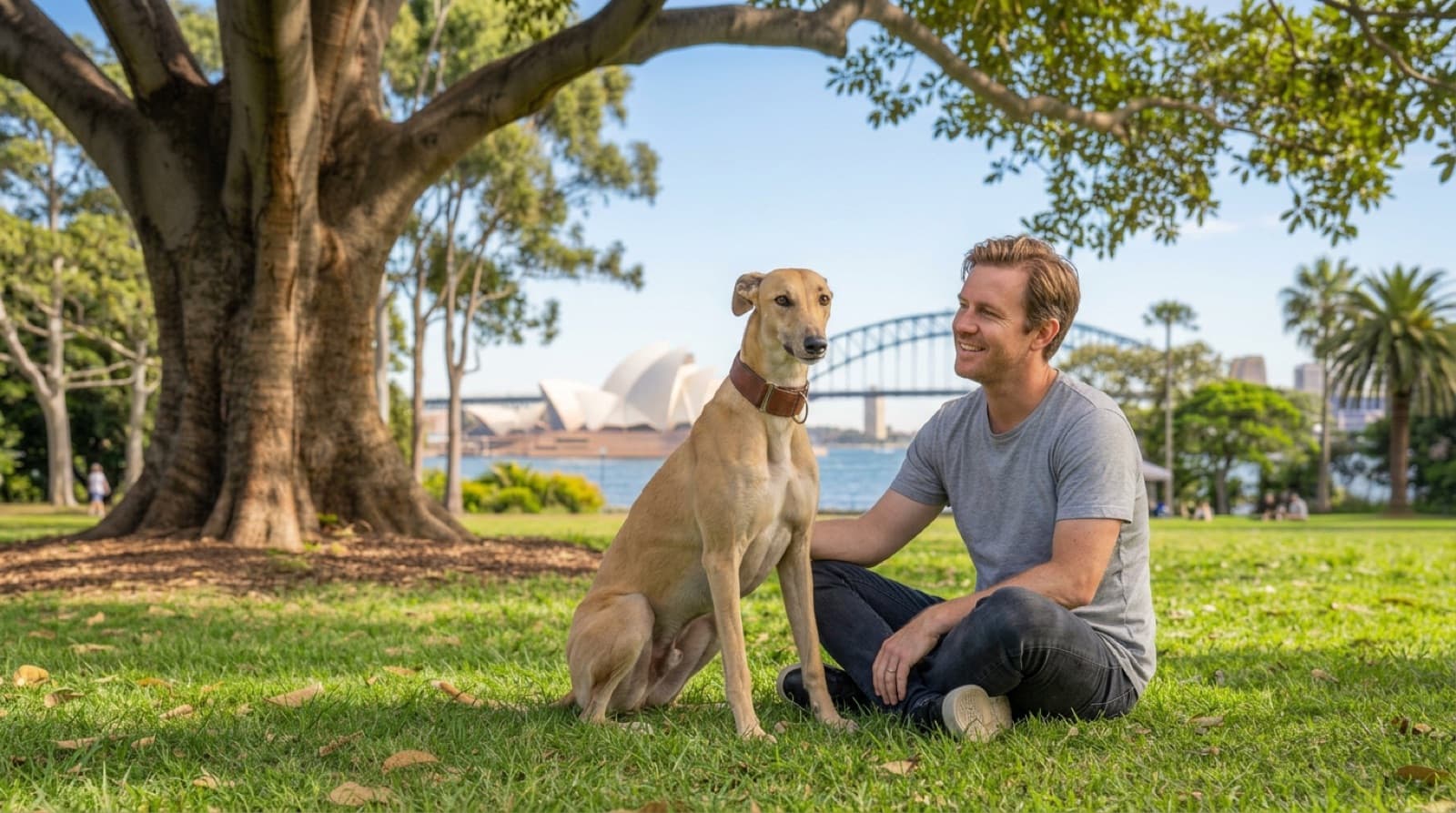
The short answer
Racing ended in New Zealand with the ban taking effect from 1 August 2026, and the Greyhound Racing Transition Agency expects around 1,300 greyhounds to need homes. The two best-established rehoming routes are Greyhounds As Pets (GAP), the national Greyhound Adoption Programme Trust, and the SPCA Greyhound Rehoming Project. Retired racers are gentle, quiet and low-energy at home, though many need a few weeks to learn ordinary house life. Prey drive varies by dog, so cat and small-dog compatibility is assessed individually. Adoption is by application and matching rather than first-come-first-served, and the fee usually covers desexing, microchipping and vaccination.
What changed in 2026
The Government announced the end of commercial greyhound racing on 10 December 2024, citing animal welfare concerns, and gave the industry a wind-down period of about 20 months. The closure legislation passed its third reading in Parliament on 2 April 2026, and the ban took effect from 1 August 2026. A Greyhound Racing Transition Agency was created to oversee the wind-down and to coordinate the rehoming of the dogs leaving the industry.
The practical result for adopters is simple: a large number of healthy, well-handled dogs are looking for homes at the same time. The transition agency expects around 1,300 greyhounds to need rehoming, fewer than some earlier industry predictions, and rehoming organisations are actively matching them with adopters. You can read the SPCA's summary of the closure on its adopt a greyhound page.
What a retired racer is actually like
The biggest surprise for most new greyhound owners is how calm the dogs are. A racing greyhound is built for short, fast sprints, not endurance, so at home they are happy with a couple of walks and then long stretches of sleep. They are often described as the dog that will run flat out for 30 seconds and then spend the rest of the day on the sofa. For a first-time owner, a retired racer is frequently easier than a high-drive working breed.
That said, these dogs come from a very particular background. Most have lived in racing kennels and may never have climbed stairs, walked on tiles or timber floors, met a cat, or heard a washing machine. The first few weeks are a gentle introduction to ordinary house life. Greyhounds learn quickly and settle well, but patience in those early weeks makes a big difference. They also feel the cold: a short coat and very little body fat means a jacket in winter is a genuine need, not a fashion choice.
Greyhounds are sighthounds, bred to chase things that move. Prey drive varies enormously between individuals. Some retired racers live happily with cats and small dogs; others should never be trusted around them. This is not something to guess at, which is exactly why the rehoming organisations assess each dog before matching.
The main rehoming organisations
Greyhounds As Pets (GAP)
Who they are: The national greyhound rehoming programme, registered as the Greyhound Adoption Programme Trust (registered charity CC22080), based in Feilding.
GAP is the long-standing, dedicated greyhound rehoming organisation in New Zealand. It assesses each dog's temperament, including how they respond to cats and small animals, before placing them, and it supports adopters through the settling-in period. Because GAP works only with greyhounds, its staff know the breed well and can advise on the specific quirks of a dog leaving racing. You can confirm the charity's registration on the New Zealand Charities Register, and the programme's own site is at gap.org.nz.
SPCA Greyhound Rehoming Project
Who they are: New Zealand's best-known animal welfare charity, running a dedicated greyhound rehoming stream.
The SPCA lists adoptable greyhounds through its Greyhound Rehoming Project and asks prospective adopters to register and be patient, because matching a dog to the right household takes time. Like GAP, the SPCA assesses each dog's lifestyle needs and household suitability, and provides support for dogs still adjusting to everyday life. Details and the register-to-adopt step are on the SPCA greyhound page.
A note on choosing an organisation: greyhound rehoming has grown quickly with the closure, and new groups appear from time to time. Before applying or paying a fee, confirm the organisation is current and registered on the Charities Register. A legitimate rehoming organisation will always desex, microchip and vaccinate the dog, and will assess temperament before placing it.
See adoptable greyhounds listed across New Zealand
LocalPetFinder gathers greyhound listings from New Zealand rescues in one place. Browse what is available now, or set up an alert and be told the moment a greyhound is listed.
Browse Greyhounds in New Zealand →How the adoption process works
Greyhound rehoming is done by application and matching, not first-come-first-served. The steps are broadly the same across organisations:
- Register and apply. You tell the organisation about your home, your hours away, your yard or fencing, any children, and any other pets. This is how they find a dog that suits you rather than one that will struggle.
- Matching conversation. Rather than you picking a photo, the organisation suggests dogs whose assessed temperament fits your household. If you need a cat-safe or small-dog-safe dog, this is where it is sorted.
- Meet and settle. You meet the dog, and the organisation guides you through the first days at home. Many provide a settling-in guide and ongoing support.
- Register with your council. Under the Dog Control Act 1996 you register the dog with your local council from three months of age, and dogs first registered on or after 1 July 2006 must be microchipped. You can read the law on legislation.govt.nz.
Expect a few weeks from application to take-home. That pace is deliberate: a good match between a dog fresh out of racing and your household is worth waiting for.
What it costs
Each rehoming organisation sets its own adoption fee, and that fee generally covers desexing, microchipping, vaccination and a vet check. Because fees change and differ between organisations, check the current amount directly with GAP or the SPCA rather than a figure quoted second-hand. Whatever the fee, an adopted greyhound costs a fraction of a purchased puppy and arrives already desexed, microchipped and vaccinated. Budget beyond the fee for the ordinary costs of a large dog: council registration, food, a warm coat for winter, a decent bed, and routine vet care.
Is a retired racer right for you?
| A retired greyhound suits you if | Think twice if |
|---|---|
| You want a calm, affectionate house dog | You want a high-energy running or hiking companion for hours a day |
| You can give a few weeks of patience while the dog learns house life | You need a dog that is instantly settled from day one |
| You have no cats or small pets, or you will wait for a cat-tested dog | You have free-roaming cats and cannot wait for a suitable match |
| You are happy to use a coat and a soft bed and keep the dog warm in winter | You expect a short-coated dog to cope outdoors in the cold |
Frequently Asked Questions
Why are so many greyhounds being rehomed in New Zealand in 2026?
The Government announced the end of commercial greyhound racing on 10 December 2024, and the closure legislation passed its third reading on 2 April 2026. Racing ended with the ban taking effect from 1 August 2026. A Greyhound Racing Transition Agency was set up to oversee the wind-down and the rehoming. The agency expects around 1,300 greyhounds to need new homes, which is why rehoming organisations are actively looking for adopters.
What is a retired racing greyhound actually like as a pet?
Most retired racers are gentle, quiet and surprisingly low-energy at home. The racing nickname is "45 mile per hour couch potato" for a reason: they enjoy short bursts of exercise and then sleep for much of the day. They are usually crate-trained and used to routine, but many have never seen stairs, glass doors, slippery floors or a television, so the first few weeks are about learning ordinary house life.
Which organisations rehome retired racing greyhounds in New Zealand?
The two best-established routes are Greyhounds As Pets (GAP), the national Greyhound Adoption Programme Trust (registered charity CC22080, based in Feilding), and the SPCA, which runs a Greyhound Rehoming Project. Both assess your lifestyle and household before matching a dog. The Greyhound Racing Transition Agency also coordinates rehoming across the sector. Always check an organisation is current and registered before paying any fee.
Can greyhounds live with cats and small dogs?
It depends on the individual dog. Greyhounds are sighthounds bred to chase, so some have a strong prey drive and some have almost none. Good rehoming organisations cat-test and small-dog-test their greyhounds and will tell you honestly whether a particular dog is suitable. If living with a cat or a small dog matters to you, say so at the start so you are matched with a dog that has been assessed as safe.
Do pet greyhounds have to wear a muzzle in New Zealand?
Muzzling was a racing-industry norm rather than a general law for pet greyhounds. Standard New Zealand dog law applies instead: under the Dog Control Act 1996 you register the dog with your council from three months of age, and dogs first registered on or after 1 July 2006 must be microchipped. Councils can have their own rules, so check with yours, but there is no blanket national requirement that a pet greyhound be muzzled in public.
How much does it cost to adopt a retired racing greyhound?
Each rehoming organisation sets its own adoption fee, and the fee usually covers desexing, microchipping, vaccination and a vet check, which makes it far cheaper than buying a dog. Because fees change and vary by organisation, check the current amount directly with GAP or the SPCA rather than relying on a figure quoted elsewhere. A rescue greyhound is almost always a fraction of the cost of a purchased puppy and arrives already desexed and vaccinated.
How long does the adoption process take?
Expect a few weeks rather than a few days. The organisations use an application and a matching conversation rather than first-come-first-served, because greyhounds leaving racing kennels are still learning pet life and the match needs to suit both the dog and your household. Having your details ready (your living situation, hours away from home, other pets, and any children) helps the process move faster.
Keep reading
Greyhounds Available in New Zealand
Live greyhound listings gathered from New Zealand rescues, with an alert option.
All Adoptable Dogs in New Zealand
Every dog listed across New Zealand rescues. Filter by breed, size, age and region.
Best Dog Rescues in Auckland
The main Auckland rescues compared: process, approach and how to choose.
Best Dog Rescues in Christchurch
Christchurch and Canterbury rescues, and how the adoption process works.