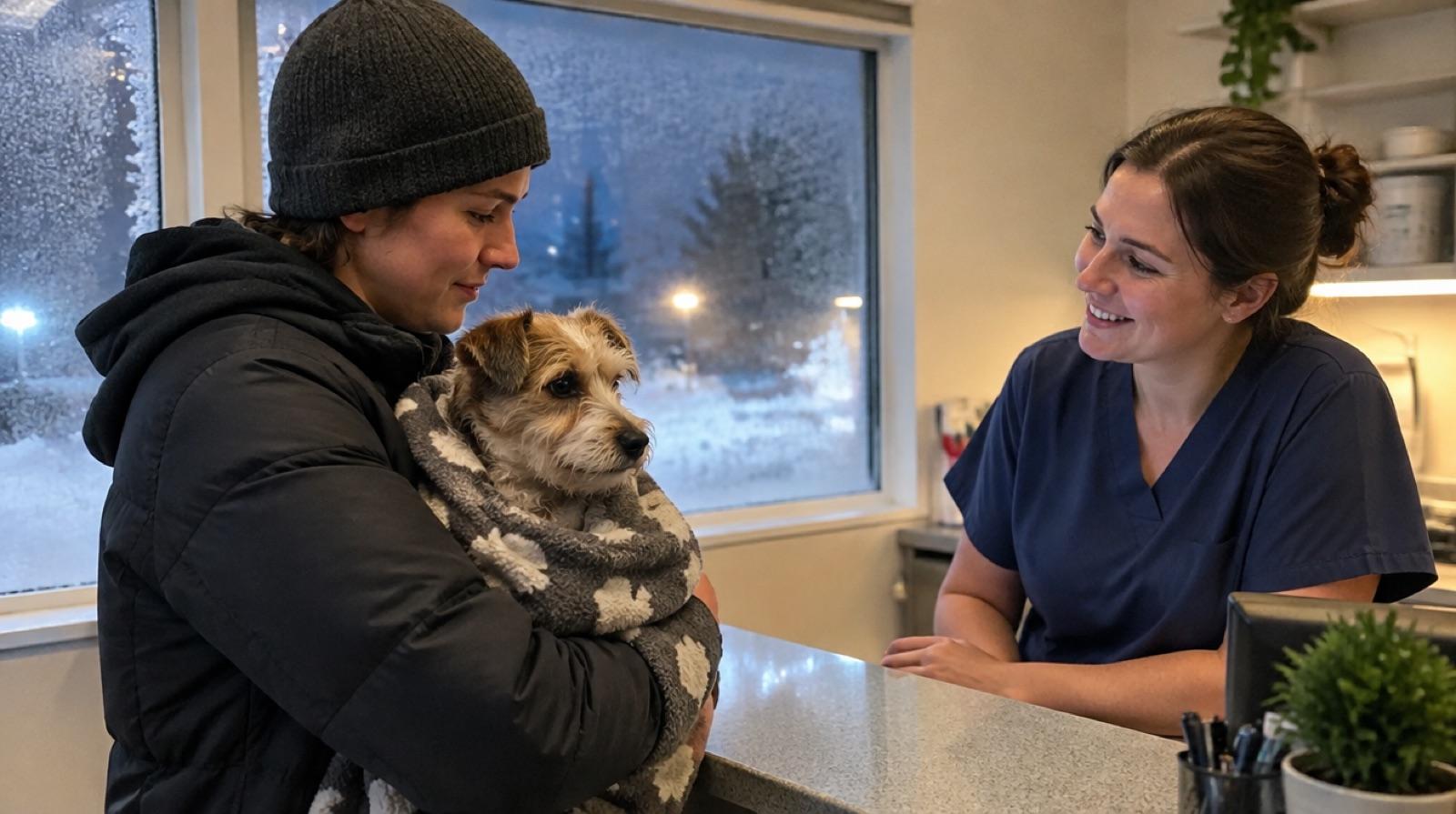
The short answer
Dunedin's after-hours vet is the Dunedin Emergency and After-Hours Vet Clinic (DEVC), based at Vets on Balmac, 220 Balmacewen Road, Wakari, phone 03 477 7233. It opens 6pm to 7.30am Monday to Friday, from Saturday 5pm to Monday 7.30am, and on public holidays. We could not find a Dunedin clinic open around the clock every day, so on weekday daytimes and Saturday daytime, call your regular vet.
Always call DEVC before you drive there. It says the vet may not be on site after midnight if there are no patients in hospital, but is still available for immediate help. It does not publish a consultation fee; ask for an estimate, because emergency care is expensive.
Which Dunedin vet is open right now?
| When | Who to call | Phone |
|---|---|---|
| Monday to Friday, 6pm to 7.30am | Dunedin Emergency and After-Hours Vet Clinic, 220 Balmacewen Road, Wakari | 03 477 7233 |
| Saturday 5pm to Monday 7.30am | Dunedin Emergency and After-Hours Vet Clinic | 03 477 7233 |
| Public holidays | Dunedin Emergency and After-Hours Vet Clinic (no separate holiday times published; phone first) | 03 477 7233 |
| Monday to Friday, 7.30am to 6pm | Your regular vet | Your vet's number |
| Saturday, 7.30am to 5pm | Your regular vet if it is open; if not, its after-hours message | Your vet's number |
Hours, address and phone from the DEVC website, read on 9 November 2026. Its footer spells the suburb “Waikari”; the main listing says Wakari. Phone before you go.
About the Dunedin Emergency and After-Hours Vet Clinic
- What it is. It describes itself as a locally owned and operated after-hours service for companion animals, offering out-of-hours consultations, treatment, surgery and overnight hospitalisation. It is currently based out of Vets on Balmac.
- Call first. It asks everyone to phone before coming in. If there are no patients in hospital, the vet may not be on site after midnight, but the team says it is still available for immediate assistance.
- Emergencies only. Its terms of service say it does not provide routine daytime care, preventive health care or elective procedures, and that it works alongside your regular clinic, sending it your pet's records.
- Triage. The terms say patients are seen in order of urgency, so another pet may be seen first if it is more critical. Being asked to wait usually means your pet is stable enough to wait safely.
What local clinics say about after hours
Pet Doctors The Gardens in North East Valley lists DEVC as its after-hours clinic, and Vets on Balmac says it hosts DEVC for urgent weekend after-hours illnesses and injuries. Some other clinics run their own after-hours phone line for their clients, so check your own clinic's website or the message on its phone when it is closed.
After-hours clinic or your regular vet?
In a city with a 24/7 hospital, you can go there at any hour. In Dunedin, the time of day decides it. From 7.30am to 6pm on weekdays, call your regular vet first, because they are open and know your pet. Pet Doctors The Gardens, for example, says that during business hours it will see an emergency as soon as possible with no booking needed. Ask your own clinic now how it handles emergencies, rather than in a crisis.
Saturday daytime is the gap to plan for. DEVC's weekend service starts at 5pm on Saturday. Several clinics we checked open on Saturday, but hours differ, so know your own clinic's Saturday hours before you need them. Vets@St Clair, which lists weekday hours only, tells its clients to ring Vets on Balmac on 03 467 2346 for triage of a Saturday daytime emergency.
If you do not have a regular vet yet, sign up with one this week. A clinic that already has your pet's records can act faster. For the South Island's other after-hours options, see our Christchurch emergency vet guide.
When is it an emergency? Go now
If you think your pet needs emergency treatment, phone. Treat these as urgent:
- Difficulty breathing, collapse or sudden weakness
- Being hit by a car, a bad fall or a deep wound, even if your pet seems fine
- Seizures, or bleeding that will not stop
- Retching that brings nothing up, with a swollen belly
- Repeated vomiting, or vomiting with blood
- A male cat straining in the litter tray with little or no urine
- Anything poisonous eaten, including rat bait, algae, chocolate or human medicine
- Difficulty giving birth
Which Otago emergencies should I know about?
These are the urgent risks that official New Zealand sources warn about.
Toxic algae in rivers and lakes: go now
LAWA (Land, Air, Water Aotearoa), run with New Zealand's regional councils, says dogs are at the greatest risk from toxic algae because they play and scavenge in water. If you suspect your dog has eaten toxic algae, treat it as an emergency and contact your vet immediately. Signs include lethargy, muscle tremors, rapid breathing, twitching, paralysis and convulsions. Keep your dog on a lead and away from water with a bloom or algal mats on the rocks or bank, and if it has been in the water, wash it with fresh water and stop it licking its fur. LAWA and the Otago Regional Council post current warnings; check them before a swim.
1080 bait in forests: go now
If you take your dog walking or hunting in bush areas, the Department of Conservation says dogs are highly susceptible to 1080 poisoning, usually from eating poisoned carcasses rather than bait, and that the outcome is usually fatal. Look for DOC's warning signs at track entrances and keep dogs out until they come down, usually four to eight months after a drop. If you think your dog has eaten bait or a carcass, call the vet, say you suspect 1080, and go immediately: DOC says there is no antidote, but dogs can sometimes be saved with early action. DOC's page also lists first-aid steps; read it before the trip.
Heat
The SPCA lists the signs of heat stress as excessive panting, drooling or hyperventilating, and seeking shade. Never leave a dog in a parked car. If you see a dog in a hot car, the SPCA says to act immediately and call the SPCA on 0800 SPCA NZ or the Police. A dog that collapses or cannot settle after heat needs a vet now.
Poisons at home
For advice on whether something swallowed is dangerous, the National Poisons Centre says it is not expert in animal poisonings and points pet owners to their vet or the NZ Animal Poisons Helpline on 0800 869 738, which charges for its service. If your pet is already unwell, call the vet first.
What should I do on the way to the emergency vet?
- Call first. In Dunedin this matters more than usual, because the vet may need to come in. Say what happened, your pet's species, size and age, and when you will arrive.
- Keep yourself safe. A frightened or hurt animal can bite, even a gentle one. Move slowly and keep your face away from its mouth.
- Carry your pet safely. Put cats and small dogs in a carrier. Lift a larger dog on a towel, blanket or board held by two people, keeping the back straight if it cannot walk.
- Bring what you can grab in a minute. Any packet, plant or bait your pet ate, your pet's medicines, and your insurance details if you have them.
- Do not give human medicines. Many are toxic to dogs and cats. Give nothing by mouth unless the vet tells you to.
- Have a second person drive if you can, so someone can watch your pet.
Adopting in Dunedin?
Otago rescues list dogs and cats that come desexed, microchipped and vaccinated. Save your vet and the after-hours number the day you bring yours home.
Browse Dogs in Dunedin →How much does an emergency vet cost in Dunedin?
DEVC does not publish a consultation fee, so we do not quote one. Emergency care is expensive, and the consultation is only the start. Here is what its terms of service (version 1.0, July 2026) say about paying:
- Estimate. Where practicable it gives a good-faith estimate before investigations or treatment. An estimate is not a fixed quote, and costs can change if your pet's condition changes.
- Deposit. It may ask for a deposit or other financial arrangements before treatment, depending on the treatment and the expected cost.
- Payment. Payment is due when your pet is discharged, and it may ask for further payments during a longer stay. The payment methods it accepts are advised by the team.
- Insurance. You remain responsible for its fees whatever happens to your insurance claim. It will provide invoices and records to support a claim.
- Talk early. It asks clients worried about cost to raise it as early as possible, so the vet can discuss options.
The best time to sort out how you would pay a large bill is before an emergency, with pet insurance (check its after-hours cover and waiting periods) or a savings buffer. If you use any finance product, read its fees and terms before you sign.
What about injured wildlife?
For a sick or injured native animal, call the Department of Conservation hotline, 0800 DOC HOT (0800 362 468). For non-native wildlife, DOC says to contact your local SPCA or a wildlife rehabilitator.
Set this up before you need it
- Register with a regular vet and save its number, plus 03 477 7233 for DEVC.
- Learn the gaps. Weekday daytimes and Saturday daytime are your vet's job; weeknights, Saturday 5pm to Monday morning and public holidays are DEVC's.
- Check your clinic's Saturday hours, because that is when the gap is easiest to miss.
- Keep a carrier and an old towel where you can reach them quickly.
- Know your pet's weight, medicines and microchip number, or keep a photo of the adoption paperwork on your phone.
If you are adopting, ask the rescue for the dog's or cat's vet history and which treatments are due next. Rescue pets usually arrive desexed, microchipped and vaccinated, so the emergency plan is the next job. Our best dog rescues in Dunedin guide lists the groups we track, and if your new dog ever slips out, start with our Dunedin lost and found pets page.
Frequently Asked Questions
Is there a 24 hour emergency vet in Dunedin?
Not one that is open around the clock every day, as far as we could find. The Dunedin Emergency and After-Hours Vet Clinic (DEVC) at 220 Balmacewen Road, Wakari, opens 6pm to 7.30am Monday to Friday, from Saturday 5pm to Monday 7.30am, and on public holidays. Weekday daytimes and Saturday daytime are your regular vet's job. We checked DEVC's website in November 2026.
What is the phone number for the Dunedin after-hours vet?
DEVC is on 03 477 7233. It asks you to call first before coming to the clinic, because the vet may not be on site after midnight if there are no patients in hospital, though it says the team is still available for immediate help.
What do I do if my pet has an emergency on a Saturday in Dunedin?
During Saturday daytime, call your regular vet. DEVC's weekend hours start at 5pm on Saturday. Several Dunedin clinics open on Saturday; Vets on Balmac, for example, lists Saturday hours of 9am to 4.30pm, and Vets@St Clair tells its clients to ring Vets on Balmac on 03 467 2346 for triage of Saturday daytime emergencies. If your own clinic is closed, listen to its after-hours message for who to call.
What do I do if my pet has an emergency on a weekday during the day in Dunedin?
Call your regular vet straight away. DEVC is closed from 7.30am to 6pm on weekdays, so daytime emergencies go to your own clinic. If you have no regular vet, phone the nearest clinic and ask. Registering with a vet before you need one avoids this problem.
Is the Dunedin after-hours vet open on public holidays?
DEVC's website lists public holidays alongside its weekend hours. It does not give separate public holiday times, so phone 03 477 7233 before you go.
How much does an emergency vet cost in Dunedin?
DEVC does not publish a consultation fee, so we do not quote one. Its terms of service say it gives an estimate where practicable, may ask for a deposit before treatment, and that payment is due at discharge. Emergency care is expensive, so ask for an estimate.
Do I still have to pay if my pet is insured?
Yes. DEVC's terms say you remain responsible for its fees whether an insurance claim is accepted, declined or still being assessed. It will provide invoices and clinical records to help with a claim, so tell the team early that your pet is insured.
What if I am worried about the cost of emergency care?
Say so early. DEVC's terms ask clients with cost concerns to raise them as early as possible, so the vet can talk through investigations, treatment options and payment arrangements. It says the payment methods it accepts are advised by the team, so ask when you call.
Does DEVC treat farm animals?
It is set up for pets. DEVC describes itself as an after-hours service for companion animals, so for a farm animal emergency, contact a vet clinic that offers farm or large animal after-hours cover.
What should I do if my dog swims in water with toxic algae?
Treat it as an emergency and contact your vet immediately if you think your dog has swallowed algae. LAWA says signs include lethargy, muscle tremors, rapid breathing, twitching, paralysis and convulsions, and to wash your dog with fresh water and stop it licking its fur.
Who do I call if my pet ate something poisonous?
If your pet is unwell, call a vet first. The National Poisons Centre says it is not expert in animal poisonings and directs pet owners to their vet or the NZ Animal Poisons Helpline on 0800 869 738, which charges for its service.
Should I save an emergency vet number when I adopt a dog in Dunedin?
Yes. Save your regular vet and 03 477 7233 for DEVC on adoption day. Because Dunedin has no round-the-clock hospital and DEVC asks you to call before you come, having the number saved matters.
Keep exploring
Best Dog Rescues in Dunedin
The Otago rescues we track and how each one works.
Lost Pets in Dunedin
Report or search for a lost or found dog or cat.
Emergency Vets in Christchurch
Christchurch's after-hours vet centre and late clinics.
Cats for Adoption in Dunedin
Current cat and kitten listings from Otago rescues.
Find your Dunedin dog
See adoptable dogs from Otago shelters and rescues, refreshed regularly. Ask each rescue about vet history before you bring one home.
See Adoptable Dogs in Dunedin →