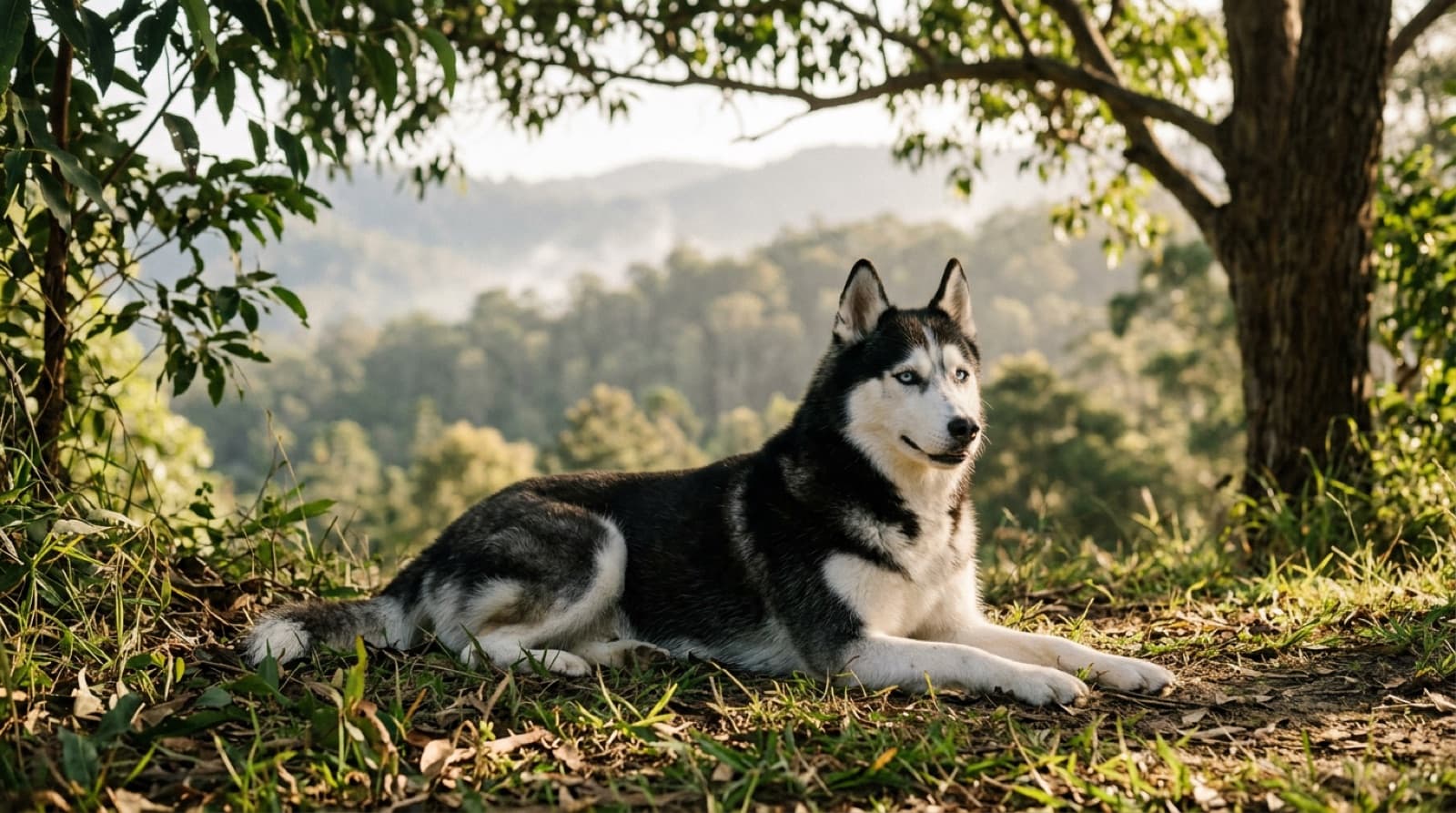
The short answer
Huskies come into Auckland rescue steadily through SPCA New Zealand (Auckland centres at Māngere and Hobsonville), foster-based rescues such as Saving Hope Foundation and PAWS Restart, and the Auckland Council animal shelters, and adopting one is inexpensive: an adult Husky costs $149 to adopt at the SPCA with desexing, microchipping and vaccination done. The catch is the commitment. A Husky is a high-energy working sled dog that needs one to two hours of exercise a day, a securely fenced escape-proof yard and a lot of mental work, and without them it becomes destructive, vocal and a talented escaper. Add heavy shedding, a strong prey drive that makes cats difficult, and an Arctic double coat that still wants shade, water and cool-hour walks on a humid Auckland summer day (and is never shaved), and this is a breed to adopt with eyes open. Get the exercise, the fencing and the summer routine sorted, and a Husky is a friendly, funny, devoted companion. This is not a first-dog breed for most people.
Why Huskies end up in Auckland rescue
Huskies are a steady presence in New Zealand rescue, and understanding why is the best preparation for adopting one, because almost every reason is about a mismatch with the owner rather than a fault in the dog.
Underestimated energy. This is the big one. A Husky is a working sled breed built to run for hours, and people who adopt the striking looks are often unprepared for the exercise reality. An under-exercised Husky becomes destructive, noisy and restless, and an overwhelmed household surrenders. The novelty of a beautiful puppy wears off as it grows into a demanding adult.
Escaping. Huskies climb, dig and bolt, and a loose Husky runs and does not look back. Owners who did not escape-proof the yard lose the dog repeatedly, pay the council to collect it from the shelter, and give up in frustration. This is hardwired wanderlust, not naughtiness, and it means secure fencing is non-negotiable for the breed.
The coat and the shedding. Huskies shed heavily year-round and blow their entire coat twice a year, and the volume of fur surprises unprepared owners. Auckland's mild climate is a point in the breed's favour, since the Arctic coat copes with the city's winters effortlessly, but the humid summer days still need managing and the fur still ends up on everything you own.
Prey drive. The strong instinct to chase makes many Huskies a poor match for homes with cats, rabbits or chickens, and a problem with a resident small animal sometimes ends in a surrender.
The dogs themselves are almost always friendly, sociable and sound. What a rescue Husky needs is an active owner with a secure yard who understands the breed, not a different temperament. Read a surrender note carefully and ask the rescue how much exercise the dog is getting, how it copes with being alone, and whether it has a history of escaping.
Where to actually look in Auckland
Because Huskies come into rescue steadily, a wide alert net catches the right dog, and a careful match matters more with this breed than most. Set up listing alerts on every rescue you would consider.
- SPCA New Zealand. The country's oldest and largest animal welfare charity runs the Auckland Centre at Māngere (50 Westney Road, open daily, adoptions by appointment through its online application) alongside its other Auckland centre at Hobsonville, and Huskies and Husky crosses come through fairly often. Every SPCA dog is desexed, microchipped and vaccinated before adoption, the fee is the same at every centre, and the Dog Control Act requires the SPCA to register the dog before it goes home with you. The team can tell you how a particular dog copes with exercise, being alone and other animals. Browse at spca.nz/adopt.
- Saving Hope Foundation. An Auckland no-kill dog rescue whose dogs live in foster homes across the city, with each listing naming the suburb. Because the dogs live in foster homes, the notes on a Husky's energy, recall, escaping and how it copes alone tend to be accurate and detailed, which matters enormously for this breed. Listings at savinghope.co.nz.
- PAWS Restart. A smaller registered Auckland charity (CC61702) that rehomes dogs through foster care. Smaller rescues see fewer Huskies at any one time, but the matching is careful and the carer notes are detailed, so it is well worth applying to and being ready to wait for the right dog. Find them at pawsrestart.org.nz.
- Auckland Council animal shelters. Huskies are escape artists, so a fair number end up impounded, and unclaimed dogs can be rehomed through the council. Check the council's dogs and animals pages alongside the charities above.
Whatever the source, verify any rescue through a real address, a current adoptable-dog list and charitable status before sending money, and treat cheap or free Husky offers online with suspicion. Browse the current Huskies and Husky crosses on the Auckland Husky listings.
How much does Husky adoption cost in Auckland?
SPCA New Zealand charges the same fee at every centre: $149 for a dog aged five months to eight years, $399 for a puppy under five months and $75 for a senior of nine years or more, plus a $2.50 service charge. That fee already includes desexing, microchipping and vaccination, which would cost far more if you paid for them separately after a private purchase. Foster-based rescues set their own fee and show it on each listing.
The costs that are particular to this breed are containment and exercise, not the dog itself. Budget for Auckland Council registration (set by the council, cheaper for a desexed dog and cheaper again with a Responsible Dog Owner Licence), and for secure fencing, which is often the biggest first outlay for a Husky owner, plus a strong harness and lead. Ongoing yearly costs cover food, routine vet care, continuous flea and worm prevention and grooming. Huskies are a fairly hardy breed, so they are not the most expensive dog to keep medically, but the fencing and the time commitment are the real cost.
Browse Huskies available in Auckland rescue
Huskies come into New Zealand rescue steadily. Browse live listings across Auckland, and set an alert so you can apply when the right dog appears.
See Available Huskies →The Husky reality, in brief
You cannot adopt a Husky well without understanding what the breed asks for, so here is the short version. A Husky needs one to two hours of real exercise a day and a securely fenced, escape-proof yard, because the breed is a determined climber, digger and bolter with an unreliable recall. It sheds heavily and blows its coat twice a year, and the Arctic double coat means a humid Auckland summer day has to be managed with shade, water and cool-hour walks, never a clipper. The strong prey drive makes cats and small pets a real consideration.
None of this makes a Husky a bad dog; it makes it a demanding one that rewards the right home. We cover the exercise, containment, coat and medical picture in more depth in the Siberian Husky breed guide.
What a Husky is like to live with
For all the demands, a Husky in the right home is a wonderful dog. They are friendly, sociable and pack-oriented, typically great with people and other dogs, playful and comical, and famously talkative, howling and chatting rather than barking much. They are not guard dogs; a Husky is more likely to greet an intruder than challenge one. They are affectionate and bond closely with an active family.
The other side is that a Husky is independent and stubborn rather than eager to please, so training rewards patience and reward-based methods, and the prey drive means care around cats and small animals. This is a dog for an active household that enjoys the outdoors, has a secure yard, and wants a spirited companion rather than an easy one. Match the breed to your genuine lifestyle, not to the photo, and a rescue Husky will repay you for years.
Auckland weather, the coat and the kauri rule
Auckland is where this guide parts company with one written for a hotter country, mostly in good ways. There is no tick in New Zealand that paralyses dogs, so the year-round tick emergency that shapes a thick-coated dog's life across the Tasman simply does not apply here, and the mild climate is kinder to an Arctic breed than almost anywhere else a Husky ends up. What Auckland has instead is a humid, often wet climate, and that still changes the routine.
Humidity, rain and the coat. Auckland summers are warm and sticky rather than extreme, but a double-coated dog still feels a humid afternoon, so exercise only in the cool of the morning and evening on those days, keep shade, water and a cool indoor space available, and never leave a Husky in a hot car or on hot pavement. Never shave the coat, which insulates against heat as well as cold and protects the skin from sun. Winters are mild and wet, which the breed shrugs off, though a soaked double coat takes a long time to dry, so towel it off after a rainy walk. Fleas and intestinal worms stay active most of the year in a mild climate, so keep prevention continuous rather than seasonal, and ask your vet about heartworm risk for your area.
Where you can walk, and the kauri rule. Dogs in Auckland's council-controlled parks and beaches are on-leash by default, you must carry a lead, and off-leash access applies only where a place is listed for it, often with time-of-day or seasonal limits at beaches. The regional rules changed on 1 August 2025, so check the council's find where and when you can walk your dog page before you try a new beach, and with a Husky's recall treat even a listed off-leash beach as a lead-on place unless it is fully fenced. Large sections of the Waitākere Ranges are closed to stop the spread of kauri dieback, and some regional-park beaches prohibit dogs in part, so a west-coast bush walk needs planning rather than assuming. If something goes wrong after hours, including heat stress, Animal Emergency at VSA runs two 24-hour hospitals, at Sylvia Park in Mt Wellington and in Henderson, so know the route before you need it.
Registering your Husky in Auckland, and avoiding scams
New Zealand's dog law is the Dog Control Act 1996. Every dog older than three months must be registered with the council for the current registration year, a dog registered for the first time must be microchipped within two months of that registration, and when a dog changes hands both the old owner and the new owner must tell the council in writing within 14 days. The Siberian Husky is not among the breeds listed in Schedule 4 of the Act, so it is legal to own and rehome normally. Auckland Council sets its own fees: a desexed dog is markedly cheaper than an entire one, a Responsible Dog Owner Licence cuts the fee again, and paying before 1 August avoids the late rate, so a rescue Husky, already desexed and microchipped, registers at the low end. Check the current figures on the Auckland Council registration page, and remember the SPCA must register a dog before it rehomes it, so an SPCA Husky arrives already on the books. Registration matters doubly for an escape artist, because a registered, microchipped Husky picked up by the council gets home.
On scams, New Zealand has no national breeder register, so there is nothing to look a seller up against. That makes the old rules matter more: see the puppy with its mother at the seller's property, get the microchip number and vaccination record in writing, and never pay a deposit or a transport fee for a dog you have not met. A cheap or free Husky on Trade Me or Facebook with a story about being out of town is the classic setup. Adopting through the SPCA or a verified Auckland rescue avoids the problem entirely.
Frequently Asked Questions
Where can I adopt a Husky near me in Auckland?
Start with SPCA New Zealand, which runs its Auckland Centre at Māngere and a second Auckland centre at Hobsonville, with adoptions by appointment through its online application. Huskies and Husky crosses turn up regularly because the breed is so often surrendered, and they also appear in the Auckland Council animal shelters as unclaimed strays. Foster-based rescues such as Saving Hope Foundation and PAWS Restart place dogs through foster homes, and a carer who has lived with a Husky can tell you about its energy, recall and escaping, which matters enormously for a careful match. Because Huskies come into rescue steadily, set alerts across all of them and be ready to apply, but do not rush: matching a Husky to a genuinely suitable, active home is what stops it being surrendered again.
Why are so many Huskies in New Zealand rescue?
Because people adopt the look and underestimate the dog. A Husky is a high-energy working sled breed that needs hours of exercise, a secure escape-proof yard and a lot of mental stimulation, and when it does not get them it becomes destructive, vocal and a determined escaper. The classic pattern is a striking puppy that grows into a demanding adult the household cannot keep up with. Add the heavy shedding and the strong prey drive that makes cats and small pets difficult, and Huskies are a steady presence in New Zealand rescue. The dogs themselves are almost always friendly and sound; the mismatch is with the owner lifestyle.
How much does it cost to adopt a Husky in Auckland?
At SPCA New Zealand the fee is the same at every centre: $149 for a dog aged five months to eight years, $399 for a puppy under five months and $75 for a senior of nine or more, plus a $2.50 service charge, with desexing, microchipping and vaccination already done. Foster-based rescues set their own fee and show it on each listing. On top of the fee, budget for Auckland Council registration (cheaper for a desexed dog and cheaper again with a Responsible Dog Owner Licence), secure fencing (often the biggest first cost for this breed), a good harness and lead, and setup like a bed and bowls. Ongoing yearly costs cover food, routine vet care, flea and worm prevention and grooming. A Husky is not an expensive breed to feed, but the containment and exercise commitment is the real cost.
Are Huskies good for first-time dog owners?
For most first-time owners, no. Huskies are high-energy, strong-willed, independent escape artists that need experienced, active handling, serious daily exercise and secure containment, and they are one of the breeds most often surrendered by owners who were not ready for the reality. A committed first-time owner who has genuinely researched the breed, has an active lifestyle, a securely fenced yard and time for one to two hours of exercise a day can succeed, but the Husky is an honest challenge. If this is your first dog and you are not sure, it is worth talking the reality through with a rescue before you fall for a face.
Are Huskies good with children and other pets?
With people and other dogs, usually yes. Huskies are friendly, social, pack-oriented dogs that are typically good with children and get on well with other dogs, which is part of their appeal. The serious caution is prey drive: Huskies have a strong instinct to chase, so cats, rabbits, chickens and other small animals are often a poor match, and even a Husky raised with a cat can be risky. If you have small pets, discuss it frankly with the rescue and be guided by the individual dog assessment. Around children, the main issue is exuberance and strength rather than temperament, so supervise as with any large, energetic dog.
Can a Husky be let off-lead in Auckland?
Rarely, and never in an unfenced space. Huskies have a powerful drive to run and a notoriously unreliable recall, so a loose Husky will keep going and is a genuine danger near roads. Auckland Council's default in its parks and beaches is on-leash with a lead in hand, and off-leash access applies only where a place is listed for it, often with time or seasonal limits, so check the council's where-to-walk page before you go. The safe plan is a securely fenced yard for off-lead freedom, a lead everywhere that is not fully fenced, and a fenced off-leash dog park for free running. This is not a training failure you can fix; it is the breed.
How do Huskies handle the Auckland climate?
Better than they handle most places a Husky ends up. Auckland's mild climate suits a Husky far better than a subtropical one across the Tasman, but humid summer days still need care. Never shave the coat, which insulates against heat as well as cold and protects the skin from sun; instead provide shade, constant water and a cool indoor space, exercise in the cool of the early morning and evening on sticky days, and test the pavement with your hand because hot ground burns paws. Watch for heavy panting, drooling, weakness or distress, which are heat stress and a veterinary emergency. The wet winters suit the breed, though a soaked double coat takes a long time to dry, so towel it off after a rainy walk. Keep flea and worm prevention continuous in a mild climate; there is no tick season to plan for in New Zealand.
How much exercise does a Husky really need?
A lot, and this is the single biggest commitment of the breed and the main reason to be honest with yourself before adopting. An adult Husky needs one to two hours of real activity a day, and a bored, under-exercised Husky becomes destructive, noisy and harder to contain. Running, secure off-lead play, hiking, and mental enrichment such as training and puzzle work all help, and many Huskies enjoy having a job to do. On a humid Auckland summer day that exercise has to shift to the cool hours of the morning and evening. If you cannot commit to serious daily exercise for the life of the dog, this is not the right breed for you.
Should I adopt a Husky puppy or an adult?
For most Auckland households an adult is the better choice. A Husky puppy is a huge amount of work and gives you no reliable read on adult energy or temperament, and Husky adolescence stacks boundless energy, escaping, chewing and independence all at once. An adult Husky has a settled temperament a rescue can assess, established habits, a known medical history and a lower adoption fee, and crucially you can see whether this individual dog suits your home. Senior Huskies are often calmer and make wonderful companions for an active owner who still walks daily but no longer wants a whirlwind. Adopting an adult whose needs are known is a real advantage with this breed.
Are Huskies a restricted breed in New Zealand?
No. The Siberian Husky is not a restricted breed under the Dog Control Act 1996 and is legal to own and rehome normally. Schedule 4 of the Act lists the Brazilian Fila, Dogo Argentino, Japanese Tosa, Perro de Presa Canario and the American Pit Bull Terrier type, which must be classified as menacing; the Husky is not among them. Like any dog in New Zealand it must be registered with the council from three months of age, microchipped within two months of its first registration, and on a change of ownership both the old and new owner must notify the council in writing within 14 days. There are no special legal restrictions on the breed, though as a strong, high-drive dog with a talent for escaping, a Husky benefits from a responsible owner who prioritises secure fencing, good lead manners and plenty of exercise.
Is it safe to buy a cheap Husky online instead of adopting?
Be cautious. Because Huskies are popular and often bred carelessly, cheap and free Husky listings online are common, and they are also a channel for pet-sale scams and for the backyard breeding that feeds the surrender cycle. New Zealand has no national breeder register, so there is nothing to look a seller up against. Rely on the basics instead: see the puppy with its mother at the seller's property, get the microchip number and vaccination record in writing, and never pay a deposit or a transport fee for a dog you have not met. A cheap or free Husky on Trade Me or Facebook with a story about being out of town is the classic setup. With so many Huskies already in New Zealand rescue needing homes, adopting is both the safer choice and the kinder one, and every SPCA Husky arrives already desexed, vaccinated and microchipped.
Keep reading
Adoptable Huskies in Auckland
Live listings of Huskies and Husky crosses, with filters for age, size and household compatibility.
Siberian Husky Breed Guide
The breed guide: why Huskies climb, dig and bolt, the fencing that holds them, hips, eyes and the coat, and what the breed needs day to day.
The Best Dog Rescues in Auckland
SPCA New Zealand, Saving Hope Foundation and PAWS Restart compared: how each works and what the fee covers.
Auckland Adoption Resources
Guides on adopting, costs, council rules and settling a rescue dog in Auckland.