The short answer
You can adopt a French Bulldog in Auckland, and because the breed is so popular, more reach rescue than people expect, alongside many crosses; look through SPCA New Zealand (Auckland centres at Māngere and Hobsonville), foster-based rescues such as Saving Hope Foundation and PAWS Restart, and the Auckland Council animal shelters. An adult Frenchie costs $149 to adopt at the SPCA with desexing, microchipping and vaccination done, against several thousand dollars from a breeder, but with this breed lifetime vet costs matter far more than the purchase price, so insure early. The Frenchie is a wonderful, gentle companion, but it is brachycephalic (flat-faced), which means real breathing problems, plus spinal, skin and eye issues, and it cannot tolerate heat or hard exercise and cannot swim. Auckland's summers are not extreme, but the humidity is the problem: a panting dog cools poorly in sticky air, and a flat-faced dog pants poorly to begin with, so on a humid day heat management is essential and genuinely life-or-death. Go in eyes-open and a Frenchie is deeply rewarding.
What a French Bulldog is
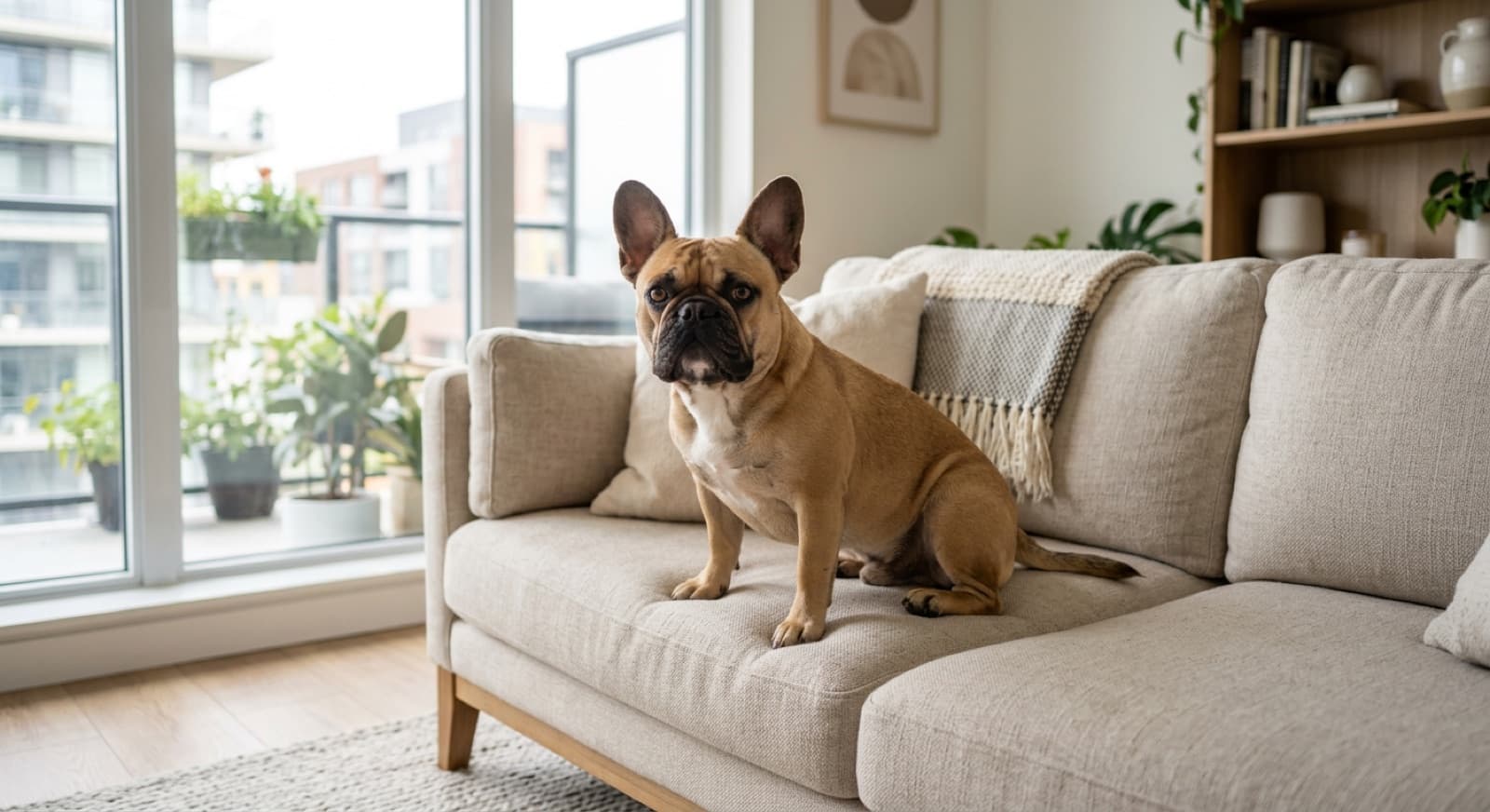
The French Bulldog is a small, compact, heavy-boned companion dog of around 8 to 14 kilograms, with the trademark bat ears, flat face and short body. The temperament is the breed's great appeal: affectionate, playful, comical, adaptable and deeply attached to its people, happy with modest exercise and well suited to apartment and unit living. Frenchies are typically good with children and other pets and make devoted, low-energy companions, which is exactly why they have become one of New Zealand's most popular breeds.
The flip side is health. The same features that define the breed, the flat face, the compact frame, the folds, are the source of significant problems, which is why an honest adoption guide spends as much time on care as on charm. The breed guide linked below covers the specifics; the essential point before you adopt is that this is a higher-needs, higher-cost breed than its easygoing nature suggests, and that humid heat is a real danger for it, even in a mild city like Auckland.
Why Frenchies reach rescue
- Health needs and cost. Breathing, spinal, skin and eye problems, and the vet bills that come with them, overwhelm some households that did not expect them.
- Sheer popularity and over-breeding. The breed is bred in huge numbers for a booming market, and volume alone feeds rescue.
- The heat mismatch. A flat-faced dog that cannot cool itself well struggles through a humid Auckland summer in a home without good airflow or shade, and some owners realise it too late.
- Ex-breeding dogs and changed circumstances. Reduced or shut-down operations, and life changes, account for the rest.
None of these reflect the dog's nature. A rescue Frenchie is typically a sweet, comical companion whose situation, not its temperament, brought it to rescue.
Where to look in Auckland
- SPCA New Zealand. The country's oldest and largest animal welfare charity runs the Auckland Centre at Māngere (50 Westney Road, open daily, adoptions by appointment through its online application) alongside its other Auckland centre at Hobsonville. Every SPCA dog is desexed, microchipped and vaccinated before adoption, the fee is the same at every centre, and the Dog Control Act requires the SPCA to register the dog before it goes home with you. Browse at spca.nz/adopt.
- Saving Hope Foundation. An Auckland no-kill dog rescue whose dogs live in foster homes across the city, with each listing naming the suburb. A foster carer can tell you exactly how the dog is with children and other pets and what its health and care needs are, which is especially important for this breed. Listings at savinghope.co.nz.
- PAWS Restart. A smaller registered Auckland charity (CC61702) that rehomes dogs through foster care. Smaller rescues see fewer Frenchies at any one time, but the matching is careful and the carer notes are detailed. Find them at pawsrestart.org.nz.
- Auckland Council animal shelters. Impounded dogs that are not claimed can be rehomed through the council, so it is worth checking the council's dogs and animals pages as well as the charities above.
The honest cost comparison
Real first-year costs in Auckland for a French Bulldog. Note the higher vet and insurance lines, which reflect the breed's health needs:
| First-year cost | Rescue Frenchie | Breeder Frenchie |
|---|---|---|
| Adoption fee or purchase price | $149 adult or $399 puppy at the SPCA (plus a $2.50 service charge) | Several thousand dollars |
| Desexing | Included | $300 to $600 |
| Microchipping | Included | Paid separately |
| First-year vaccinations | Included | $250 to $400 |
| Initial vet check | Included | $100 to $200 |
| Council registration (reduced fee if desexed and microchipped) | Set by Auckland Council (cheaper for a desexed dog) | Set by Auckland Council (cheaper for a desexed dog) |
| Year 1 food | $500 to $900 | $500 to $900 |
| Skin, ear and eye care products | $150 to $350 | $150 to $350 |
| Parasite prevention (flea, worm, heartworm) | $300 to $550 | $300 to $550 |
| Initial gear (bed, harness, bowls, cooling mat) | $200 to $400 | $200 to $400 |
| Pet insurance (strongly recommended for this breed) | $800 to $1,600 | $800 to $1,600 |
| Year 1 total (excluding council fee) | The adoption fee plus the everyday costs above | Several thousand dollars more, with the vet work still to pay |
The lines to notice are vet-related, and a Frenchie is a use-a-harness-not-a-collar breed given its airway and neck. With a breed this health-prone, pet insurance taken out early, before any condition is on record, is the single most valuable thing you can do, and a realistic ongoing vet budget matters more than the adoption fee. Some Frenchies need airway (BOAS) or spinal surgery, covered in the French Bulldog breed guide.
Browse French Bulldogs in Auckland rescue
Because the breed is so popular, Frenchies and crosses do reach rescue. Live listings from Auckland shelters and New Zealand rescues, with foster carer notes on each dog's health and care needs.
See Available French Bulldogs →Is a French Bulldog right for your Auckland home?
A Frenchie suits an owner who loves the breed's affectionate, comical nature and goes in fully prepared for its care: daily skin-fold and eye attention, a strict approach to heat and exercise, a cool indoor environment with good airflow, protecting the spine (no jumping from heights, a harness not a collar), and the budget for potentially high vet costs. It is a great fit for apartment and unit living, for calm households including with children, and for people who want a low-energy, devoted companion. Plenty of Auckland homes are rented or sit under a body corporate, so check the pet rules before you apply. It is a poor fit for anyone wanting an active outdoors dog, anyone without a fan, airflow or reliable cooling through a humid Auckland summer, or anyone on a tight budget who could not manage a major vet bill. Meet the individual dog, read its vet history, and be honest about whether you can meet the breed's needs, especially on the hot, sticky days.
Whatever the breed, the first month home is a decompression period. The 3-3-3 rule is a useful guide: roughly three days to decompress, three weeks to start showing personality, three months to fully settle.
Auckland weather, breathing and the kauri rule
Auckland is where this guide parts company with the hot-climate version, mostly in good ways. New Zealand has no tick that paralyses dogs, and Auckland summers are warm and sticky rather than extreme. For most breeds that is good news. For a flat-faced dog it is good news with a catch, because humidity is the Frenchie's particular enemy: a dog cools itself by panting, panting works poorly in humid air, and a brachycephalic dog pants poorly to begin with. A mild-sounding humid afternoon can push a Frenchie into heat stress faster than its owner expects.
Humid summer days. Walk only in the cool of the early morning or evening, keep walks short and slow, carry water, and keep the dog in the coolest, best-ventilated room of the house with a fan or a cooling mat through the middle of the day. Never leave a Frenchie in a parked car, even briefly. Noisy, laboured breathing, a blue or purple tongue, drooling or collapse on a warm day is an emergency, not something to wait out. Keep the dog away from deep water, because a Frenchie cannot swim and can drown in a pool or off a beach. Winters are mild and wet, which the breed handles well as long as you dry the skin folds after a rainy walk, because damp folds invite the skin infections the breed is prone to. Fleas and intestinal worms stay active most of the year in a mild climate, so keep prevention continuous rather than seasonal, and ask your vet about heartworm risk for your area.
Where you can walk, and the kauri rule. Dogs in Auckland's council-controlled parks and beaches are on-leash by default, you must carry a lead, and off-leash access applies only where a place is listed for it, often with time-of-day or seasonal limits at beaches. The regional rules changed on 1 August 2025, so check the council's find where and when you can walk your dog page before you try somewhere new, and favour a short, shaded, flat stroll over a long one for this breed. Large sections of the Waitākere Ranges are closed to stop the spread of kauri dieback, and some regional-park beaches prohibit dogs in part, though a long bush walk is not a Frenchie outing anyway. If something goes wrong after hours, Animal Emergency at VSA runs two 24-hour hospitals, at Sylvia Park in Mt Wellington and in Henderson, so know the route before you need it, because with a flat-faced dog in heat stress minutes matter.
Registering your Frenchie in Auckland, and avoiding scams
Council registration is a separate legal step from adoption. New Zealand's dog law is the Dog Control Act 1996. Every dog older than three months must be registered with the council for the current registration year, a dog registered for the first time must be microchipped within two months of that registration, and when a dog changes hands both the old owner and the new owner must tell the council in writing within 14 days. Auckland Council sets its own fees: a desexed dog is markedly cheaper than an entire one, a Responsible Dog Owner Licence cuts the fee again, and paying before 1 August avoids the late rate, so a rescue Frenchie, already desexed and microchipped, registers at the low end. Check the current figures on the Auckland Council registration page, and remember the SPCA must register a dog before it rehomes it, so an SPCA Frenchie arrives already on the books.
On scams, New Zealand has no national breeder register, so there is no breeder number to check. That makes the old rules matter more: see the puppy with its mother at the seller's property, get the microchip number and vaccination record in writing, and never pay a deposit or a transport fee for a dog you have not met. An expensive breed offered cheap or free on Trade Me or Facebook with a story about being out of town is the classic setup, and Frenchies are among the most scammed breeds for exactly that reason. Adopting through the SPCA or a verified Auckland rescue avoids the problem entirely.
Frequently Asked Questions
Can you adopt a French Bulldog in Auckland?
You can, and because the Frenchie is one of New Zealand's most popular companion breeds, more turn up in rescue than you might expect, alongside a lot of crosses. They come through SPCA New Zealand's Auckland centres at Māngere and Hobsonville, through foster-based Auckland rescues such as Saving Hope Foundation and PAWS Restart, and through the Auckland Council animal shelters, which rehome unclaimed impounded dogs. Purebred Frenchies in rescue are often surrendered exactly when their health needs and costs became clear, so read the foster notes and vet history closely, set alerts across several sources, and be ready to take on a dog that may need ongoing care.
How much does it cost to adopt a French Bulldog in Auckland?
At SPCA New Zealand the fee is the same at every centre: $149 for a dog aged five months to eight years, $399 for a puppy under five months and $75 for a senior of nine or more, plus a $2.50 service charge, with desexing, microchipping and vaccination already done. Foster-based rescues set their own fee and show it on each listing. A breeder French Bulldog is one of the most expensive dogs you can buy in New Zealand, commonly several thousand dollars and often far more than other breeds, because the breed is difficult and costly to breed (most are conceived by artificial insemination and born by caesarean). But the purchase price is not the number that matters most: this is a breed with high lifetime veterinary costs, especially for breathing, spine, skin and eyes, so early pet insurance and a realistic ongoing vet budget matter far more than the upfront fee.
Why do French Bulldogs end up in rescue?
Often because the health needs and costs became more than an owner planned for, and because the breed's huge popularity means huge numbers are bred, and volume alone feeds rescue. Frenchies are prone to breathing problems, spinal disease, skin and eye conditions, and the vet bills can be substantial. Some are surrendered when a flat-faced dog and a sticky Auckland summer prove a poor match, some come from breeding operations that have been reduced or shut down, and some through changed circumstances. It is rarely about temperament, which is typically affectionate and comical. A rescue Frenchie is usually a lovely dog whose main need is an owner ready for the breed's care.
Are French Bulldogs good family dogs?
Temperamentally, very much so. The French Bulldog is affectionate, playful, comical and people-focused, generally good with children and content as a companion without needing hard exercise, which is a big part of why it is so popular, especially for apartment living. The honest caveats are about health and management, not character: the breed cannot tolerate heat or hard exercise, cannot swim and can drown in a pool, needs daily skin-fold and eye care, is prone to painful spinal problems, and often faces higher vet costs. For a household that understands and can meet those needs, including heat care on Auckland's humid summer days, a Frenchie is a devoted and endearing family dog.
How can I tell if a French Bulldog advertised online is a scam?
New Zealand has no national breeder register, so there is no breeder number to check. Rely on the basics instead: see the puppy with its mother at the seller's property, get the microchip number and vaccination record in writing, and never pay a deposit or a transport fee for a dog you have not met. French Bulldogs are among the most scammed breeds because they are so expensive and wanted, so a cheap or free Frenchie on Trade Me or Facebook with a story about being out of town is the classic setup. Adopting through the SPCA or a verified Auckland rescue avoids the problem entirely.
Keep reading
Adoptable French Bulldogs in Auckland
Live listings with foster carer notes on temperament, health and care needs.
French Bulldog Breed Guide
The breed guide: breathing (BOAS), spinal disease, skin folds, eyes and allergies, and why insuring early matters.
The Best Dog Rescues in Auckland
SPCA New Zealand, Saving Hope Foundation and PAWS Restart compared: how each works and what the fee covers.
Auckland Adoption Resources
Guides on adopting, costs, council rules and settling a rescue dog in Auckland.