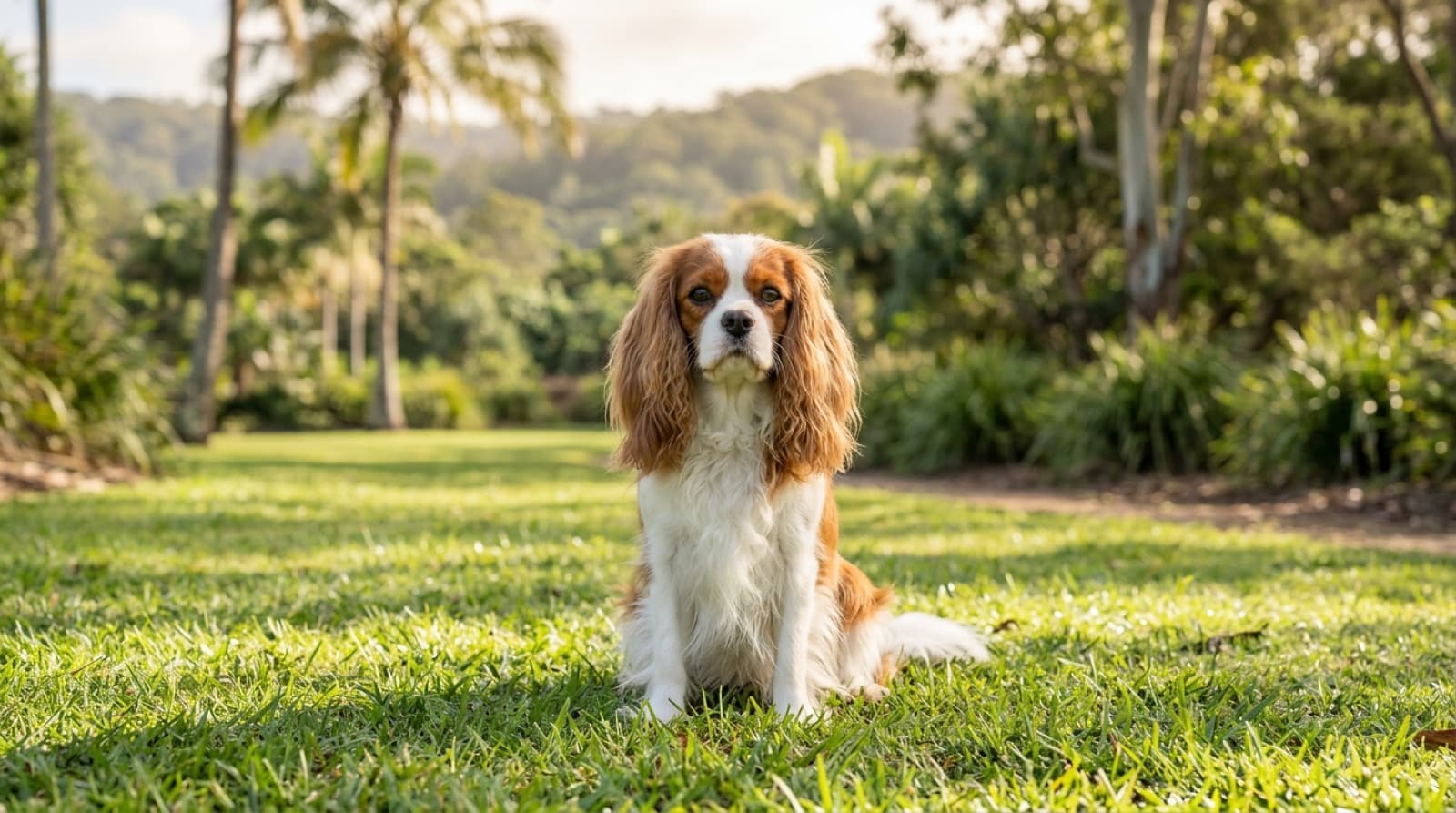
The short answer
You can adopt a Cavalier in Auckland, and it is one of the loveliest small dogs you can bring home: gentle, affectionate, great with kids and other pets, and happy in an apartment. Purebreds are uncommon in rescue, so set alerts across SPCA New Zealand (Auckland centres at Māngere and Hobsonville), Saving Hope Foundation and PAWS Restart, be application-ready, and stay open to a Cavalier cross or an older dog. An adult Cavalier costs $149 to adopt at the SPCA with desexing, microchipping and vaccination done, against several thousand dollars from a breeder. The honest part is the health commitment: Cavaliers are prone to serious inherited heart disease and a neurological condition, so adopting one means being prepared, and budgeting, for potential vet care. Keep the long ears dry through a wet Auckland winter, go in ready for the health side, and you have a devoted, wonderful companion.
Why Cavaliers end up in New Zealand rescue
Most breed guides open with where to adopt. With the Cavalier, it helps to understand first why they reach rescue, because that story is tied up with the breed's health and tells you what to be ready for.
Health issues and vet costs mount. Cavaliers are bought as gentle, easy family dogs, which they are. What some owners are not prepared for is that this is a breed with serious inherited health problems, heart disease in particular. When those conditions develop and the vet bills arrive, some households cannot carry the cost, and the dog is surrendered. It is a sad path, and it is the single most important reason to go into a Cavalier adoption with a clear plan for health care.
The velcro nature and separation stress. Cavaliers are famously people-oriented. They want to be with their family, on the couch, in the same room, part of everything, and they do not cope well left alone for long hours. A household that is out all day can leave a Cavalier anxious and unhappy, and that mismatch is another common route to surrender. This is a companion dog in the truest sense, not a dog to leave home alone.
Life changes and housing. Many Cavaliers reach rescue through no fault of their own: a relationship breakdown, a new baby, a move to a rental or a unit under a body corporate that will not take a dog, which is common in Auckland, or an owner who could no longer manage a pet. The dog is usually loving and well-socialised. Its world simply changed.
Crosses appear too. Because Cavaliers are so often crossed with other breeds, especially Poodles, you will see Cavalier crosses in rescue more often than purebreds. They carry the same sweet, companion-focused temperament in a slightly different package, and are just as adoptable.
What this means for you. A Cavalier in rescue is almost never a broken dog. It is usually a gentle, affectionate companion whose last home hit a wall, often a health or a life one. If you want a loving small dog and you can commit to the vet care the breed can need, and be home enough to keep it company, you are looking at a wonderful adoption. Being honest about the health commitment now is the kindest thing you can do.
Where to adopt a Cavalier or Cavalier cross in Auckland
Because Cavaliers are uncommon in general rescue, a wide alert net is the right approach. Set listing alerts on every rescue you would consider, and add small-breed and companion-dog foster networks.
- SPCA New Zealand. The country's oldest and largest animal welfare charity runs the Auckland Centre at Māngere (50 Westney Road, open daily, adoptions by appointment through its online application) alongside its other Auckland centre at Hobsonville. Small companion dogs including Cavalier types turn up from time to time, and every SPCA dog is desexed, microchipped and vaccinated before adoption, the fee is the same at every centre, and the Dog Control Act requires the SPCA to register the dog before it goes home with you, so a surrendered dog often arrives with a known history worth knowing for a breed where a heart check matters. Browse at spca.nz/adopt.
- Saving Hope Foundation. An Auckland no-kill dog rescue whose dogs live in foster homes across the city, with each listing naming the suburb. Because the dog lives in a foster home, the notes on its temperament, health and behaviour with children and other animals tend to be detailed and honest, which is exactly what you want when matching a companion dog to the right household. Listings at savinghope.co.nz.
- PAWS Restart. A smaller registered Auckland charity (CC61702) that rehomes dogs through foster care. Smaller rescues see fewer Cavaliers at any one time, but small companion crosses do come through, the matching is careful and the carer notes are detailed. Find them at pawsrestart.org.nz.
- Auckland Council animal shelters. Impounded dogs that are not claimed can be rehomed through the council, so it is worth checking the council's dogs and animals pages as well as the charities above.
Some adopters search for a dedicated New Zealand Cavalier rescue, but we cannot verify a currently active organisation by that name, so use the general rescues above, set alerts, and be wary of any group that asks for money before you have confirmed a real address, a current adoptable-dog list and a Charities Services registration.
What a Cavalier costs: adopt versus buy
Real first-year costs in Auckland:
| First-year cost | Rescue Cavalier | Breeder Cavalier |
|---|---|---|
| Adoption fee or purchase price | $149 adult or $399 puppy at the SPCA (plus a $2.50 service charge) | Several thousand dollars |
| Desexing | Included | $300 to $600 |
| Microchipping | Included | Paid separately |
| First-year vaccinations | Included | $200 to $400 |
| Initial vet check | Included | $100 to $200 |
| Council registration (reduced fee if desexed and microchipped) | Set by Auckland Council (cheaper for a desexed dog) | Set by Auckland Council (cheaper for a desexed dog) |
| Year 1 food | $600 to $1,000 | $600 to $1,000 |
| Parasite prevention (flea, worm, heartworm) | $350 to $600 | $350 to $600 |
| Grooming (silky coat, 4 to 6 visits) | $300 to $700 | $300 to $700 |
| Initial gear (bed, lead, bowls, harness) | $250 to $450 | $250 to $450 |
| Pet insurance (strongly recommended for this breed) | $600 to $1,000 or more | $600 to $1,000 or more |
| Year 1 total (excluding council fee) | The adoption fee plus the everyday costs above | Several thousand dollars more, with the vet work still to pay |
Here is the ethical point worth spelling out. With a breed prone to inherited heart and neurological disease, responsible breeders health-test the parents before they breed, and that testing is part of why a well-bred Cavalier costs what it does. A cheap, unhealth-tested puppy from a backyard breeder is a false economy: you may save at the counter and pay far more, in money and heartbreak, at the vet later. Where a Cavalier gets genuinely expensive is the ongoing health care, so budget for regular vet checks, year-round flea and worm prevention and pet insurance taken out while the dog is young. We cover the health side properly in the Cavalier breed guide.
Browse adoptable Cavaliers in Auckland
Cavaliers are uncommon in rescue, so crosses and older dogs appear more often than purebred puppies. Browse live New Zealand listings and set an alert so you hear the moment one comes in.
See Available Cavaliers →The gentle companion: what Cavaliers are like to live with
If you want a dog whose whole purpose is to be your companion, few breeds do it better. The Cavalier is a small, silky-coated toy spaniel, and it is one of the most gentle, affectionate and people-oriented breeds you can adopt. They are famously good with children, patient with other dogs and cats, and a lovely fit for seniors, which is a big part of why they are so widely loved.
They adapt beautifully to apartment and unit living, need only low-to-moderate exercise, a couple of gentle walks plus some play, and are quiet, easy neighbours. In Auckland the coat is easy: the fine, silky coat gives little insulation, which suits a mild climate, and a Cavalier feels the humid summer days more than the winter, so keep exercise to the cool hours and give the dog a cool indoor space. The ears are the Auckland-specific job, because the breed's long, feathered drop ears hold moisture, and a wet winter makes drying and checking them a weekly habit. The one non-negotiable is company. A Cavalier is a true velcro dog. It wants to be with you and does not cope well left alone for long hours, so it suits someone home a lot rather than a household out all day. For the full picture on temperament, grooming and daily care, see our Cavalier breed guide.
The honest health commitment
This is the part no responsible Cavalier guide should skip. The breed carries serious inherited health problems, and being ready for them is central to adopting one well. The main concern is mitral valve disease, a progressive heart condition that most Cavaliers develop as they age, and often earlier than in other breeds. Many will need heart monitoring and, over time, medication managed by a vet. The other well-known condition is syringomyelia, a painful neurological problem related to the shape of the skull and spinal cord.
None of this is a reason not to adopt a Cavalier. Countless Cavaliers live long, happy, deeply loved lives, and the affection they give back is exactly why people adore the breed. It does mean going in prepared: choose a good local vet early, take out pet insurance while the dog is young and healthy, budget for regular checks, and know what signs to watch for. Prevalence and management of these conditions is a veterinary topic, so lean on your vet rather than internet guesswork. We cover the conditions, the warning signs and how to plan financially in the Cavalier breed guide. Read it before you adopt.
Cavalier or Cavoodle? They are not the same dog
A lot of people use the two names loosely, so it is worth being clear. A Cavalier King Charles Spaniel is a purebred toy spaniel with a classic silky coat and the well-documented breed health profile in this guide. A Cavoodle is a cross between a Cavalier and a Poodle, bred for a lower-shedding coat, and it is one of the most popular crosses in New Zealand. Because Cavoodles dominate the for-sale market, plenty of people who type “Cavalier” are actually picturing a Cavoodle.
Both can make lovely companions, but the coat, the grooming and some of the health considerations differ, so decide which dog you actually want before you start applying. We keep a separate Cavoodle breed guide. In rescue you will occasionally see both the purebred Cavalier and the cross, though neither is common, which is another reason to set a wide alert net and stay a little flexible.
Auckland weather, wet ears and the kauri rule
Auckland changes the climate picture for a Cavalier, mostly in good ways. New Zealand has none of the dangerous ticks that shape dog ownership across the Tasman, so there is no year-round tick emergency to plan around. What Auckland has instead is a mild, humid, often wet climate, and for this breed that mostly comes down to the ears.
Humidity, rain and ears. Auckland summers are warm and sticky rather than extreme, but a Cavalier has a moderately short muzzle, so walk in the cooler hours, carry water, watch for heavy panting on a humid afternoon, and never leave the dog in a parked car. Winters are mild and wet, and that is where a Cavalier's long, heavily feathered drop ears matter: they trap moisture against the ear canal and are prone to infection at the best of times, so dry the ears after every rainy walk, check them weekly, and learn the smell of trouble early, because ear infections are the breed's most regular vet visit in a wet city. Fleas and intestinal worms stay active most of the year in a mild climate, so keep prevention continuous rather than seasonal, and ask your vet about heartworm risk for your area.
Where you can walk, and the kauri rule. Dogs in Auckland's council-controlled parks and beaches are on-leash by default, you must carry a lead, and off-leash access applies only where a place is listed for it, often with time-of-day or seasonal limits at beaches. The regional rules changed on 1 August 2025, so check the council's find where and when you can walk your dog page before you try a new beach. Large sections of the Waitākere Ranges are closed to stop the spread of kauri dieback, and some regional-park beaches prohibit dogs in part, so a west-coast bush walk with a Cavalier needs planning rather than assuming. If something goes wrong after hours, Animal Emergency at VSA runs two 24-hour hospitals, at Sylvia Park in Mt Wellington and in Henderson, which matters more than usual for a breed with a known heart condition, so know the route before you need it.
Registering a Cavalier in Auckland, and avoiding scams
The Cavalier is a small, gentle companion breed and is not on the restricted list, so it is legal to own and rehome normally. New Zealand's dog law is the Dog Control Act 1996. Every dog older than three months must be registered with the council for the current registration year, a dog registered for the first time must be microchipped within two months of that registration, and when a dog changes hands both the old owner and the new owner must tell the council in writing within 14 days. Auckland Council sets its own fees: a desexed dog is markedly cheaper than an entire one, a Responsible Dog Owner Licence cuts the fee again, and paying before 1 August avoids the late rate, so a rescue Cavalier, already desexed and microchipped, registers at the low end. Check the current figures on the Auckland Council registration page, and remember the SPCA must register a dog before it rehomes it, so an SPCA Cavalier arrives already on the books.
On scams, Cavaliers and Cavoodles are a high-demand breed and a magnet for fake listings, and New Zealand has no national breeder register, so there is no breeder registration number to check against a listing. That makes the old rules matter more: see the puppy with its mother at the seller's property, ask to see both parents and their heart and health testing, get the microchip number and vaccination record in writing, and never pay a deposit or a transport fee for a dog you have not met. A cheap or free Cavalier on Trade Me or Facebook with a story about being out of town is the classic setup. The only other practical hurdle is housing: plenty of Auckland homes are rented or sit under a body corporate, so confirm in writing that dogs are allowed before you apply. A calm, quiet Cavalier is one of the easier dogs to reassure a landlord about.
Adult or puppy, and how to choose
For almost every adopter an adult is the better choice, and Cavalier puppies are rare in rescue anyway. An adult has a known temperament the rescue can describe, an established size and energy you can see rather than gamble on, often some house training in place, and a lower adoption fee. With this breed, an adult also lets the rescue tell you about the dog's health so far and any conditions already picked up, which is genuinely useful information for a breed with inherited heart and neurological risks.
Do not overlook the older Cavaliers. A senior rescue Cavalier is very often a wonderful, affectionate companion who has simply waited a long time for a home, sometimes surrendered late in life when an owner could no longer cope, and the SPCA's senior fee makes it the cheapest adoption of all. These dogs are usually gentle, settled and deeply loving, and they ask for little more than a warm lap and your company. When you choose, read the foster carer's notes closely: how the dog is with children, cats, other dogs and being left alone, plus any known health history. That record predicts the fit far better than the breed average.
Frequently Asked Questions
Where can I adopt a Cavalier King Charles Spaniel in Auckland?
Start with SPCA New Zealand's Auckland centres at Māngere and Hobsonville, the foster-based rescues Saving Hope Foundation and PAWS Restart, and the Auckland Council animal shelters, which rehome unclaimed dogs. Be realistic about supply: purebred Cavaliers are fairly uncommon in rescue, so Cavalier crosses show up more often than full purebreds. Set listing alerts across every rescue you would consider, have your application and vet references ready, and stay open to a cross or an older dog. If you find a group calling itself a Cavalier rescue, verify it has a real address, a current adoptable-dog list and a Charities Services registration before you send any money.
Why do Cavaliers end up in rescue?
Usually because the health issues and vet costs mount, or because of a life change, not because of any fault in the dog. Cavaliers are gentle, affectionate family dogs, and many are bought for exactly that. What catches owners out is the breed's serious inherited health problems, especially heart disease, which can bring real vet bills and hard decisions, and some dogs are surrendered when those costs arrive. Others reach rescue through no fault of their own, after a relationship breakdown, a new baby, a move to housing that will not take a dog, or an owner who could no longer care for a pet who hates being left alone. Cavalier crosses turn up too. The temperament is almost always intact: a rescue Cavalier is typically a loving, people-oriented companion whose last home simply could not continue.
How much does it cost to adopt a Cavalier in Auckland versus buy one?
Adoption is far cheaper up front. At SPCA New Zealand the fee is the same at every centre: $149 for a dog aged five months to eight years, $399 for a puppy under five months and $75 for a senior of nine or more, plus a $2.50 service charge, with desexing, microchipping and vaccination already done. Foster-based rescues set their own fee and show it on each listing. A Cavalier puppy from a breeder costs several thousand dollars, with none of that vet work done yet. So adopting is many times cheaper at the outset and the dog arrives already vetted. The real cost of a Cavalier, though, is ongoing health care: this is a breed with well-known inherited heart and neurological conditions, so budget for regular vet checks, year-round flea and worm prevention, and pet insurance taken out while the dog is young and healthy. A cheap puppy from an unhealth-tested parent is a false economy that can cost far more later.
Are Cavaliers a restricted breed in New Zealand?
No. The Cavalier King Charles Spaniel is a small, gentle companion breed and is not on the restricted list in the Dog Control Act 1996. Schedule 4 of the Act names the Brazilian Fila, Dogo Argentino, Japanese Tosa, Perro de Presa Canario and the American Pit Bull Terrier type, which must be classified as menacing, and the Cavalier is not among them, so it is legal to own and rehome normally. It simply needs to be registered with Auckland Council once it is older than three months and microchipped within two months of its first registration. The only practical hurdles are housing and company: plenty of Auckland homes are rented or sit under a body corporate, so confirm dogs are allowed in writing before you apply, and be honest about whether you are home enough, because a Cavalier does not cope well left alone for long hours.
Do Cavaliers cope with the Auckland climate?
Well, with two things to watch. Cavaliers have a fine, silky coat and a moderately short muzzle, so the humid Auckland summer days still need respecting: walk in the cool of the early morning or evening, carry water, provide shade and a cool indoor space, and never leave a dog in a parked car. Winters are mild and wet, and that is where the breed's long, heavily feathered drop ears matter: a Cavalier's ears trap moisture and are prone to infection at the best of times, and Auckland's rainy walks make drying and checking them a weekly habit rather than an occasional one. There are no dangerous ticks in New Zealand, but fleas and worms stay active year-round in a mild climate, so keep prevention continuous.
What is the difference between a Cavalier and a Cavoodle?
A Cavalier King Charles Spaniel is a purebred toy spaniel, while a Cavoodle is a cross between a Cavalier and a Poodle. They are different dogs, and it is worth being clear which one you want. The Cavoodle is a designer cross bred for a lower-shedding coat and is one of the most popular crosses in New Zealand, so it dominates the for-sale listings and is often what people picture. A purebred Cavalier has the classic silky spaniel coat and the well-documented breed health profile covered here. Both can be wonderful, but the coat, the grooming and some of the health considerations differ, so decide which you actually want. In rescue, both the purebred and the cross appear, though neither is common.
How can I tell if a Cavalier advertised online is a scam?
Cavaliers and Cavoodles are high-demand, which makes them a target for fake listings and backyard breeders. New Zealand has no national breeder register, so there is no breeder registration number to check against a listing. Rely on the basics instead: see the puppy with its mother at the seller's property, get the microchip number and vaccination record in writing, and never pay a deposit or a transport fee for a dog you have not met. A cheap or free Cavalier on Trade Me or Facebook with a story about being out of town is the classic setup, and a seller who will not show you both parents and their health testing is a warning sign. With a breed prone to inherited heart and neurological disease, a breeder who does not health-test the parents is a genuine risk. Adopting through the SPCA or a verified Auckland rescue sidesteps it entirely.
Keep reading
Adoptable Cavaliers in Auckland
Live listings of Cavaliers and Cavalier crosses across New Zealand rescues.
Cavalier King Charles Spaniel Breed Guide
Mitral valve disease, syringomyelia, the warning signs, grooming the silky coat and the ears, and how to plan and budget.
The Best Dog Rescues in Auckland
SPCA New Zealand, Saving Hope Foundation and PAWS Restart compared: how each works and what the fee covers.
Auckland Adoption Resources
Guides on adopting, costs, council rules and settling a rescue dog in Auckland.