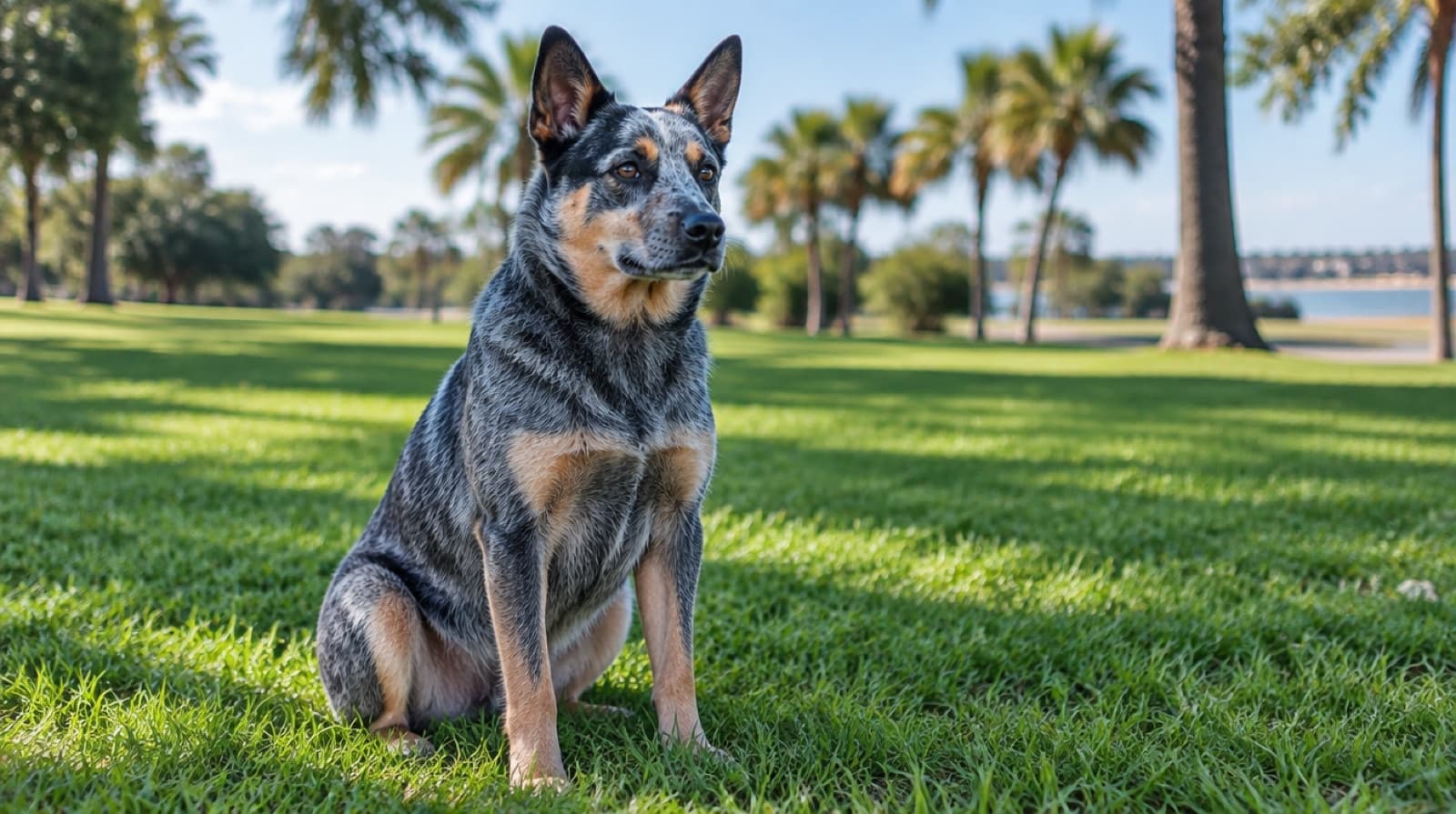
The short answer
Cattle Dogs appear in Auckland rescue regularly through SPCA New Zealand (Auckland centres at Māngere and Hobsonville), foster-based rescues such as Saving Hope Foundation and PAWS Restart, and the Auckland Council shelters, most often as cattle dog or heeler crosses. An adult costs $149 to adopt at the SPCA (plus a $2.50 service charge) with desexing, microchipping and vaccination done, against several thousand dollars for a breeder pup. Most rescue heelers are adolescents (1 to 3 years) surrendered for underestimated energy, and heeler crosses turn up far more often than purebreds. The right home is active and outdoor-focused with a serious commitment to daily exercise plus mental work plus a job. Apartments without a yard rarely work for young heelers. Working-line dogs need experienced active homes; show-line dogs and crosses are more flexible. Plan for cool-hour exercise on humid summer days, a dried coat after wet winter walks, and year-round flea and worm prevention in a mild climate that has no dangerous tick. Pet insurance is genuinely worth it.
Why so many Cattle Dogs are in New Zealand rescue
The Cattle Dog was developed across the Tasman in the 1800s to move cattle over vast properties in heat and difficult terrain, and it has long been a familiar sight on New Zealand farms and lifestyle blocks. The traits that make them brilliant stock dogs, the drive, intelligence, independence, nipping instinct and one-person bond, make them difficult pets in suburban homes that cannot meet the exercise, training and stimulation needs. New Zealand rescue intakes reflect that mismatch, and most surrenders say nothing bad about the dog.
Energy underestimation (the most common reason).
A Cattle Dog puppy looks like a manageable medium-sized dog. The same dog at 14 months is a 20 kilo working athlete needing 90 minutes or more of physical exercise daily plus mental work plus a job. Families who bought a heeler expecting the calm farm-dog image often surrender during the adolescent phase. The dog grows into a calmer adult by 3 to 4 years, but many families do not last that long.
Heeling-nip behaviour with children and other pets.
The heel-nipping instinct is hardwired, because the breed was bred to nip at cattle heels to drive movement. With training and good management it is workable; without, the dog nips at running children, other dogs, joggers, bikes and traffic. The instinct itself is not aggression, but the bite force of a 20 kilo working dog is significant. Families that did not expect the behaviour often surrender.
Rural-to-urban moves.
A meaningful share of New Zealand rescue heelers come from rural working homes that relocate to the city. A working stock dog adapts poorly to suburban life without a job, so the family rehomes or surrenders. These dogs are often working-line, highly trained on stock, and need experienced adopters who can give them a genuine outlet.
The destructive adolescent phase.
Heelers without adequate exercise plus mental work plus a job become destructive in adolescence, roughly 6 to 24 months. They chew, dig, escape, bark, fence-fight and herd everything that moves. The behaviour is not the dog being bad; it is energy without an outlet. The families that get through it end up with wonderful adult dogs.
Where to actually look in Auckland
- SPCA New Zealand. The country's oldest and largest animal welfare charity runs the Auckland Centre at Māngere (50 Westney Road, open daily, adoptions by appointment through its online application) alongside its other Auckland centre at Hobsonville, and cattle dog and heeler crosses come through regularly. Every SPCA dog is desexed, microchipped and vaccinated before adoption, the fee is the same at every centre, and the Dog Control Act requires the SPCA to register the dog before it goes home with you. Browse at spca.nz/adopt.
- Saving Hope Foundation. An Auckland no-kill dog rescue whose dogs live in foster homes across the city, with each listing naming the suburb. A foster carer who has lived with a heeler for weeks can tell you exactly how it is with children, other pets, stock, bikes and being left alone, which matters more for this breed than for almost any other. Listings at savinghope.co.nz.
- PAWS Restart. A smaller registered Auckland charity (CC61702) that rehomes dogs through foster care. The process is slower and more matched, which suits a working breed where the fit matters. Find them at pawsrestart.org.nz.
- Auckland Council animal shelters. Heelers are escape artists, so plenty come through the council shelters as strays, and impounded dogs that are not claimed can be rehomed through the council. Check the council's dogs and animals pages as well as the charities above.
Working-line vs show-line Cattle Dogs
The breed has diverged into two recognisable types over the past century, though less sharply than Border Collies, and the type shapes how much work the dog needs.
Working-line Cattle Dogs.
Bred for stock work on real properties. Selected for drive, biddability, stamina, hardiness in heat and the heeling instinct. Leaner build, slightly longer legs, often less colour-marked. Energy and drive are considerably higher than in show-line dogs. In a suburban pet home, working-line heelers need a very serious outlet (dog sports, agility, scent work, herding clinics) to thrive. Most rural-to-urban surrenders are working-line dogs going to homes that could not match their needs.
Show-line (conformation) Cattle Dogs.
Bred for the show ring and as active family pets. Stockier build, classic Blue or Red Heeler markings, somewhat calmer overall. Still high-energy dogs, but more forgiving for committed pet homes. More common in suburban rescue than working-line dogs.
A practical note: most rescue heelers in New Zealand are crosses, often Cattle Dog x Huntaway, Cattle Dog x Heading Dog, Cattle Dog x Border Collie or Cattle Dog x Staffy. The cross dilutes the breed traits somewhat, and the foster or shelter notes describe an individual dog's temperament and drive better than any breed-type label.
The honest cost comparison
Real first-year costs in Auckland:
| First-year cost | Rescue heeler | Breeder heeler |
|---|---|---|
| Adoption fee or purchase price | $149 adult or $399 puppy at the SPCA (plus a $2.50 service charge) | Several thousand dollars |
| Desexing | Included | $400 to $600 |
| Microchipping | Included | Paid separately |
| First-year vaccinations | Included | $150 to $250 |
| Initial vet check and BAER hearing test (for deafness) | Often included | $250 to $500 |
| Council registration (reduced fee if desexed and microchipped) | Set by Auckland Council (cheaper for a desexed dog) | Set by Auckland Council (cheaper for a desexed dog) |
| Year 1 food (medium breed) | A medium-breed food budget, the same either way | A medium-breed food budget, the same either way |
| Parasite prevention (flea, worm, heartworm) | $350 to $600 | $350 to $600 |
| Initial gear (bed, lead, crate, bowls, harness) | $300 to $500 | $300 to $500 |
| Reward-based training class | $200 to $400 | $200 to $400 |
| Pet insurance (recommended) | Priced by age and cover, the same either way | Priced by age and cover, the same either way |
| Year 1 total (excluding council fee) | The adoption fee plus the everyday costs above | Several thousand dollars more, with the vet work still to pay |
Rescue saves several thousand dollars in year one, and the ongoing costs are identical. Two lines deserve attention for a heeler in Auckland: the BAER hearing test, because congenital deafness runs in the breed and a rescue may not have tested, and pet insurance, which is genuinely worth it given the breed's deafness, hip dysplasia and inherited eye conditions. The health detail is in our Cattle Dog breed guide.
Browse Cattle Dogs available in Auckland rescue
Live listings from Auckland shelters and New Zealand rescues. Foster carer notes describe each dog's drive and household fit before you apply.
See Available Cattle Dogs →What to expect from a rescue Cattle Dog
A typical Auckland rescue heeler is:
- 1 to 5 years old. Adolescents (1 to 2) are the most common bracket from energy-underestimation surrenders.
- 16 to 22 kg adult weight. Females tend toward the lower end, males toward the upper.
- Mostly house-trained, sometimes needing a refresh for the new home routine.
- Lead-trained with variable manners. Many adolescent heelers pull or get reactive on lead; reward-based training fixes most of this within months.
- High drive that needs an outlet. The defining trait. Even calmer rescue heelers need more exercise plus mental work than most breeds.
- A one-person bond tendency. Many adopted heelers gravitate to the primary caregiver. Spreading the bond takes shared handling from several family members.
- Strong loyalty once settled. Heelers bond hard to their family; many become deeply devoted dogs that follow their person room to room.
- Sometimes wary of strangers. The breed is often reserved with new people. It is not aggression, but not the bouncy-friendly Labrador greeting either. Trust builds gradually.
The first month home is usually intense as the dog decompresses and tests boundaries. The 3-3-3 rule applies: three days to decompress, three weeks to start showing personality, three months to fully settle.
The first week home: a realistic plan
Day 1:
- Bring the dog home during daylight hours, and heeler-proof the space first: nothing chewable in reach, secure fencing checked (heelers are escape artists), gates latched
- Show them their bed, food and water area, with a cool tiled spot to lie on in summer and a dry, draught-free one in winter
- Keep it calm: skip introductions to extended family and other dogs for now
- A short, quiet walk in the cool of the late afternoon on a warm day
Days 2 to 3:
- Two walks daily, 30 to 45 minutes each, timed to avoid the midday heat in summer, always with water
- Begin reward-based training (name response, sit, recall on lead)
- Introduce mental work (a puzzle feeder during meals) and a measured meal routine
Days 4 to 7:
- Longer walks and some off-lead time in a fully fenced dog off-leash area, in the cool hours
- First vet visit for a baseline weight and joint assessment, a BAER hearing test if the rescue has not already done it, and a year-round flea and worm prevention plan
- Begin building short alone-time periods, and share handling across the family to broaden the bond from day one
Cattle Dogs and Auckland living
- House and yard. A heeler strongly benefits from a yard, even a modest one, plus an indoor space to recover in after a hard run. Apartments without a yard or easy outdoor access almost never work for young heelers, and plenty of Auckland homes are rented or sit under a body corporate, so check the pet rules before you apply.
- Fencing and containment. Cattle Dogs are escape artists. A secure 1.5 metre fence with latched gates is the minimum; many heelers jump or climb lower fences. Check the perimeter weekly for new gaps.
- Off-leash areas. Auckland Council lists every off-leash park and beach section, with the times that apply, on its find where and when you can walk your dog page, and a fully fenced park is the safe place to let a heeler run once it has reliable recall. The default everywhere else is on-leash with a lead in hand, and the rules changed in August 2025, so check before you go.
- Dog sports and water. Agility, flyball, scent work, herding clinics and obedience all suit heelers, and a keen swim is an excellent low-impact outlet on a humid Auckland summer day. A serious job plus the right exercise is what keeps this breed settled at home.
- Weather and the double coat. Heelers were bred for hard, hot country, so the mild Auckland climate suits them well, but humidity still limits a hard-working dog, so exercise in the cool hours on sticky days, carry water and provide shade. The short double coat insulates against both heat and cold and sheds the rain, so do not shave it, and towel the dog off after a wet winter walk.
Auckland weather, a wet coat and the kauri rule
Auckland is where this guide parts company with one written for the breed's home country, mostly in good ways. New Zealand has no dangerous tick, so the year-round tick emergency that shapes a working dog's life in hotter places simply does not apply here. What Auckland has instead is a mild, humid, often wet climate, and for a dog that lives outdoors as much as a heeler does, that changes the routine in smaller ways.
Humidity, rain and the coat. A heeler manages warmth better than a heavy-coated or flat-faced breed, but it is a driven dog that will push itself, so on a warm, sticky Auckland afternoon walk and work in the cool hours, always carry water, and watch for heat stress. Winters are mild and wet, and the double coat copes with that far better than it copes with a hot climate, but a dog that spends an hour in the rain every day needs towelling off and a dry bed, or the skin under that coat stays damp. Fleas and intestinal worms stay active most of the year in a mild climate, so keep prevention continuous rather than seasonal, and ask your vet about heartworm risk for your area.
Where you can walk, and the kauri rule. Dogs in Auckland's council-controlled parks and beaches are on-leash by default, you must carry a lead, and off-leash access applies only where a place is listed for it, often with time-of-day or seasonal limits at beaches. The regional rules changed on 1 August 2025, so check the council's find where and when you can walk your dog page before you try a new beach. Large sections of the Waitākere Ranges are closed to stop the spread of kauri dieback, and some regional-park beaches prohibit dogs in part, so the long west-coast bush run a heeler would love needs planning rather than assuming. If something goes wrong after hours, Animal Emergency at VSA runs two 24-hour hospitals, at Sylvia Park in Mt Wellington and in Henderson, so know the route before you need it.
Registering your heeler in Auckland, and avoiding scams
New Zealand's dog law is the Dog Control Act 1996. Every dog older than three months must be registered with the council for the current registration year, a dog registered for the first time must be microchipped within two months of that registration, and when a dog changes hands both the old owner and the new owner must tell the council in writing within 14 days. Auckland Council sets its own fees: a desexed dog is markedly cheaper than an entire one, a Responsible Dog Owner Licence cuts the fee again, and paying before 1 August avoids the late rate, so a rescue heeler, already desexed and microchipped, registers at the low end. Check the current figures on the Auckland Council registration page, and remember the SPCA must register a dog before it rehomes it, so an SPCA heeler arrives already on the books. Cattle Dogs are not on the Schedule 4 list of the Act, so there are no breed-based conditions on owning one.
On scams, New Zealand has no national breeder register, so there is no breeder registration number to check. That makes the old rules matter more: see the puppy with its mother at the seller's property, get the microchip number and vaccination record in writing, and never pay a deposit or a transport fee for a dog you have not met. A cheap or free heeler on Trade Me or Facebook with a story about being out of town is the classic setup. Adopting through the SPCA or a verified Auckland rescue avoids the problem entirely.
Frequently Asked Questions
Can you actually find a Cattle Dog in Auckland rescue?
Yes, regularly, though more often as a cross than a pedigree. Blue Heelers, Red Heelers and heeler crosses are among the more common working-breed dogs in New Zealand rescue at any given time, because the breed is popular on farms and lifestyle blocks and often underestimated in town, and listings tend to describe them simply as cattle dog or heeler crosses. They come through SPCA New Zealand's Auckland centres at Māngere and Hobsonville, foster-based rescues such as Saving Hope Foundation and PAWS Restart, and Auckland Council's animal shelters. Most are adolescents and young adults, roughly 1 to 3 years, surrendered because the household underestimated the breed's working drive. A settled adult heeler is often the easier dog than a high-drive youngster.
What is the difference between a Blue Heeler and a Red Heeler?
They are the same breed, the Australian Cattle Dog, with different coat colours. The blue coat is grey-blue with darker speckling; the red coat is rust-red with darker speckling. Personality, energy, drive, health and care needs are identical. Some lines lean toward one colour, but the coat is just a coat. The terms Blue Heeler, Red Heeler, heeler, cattle dog and ACD are all used interchangeably in New Zealand rescue listings.
How much does it cost to adopt a Cattle Dog in Auckland?
At SPCA New Zealand the fee is the same at every centre: $149 for a dog aged five months to eight years, $399 for a puppy under five months and $75 for a senior of nine or more, plus a $2.50 service charge, with desexing, microchipping and vaccination already done. Foster-based rescues set their own fee and show it on each listing. A breeder Cattle Dog puppy in New Zealand typically costs several thousand dollars before any of that vet work. On top of the adoption fee you pay Auckland Council registration, which is cheaper for a desexed dog and cheaper again with a Responsible Dog Owner Licence, so a rescue heeler registers at the low rate. The adopted dog also usually arrives with an assessed temperament and often some basic training already in place.
Are Cattle Dogs good with children?
They can be wonderful with respectful older children, but the herding instinct creates issues with young kids. Cattle Dogs heel, meaning they nip at moving heels to drive stock, and a toddler running across the room can be a target for that hardwired instinct. It is not aggression, but the bite pressure of a 20 kilo working dog is significant. With training, supervision and older children who understand how to handle a dog, heelers are loyal family members. With unsupervised toddlers, bikes and running games, the heeling nip can become a real problem fast. The foster or shelter notes on each dog describe how it has gone with children.
Are Cattle Dogs good apartment dogs in Auckland?
Almost never for young heelers. The breed needs 90 minutes or more of physical exercise a day plus mental work plus a job, and a confined apartment without a yard or easy outdoor access produces the destructive behaviour that ends most apartment-heeler adoptions. Older, settled Cattle Dogs from about 6 years in homes with a serious daily exercise commitment can sometimes make it work. Plenty of Auckland homes are rented or sit under a body corporate, so check the pet rules before you apply as well. The typical young heeler in an apartment is a setup for surrender.
How can I tell if a Cattle Dog advertised online is a scam?
New Zealand has no national breeder register, so there is no breeder registration number to check. Rely on the basics instead: see the puppy with its mother at the seller's property, get the microchip number and vaccination record in writing, and never pay a deposit or a transport fee for a dog you have not met. A cheap or free heeler on Trade Me or Facebook with a story about being out of town is the classic setup. Adopting through the SPCA or a verified Auckland rescue avoids the problem entirely.
Keep reading
Adoptable Cattle Dogs in Auckland
Live listings with foster carer notes on drive and family fit.
Australian Cattle Dog Breed Guide
Deafness and BAER testing, hip dysplasia, PRA, why a heeler needs a job, and what the breed needs day to day.
The Best Dog Rescues in Auckland
SPCA New Zealand, Saving Hope Foundation and PAWS Restart compared: how each works and what the fee covers.
Auckland Adoption Resources
Guides on adopting, costs, council rules and settling a rescue dog in Auckland.