The short answer
A Domestic Shorthair is any short-coated cat of mixed ancestry, and it is the easiest cat to adopt in Auckland because most rescue cats here are DSHs. SPCA New Zealand charges $149 for an adult cat and $299 for a kitten, with desexing, microchipping and vaccinations done. Choose on the foster notes rather than the coat, and plan for a safe, mostly indoor life.
What a Domestic Shorthair actually is
A Domestic Shorthair is any short-coated cat of mixed or unknown ancestry. It is not a breed with a written standard, the way a Ragdoll or a Burmese is. It is a type of cat: the ordinary pet most New Zealanders simply call a moggy.
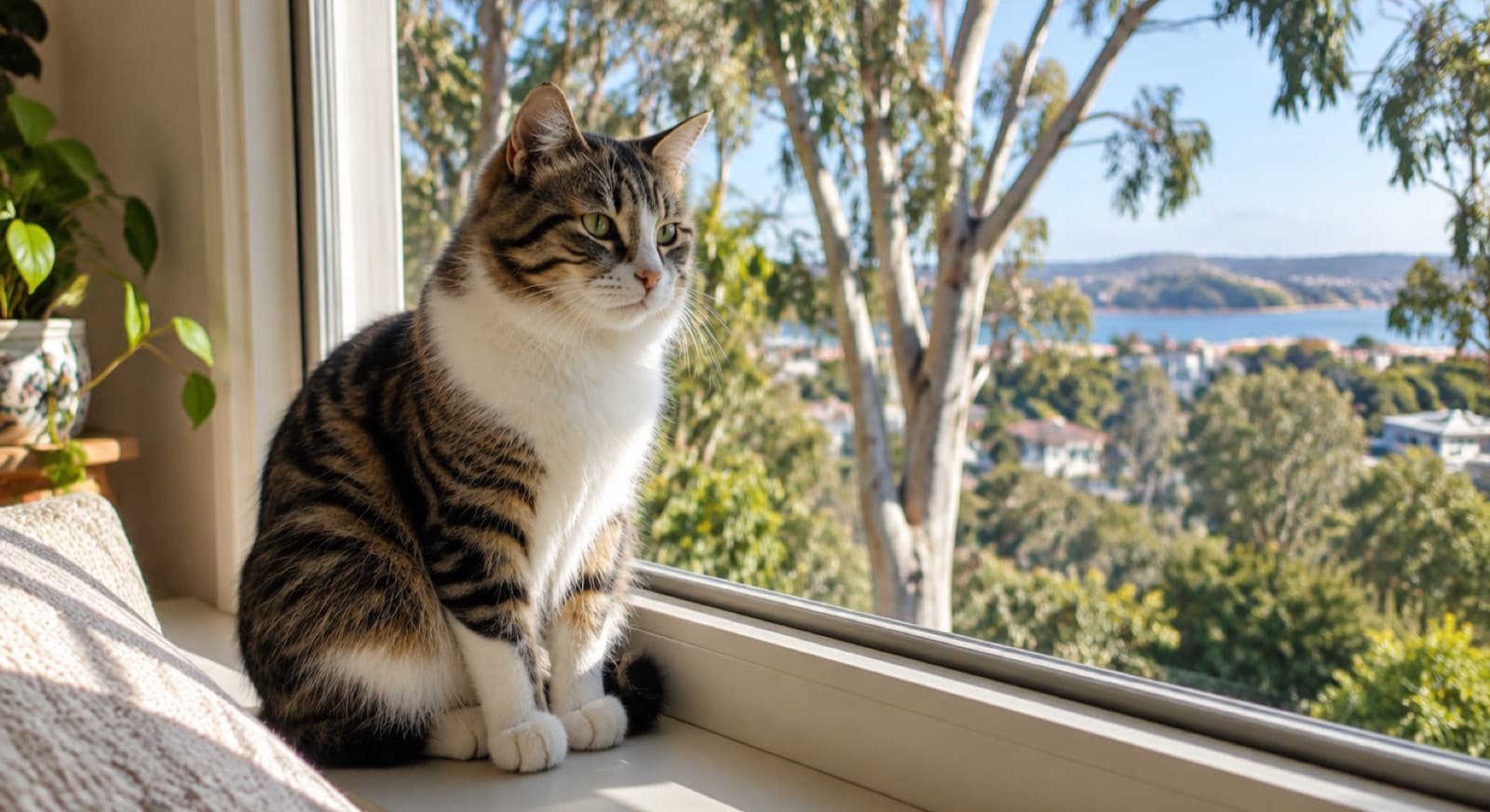
Because a DSH has a mixed family tree, it can be any colour or pattern. Brown and grey tabbies, black, tuxedo, ginger, tortoiseshell and calico are all common, and two kittens from one litter can look completely different. A long-haired mixed cat is technically a Domestic Longhair, though people call it a moggy too.
This is where our data comes in. Across the Auckland rescues we aggregate, Domestic Shorthairs make up most of the cats listed, far ahead of every named breed combined. When you browse cats for adoption in Auckland, most of what you see will be moggies, so there is real choice and no waiting list.
Why a Domestic Shorthair suits most homes
The mixed background that makes a DSH hard to label is also its biggest strength. Broad genetic diversity tends to make moggies hardy, with fewer of the inherited problems seen in some closely bred pedigree lines. With good care, many live well into their teens.
You also get to choose on personality. With no fixed breed temperament, a foster carer can point you to a bold lap cat, a quiet gentle one or a playful youngster. A moggy is also the most affordable cat to bring home, because no breeder premium is built into the fee.
Where to adopt a Domestic Shorthair in Auckland
These are the main groups rehoming cats around Auckland:
SPCA New Zealand (Māngere and Hobsonville)
New Zealand's largest animal welfare charity runs Auckland centres at Māngere and Hobsonville. The Māngere centre at 50 Westney Road is open 10am to 4pm every day. Adoptions are by appointment, and you apply through the Adopets platform after you register to adopt on spca.nz.
The Lonely Miaow Association
A registered charity based at Red Beach on the Hibiscus Coast that rescues and rehomes stray cats across Greater Auckland. Its cats are raised in foster homes, so a carer can tell you how each one behaves day to day. See lonelymiaow.co.nz.
Paw Kitties
A charitable trust that cares for, desexes and rehomes stray cats, mainly around Mt Wellington, Glen Innes and Point England. Its charity registration is on the Charities Register.
For a side-by-side comparison of how each group works, read our guide to the best cat rescues in Auckland.
What adoption costs in Auckland
SPCA New Zealand charges the same adoption fees at every centre, including its Auckland centres. Every fee includes desexing, microchipping and vaccinations, so the cat comes home with that vet work already done.
- Kitten under 5 months: $299
- Cat from 5 months to 9 years: $149
- Senior cat, 10 years and over: $75
Each fee also covers a $15 one-off lifetime registration on the New Zealand Companion Animal Register, and a $2.50 service charge is added at checkout. The SPCA takes 30% off for long-stay animals that have been adoptable for more than 42 days, and 15% off when you adopt more than one animal. The two discounts cannot be combined. Details are on the SPCA adoption fees page.
Lonely Miaow and Paw Kitties do not publish a flat fee, so ask when you enquire. Expect the fee to cover desexing and the vet work the rescue has already paid for.
Choosing your Domestic Shorthair
Choose on temperament, not coat colour. Read the foster notes for how the cat behaves with children, dogs and other cats, and ask the carer about its energy level. A good rescue would rather match you well than adopt a cat out fast.
An adult is often the easier first cat. Its personality is already formed, so you know whether it is a lap cat and how it copes with a busy house. Seniors wait longest for homes, and the SPCA charges just $75 for a cat aged 10 years and over.
Kittens are playful and adaptable, but they need time, supervision and kitten-proofing. If you work long hours, two kittens together, or one kitten with a calm adult cat, usually settle better than a single kitten alone.
New Zealand cat rules for a new owner
No national law in New Zealand requires a cat to be microchipped. A Cat Management Bill covering microchipping and registration was introduced in December 2024, and at our last check in October 2026 it was still going through Parliament. The SPCA tracks it on its national cat legislation page.
Some councils have their own cat bylaws on desexing or microchipping. Auckland is not among the councils that the SPCA and the New Zealand Companion Animal Register list as having one, so the national position applies.
Registration on the New Zealand Companion Animal Register is voluntary, but it is how a lost microchipped cat finds its way home. An SPCA adoption already includes it. For a transfer, the current guardian starts the rehoming in the register and you accept from the emailed link within a few days. Many rescues complete the transfer for you.
Keeping a moggy safe and healthy in Auckland
Most rescues encourage an indoor life, or outdoor time that is contained with a catio or a cat-proofed yard. Inside, a cat is safe from traffic and fights, and native birds are safe from the cat. An indoor moggy thrives with climbing space, scratching posts, a window perch and daily play.
Auckland has one advantage over much of Australia: there is no paralysis tick in New Zealand. The mild, humid climate does keep fleas and worms active all year, so ask your vet for a cat-safe prevention plan. In an emergency, Animal Emergency at VSA runs two Auckland hospitals open 24 hours, at Sylvia Park in Mt Wellington and Auckland West in Henderson. Call ahead on the way; details are at animalemergency.co.nz.
Settling a rescue cat into an Auckland home
Start small. The RSPCA Knowledgebase suggests keeping a new cat in one quiet room for a couple of days, with its litter tray, water, food and a hiding spot, then opening up the house gradually. Let the cat come to you rather than chasing it for cuddles.
Expect settling to take time. International Cat Care says a cat can take from several days to a week or two to settle, and advises waiting two to three weeks before letting an adult cat outside, if it is to go out at all. Any sudden change in behaviour is a reason to see a vet.
- Before pickup: a litter tray, food and water bowls, a scratching post, a carrier and a hiding box.
- First days: one quiet room, the same food the rescue used, and short, calm visits.
- First weeks: open up the house a room at a time, and book a check with your own vet.
Buying instead? A Trade Me caution
Plenty of people start by searching for a kitten for sale on Trade Me. Slow down before you pay. Meet the kitten in person, ideally with its mother, and never send a deposit for a kitten you have not seen. A seller who refuses a visit or a video call is a red flag.
A rescue cat removes that risk. It is a real cat you can meet, and it comes home desexed, vaccinated and microchipped.
Frequently Asked Questions
What is a Domestic Shorthair cat?
A Domestic Shorthair, or DSH, is any short-coated cat of mixed or unknown ancestry: the everyday moggy. It can be any colour or pattern, from tabby and tuxedo to ginger, black and tortoiseshell. Across the Auckland rescues we aggregate, Domestic Shorthairs are the cats listed most often by a wide margin.
Is a Domestic Shorthair a breed?
No. A Domestic Shorthair is a type of cat, not a recognised breed. A breed such as a Burmese is bred to a written standard, while a DSH simply has a mixed family tree. That broad genetic mix tends to make moggies hardy compared with some closely bred pedigree lines.
How much does it cost to adopt a Domestic Shorthair in Auckland?
At SPCA New Zealand, adoption costs $149 for a cat aged 5 months to 9 years, $299 for a kitten under 5 months and $75 for a senior of 10 years or over. Each fee includes desexing, microchipping, vaccinations and lifetime registration on the NZ Companion Animal Register, plus a $2.50 service charge. Other Auckland rescues set their own fees, so ask when you enquire.
Where can I adopt a Domestic Shorthair in Auckland?
Almost any Auckland cat rescue, because most rescue cats are Domestic Shorthairs. SPCA New Zealand has Auckland centres at Māngere and Hobsonville, and the Lonely Miaow Association and Paw Kitties are charities that rehome stray cats. Browse current listings, read the foster notes, and apply for the cats whose temperament suits your home.
Do cats need to be microchipped in Auckland?
Not by law at the moment. New Zealand has no national cat microchipping law, and Auckland is not among the councils listed as having a cat bylaw. A Cat Management Bill covering microchipping and registration is going through Parliament. Rescue cats come microchipped anyway, and SPCA fees include lifetime registration on the NZ Companion Animal Register.
Should I adopt a kitten or an adult moggy?
An adult is often the easier choice. Its temperament is already formed, so a foster carer can tell you whether it is a lap cat and how it copes with children or other pets. Kittens are fun but need time and supervision. Seniors wait longest for homes, and the SPCA charges $75 for a cat aged 10 or over.
Is there a discount on SPCA adoption fees?
Yes, in two cases. The SPCA takes 30% off for long-stay animals that have been adoptable for more than 42 days, and 15% off when you adopt more than one animal. The two discounts cannot be combined. Long-stay cats are often adults and seniors, which makes them some of the best-value moggies in Auckland.
How long does a rescue cat take to settle in?
Usually from several days to a week or two, according to International Cat Care, though shy cats can take longer. Start the cat in one quiet room with everything it needs, then open up the house gradually. If the cat will ever go outside, wait at least two to three weeks first.
Should a Domestic Shorthair live indoors in Auckland?
An indoor or contained life is the safer choice. It keeps a cat away from traffic and fights, and it protects native birds. A catio or a cat-proofed yard gives outdoor time safely. With climbing space, scratching posts, a window perch and daily play, an indoor moggy is a contented cat.
Keep reading
Domestic Shorthair cats in Auckland
Every moggy currently listed by Auckland rescues.
The Best Cat Rescues in Auckland
How the SPCA, Lonely Miaow and Paw Kitties work, and which to contact first.
Kittens for adoption in Auckland
Every kitten currently listed by Auckland rescues.
All Auckland cat guides
Guides to adopting a rescue cat in Auckland.