The short answer
Purebred Burmese are rare in Auckland rescue, because the breed is a deliberate purchase. Watch the SPCA centres at Māngere and Hobsonville, Lonely Miaow and Paw Kitties, set an alert, and stay open to a Burmese cross or a sociable moggy. SPCA adoption costs $149 for an adult cat and $299 for a kitten. Most of all, a Burmese needs company and copes badly with long days alone.
What a Burmese cat is
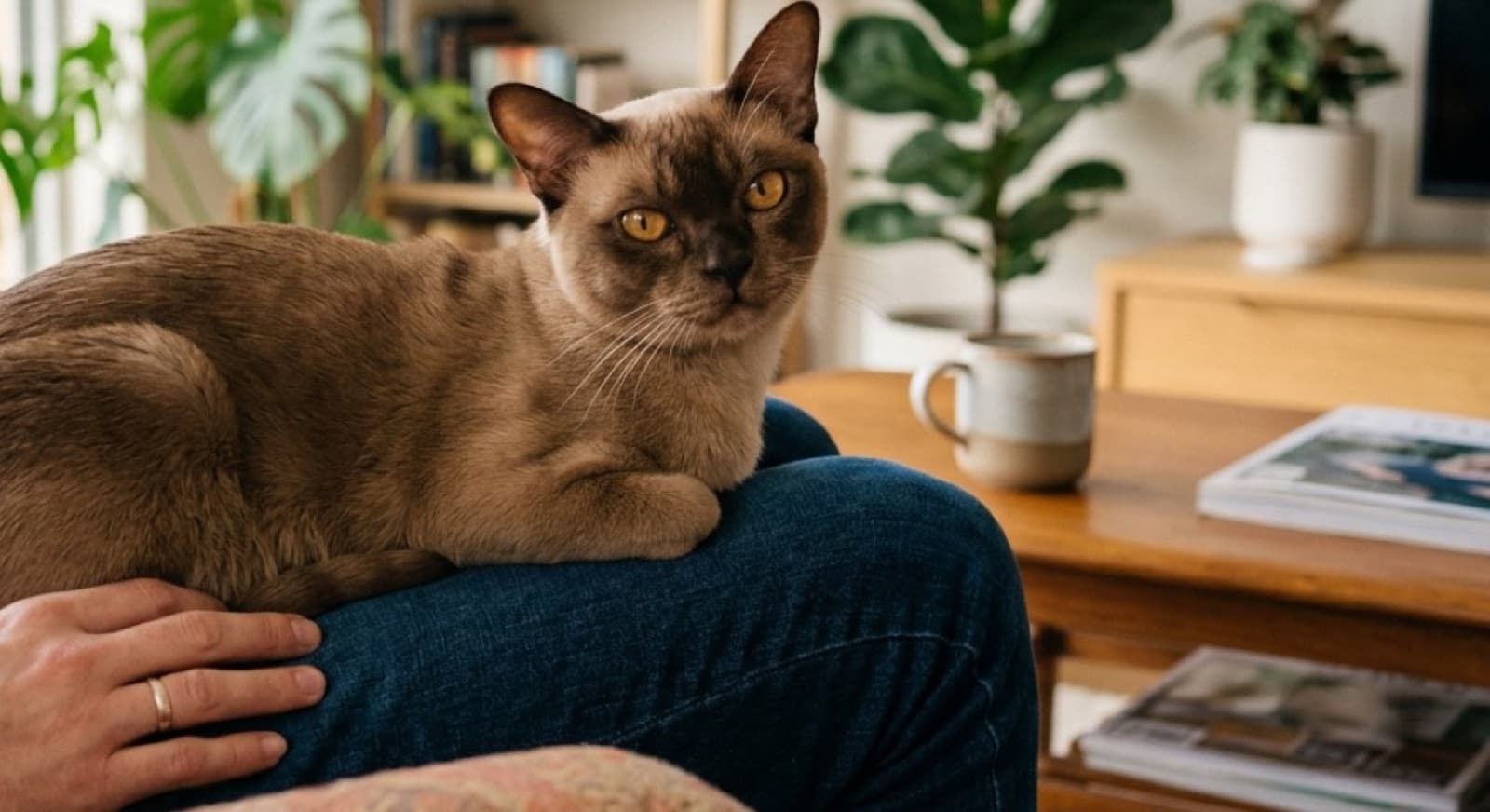
The Burmese is a compact, muscular cat with a glossy, satin-like short coat, large expressive eyes and a rounded head. The original colour is a rich sable brown, and the breed now also comes in blue, chocolate, lilac, red and cream. It feels surprisingly heavy for its size, and the coat needs little more than an occasional brush.
Temperament is the real draw. Burmese are intensely affectionate and people-oriented, and they are often called dog-like because they follow their people around. They stay playful into adulthood and keep up a running conversation. The flip side matters most: a Burmese wants company and does not cope well alone all day.
Why purebred Burmese are rare in Auckland rescue
Across the Auckland rescues we aggregate, almost every cat listed is a Domestic Shorthair or Longhair, and a purebred Burmese is a rare find. Owners usually buy the breed deliberately, so few ever enter the rescue system.
When a Burmese or Burmese cross does arrive, the story is usually a life change rather than the cat. A move to a rental that will not take pets, a new baby, illness or a relationship ending are common reasons. Some owners also underestimate how much company the breed needs.
A cross is the realistic target. A Burmese cross often carries the sleek coat and the sociable, chatty nature, and it turns up more often than a purebred. If you want the personality rather than the papers, widen your search to friendly domestic cats too.
Where to adopt a Burmese or Burmese cross in Auckland
These are the main groups rehoming cats around Auckland:
SPCA New Zealand (Māngere and Hobsonville)
New Zealand's largest animal welfare charity runs Auckland centres at Māngere and Hobsonville. The Māngere centre at 50 Westney Road is open 10am to 4pm every day. Adoptions are by appointment, and you apply through the Adopets platform after you register to adopt on spca.nz.
The Lonely Miaow Association
A registered charity based at Red Beach on the Hibiscus Coast that rescues and rehomes stray cats across Greater Auckland. Its cats are raised in foster homes, so a carer can tell you how each one behaves day to day. See lonelymiaow.co.nz.
Paw Kitties
A charitable trust that cares for, desexes and rehomes stray cats, mainly around Mt Wellington, Glen Innes and Point England. Its charity registration is on the Charities Register.
For a side-by-side comparison of how each group works, read our guide to the best cat rescues in Auckland.
What adoption costs in Auckland
SPCA New Zealand charges the same adoption fees at every centre, including its Auckland centres. Every fee includes desexing, microchipping and vaccinations, so the cat comes home with that vet work already done.
- Kitten under 5 months: $299
- Cat from 5 months to 9 years: $149
- Senior cat, 10 years and over: $75
Each fee also covers a $15 one-off lifetime registration on the New Zealand Companion Animal Register, and a $2.50 service charge is added at checkout. The SPCA takes 30% off for long-stay animals that have been adoptable for more than 42 days, and 15% off when you adopt more than one animal. The two discounts cannot be combined. Details are on the SPCA adoption fees page.
Lonely Miaow and Paw Kitties do not publish a flat fee, so ask when you enquire. Expect the fee to cover desexing and the vet work the rescue has already paid for.
Living with a Burmese, and the health picture
The one thing to get right is company. A Burmese bonds hard to its people and wants to be part of daily life. It suits a home where someone is around much of the day, or where a second cat keeps it company. Ask the foster carer how the cat copes alone before you commit.
On health, the breed is linked to a few hereditary conditions, including a muscle-weakness condition and a predisposition to diabetes, and it can be prone to dental and gum problems. A rescue cat arrives vet-checked, so ask what the in-care assessment found. Keep the cat at a healthy weight, stay on top of dental care, and talk to your own vet about the individual cat.
Auckland has one advantage over much of Australia: there is no paralysis tick in New Zealand. The mild, humid climate does keep fleas and worms active all year, so ask your vet for a cat-safe prevention plan. In an emergency, Animal Emergency at VSA runs two Auckland hospitals open 24 hours, at Sylvia Park in Mt Wellington and Auckland West in Henderson. Call ahead on the way; details are at animalemergency.co.nz.
New Zealand cat rules for a new owner
No national law in New Zealand requires a cat to be microchipped. A Cat Management Bill covering microchipping and registration was introduced in December 2024, and at our last check in October 2026 it was still going through Parliament. The SPCA tracks it on its national cat legislation page.
Some councils have their own cat bylaws on desexing or microchipping. Auckland is not among the councils that the SPCA and the New Zealand Companion Animal Register list as having one, so the national position applies.
Registration on the New Zealand Companion Animal Register is voluntary, but it is how a lost microchipped cat finds its way home. An SPCA adoption already includes it. For a transfer, the current guardian starts the rehoming in the register and you accept from the emailed link within a few days. Many rescues complete the transfer for you.
Buying instead? A Trade Me caution
Plenty of people start by searching for a kitten for sale on Trade Me. Slow down before you pay. Meet the kitten in person, ideally with its mother, and never send a deposit for a kitten you have not seen. A seller who refuses a visit or a video call is a red flag.
A rescue cat removes that risk. It is a real cat you can meet, and it comes home desexed, vaccinated and microchipped.
Burmese or Burmese cross?
A purebred Burmese and a cross are different propositions. The purebred brings the full breed package: the satin coat, the heavy compact build and the intense need for company, along with the hereditary health risks linked to the breed. A cross is less predictable in looks but often carries the same warm, chatty nature.
For most adopters a cross is the better bet. It turns up more often, you can meet it and see its real personality, and a mixed background tends to make a cat hardy. If a papered Burmese matters to you, go to a breeder you can visit in person.
Settling a rescue cat into an Auckland home
Start small. The RSPCA Knowledgebase suggests keeping a new cat in one quiet room for a couple of days, with its litter tray, water, food and a hiding spot, then opening up the house gradually. Let the cat come to you rather than chasing it for cuddles.
Expect settling to take time. International Cat Care says a cat can take from several days to a week or two to settle, and advises waiting two to three weeks before letting an adult cat outside, if it is to go out at all. Any sudden change in behaviour is a reason to see a vet.
- Before pickup: a litter tray, food and water bowls, a scratching post, a carrier and a hiding box.
- First days: one quiet room, the same food the rescue used, and short, calm visits.
- First weeks: open up the house a room at a time, and book a check with your own vet.
Choosing the right Burmese-type cat
For a first Burmese, an adult is usually the safer bet. You can see the real temperament, hear how vocal the cat is, and learn how it copes when the house is empty. When you meet a cat, ask about its sociability, how it handles being alone, and any notes from the vet check.
Frequently Asked Questions
Can I adopt a Burmese cat in Auckland?
Yes, but expect to wait for a purebred. Across the Auckland rescues we aggregate, almost every cat listed is a Domestic Shorthair or Longhair, so a purebred Burmese is rare. Burmese crosses appear more often. Watch the SPCA centres at Māngere and Hobsonville, Lonely Miaow and Paw Kitties, and set an alert so you hear about a new listing quickly.
How much does it cost to adopt a Burmese in Auckland?
A rescue Burmese costs the same as any rescue cat. At SPCA New Zealand that is $149 for a cat aged 5 months to 9 years, $299 for a kitten and $75 for a senior, plus a $2.50 service charge. The fee includes desexing, microchipping, vaccinations and lifetime registration on the NZ Companion Animal Register. A breeder kitten costs far more, and you pay its vet work on top.
Is there a Burmese rescue in Auckland?
We cannot verify a Burmese-only rescue serving Auckland. The realistic route is the general cat rescues: SPCA New Zealand, the Lonely Miaow Association and Paw Kitties. Never send a deposit to a group you have not confirmed yourself, and check a charity on the Charities Register before paying anything.
Are Burmese cats good for working households?
Only with care. A Burmese is intensely people-focused and can become bored or anxious if left alone all day. It suits a home where someone is around much of the time, or one with a second friendly cat for company. Ask the foster carer how the cat copes alone before you adopt.
What health problems do Burmese cats have?
The breed is linked to a few hereditary conditions, including a muscle-weakness condition and a predisposition to diabetes, and it can be prone to dental and gum problems. A rescue cat arrives vet-checked, so ask what the assessment found. Keep the cat lean, look after its teeth, and talk to your own vet about the individual cat.
Should a Burmese have a second cat for company?
Often, yes. A Burmese that is alone for much of the day usually does better with a friendly companion cat. Some rescues adopt pairs that already get along, and the SPCA takes 15% off when you adopt more than one animal. Ask the foster carer how the cat gets on with other cats before you decide.
Are Burmese cats noisy?
They are talkative rather than loud. A Burmese tends to keep up a running conversation with its people, especially when it wants attention or food. A foster carer can tell you how vocal a particular cat is, which matters if you live in an apartment or a shared house.
Should I buy a Burmese kitten on Trade Me?
Be careful. Meet the kitten in person, ideally with its mother, and never send a deposit for a kitten you have not seen. A seller who refuses a visit or a video call is a red flag. A rescue cat removes that risk, because it is real and arrives desexed, vaccinated and microchipped.
Keep reading
Burmese cats in Auckland
Any Burmese or Burmese cross currently listed by Auckland rescues.
The Best Cat Rescues in Auckland
How the SPCA, Lonely Miaow and Paw Kitties work, and which to contact first.
Kittens for adoption in Auckland
Every kitten currently listed by Auckland rescues.
All Auckland cat guides
Guides to adopting a rescue cat in Auckland.