Shelter or rescue? List your pets free →

Doberman Rescue Dogs & Puppies for Adoption in Wollongong

There are no Dobermans listed in Wollongong at the moment. Dobermans come up periodically, so it is worth setting an alert, and Doberman crosses are worth considering too.

4 Dobermans available elsewhere in Australia

None are listed in Wollongong today, but many rescues will adopt to homes across the country if you can travel to meet them.

No Dobermans in Wollongong right now

Rescue availability changes constantly. Set an alert below and we will email you the moment one is listed, or browse every adoptable dog in Wollongong.

Get notified when a Doberman is listed in Wollongong

We will email you the moment a Doberman becomes available in Wollongong, from a rescue or an owner rehoming.

One email when there is a match. Unsubscribe anytime.

Similar breeds available in Wollongong now

How much does a Doberman cost to adopt in Wollongong?

Adoption fees are set by each rescue, so check the fee on the rescue's own listing. For example, RSPCA NSW lists $500 for a dog and $620 for a puppy (read November 2026). Fees change, so check with the rescue; this is reference only, not a quote. The fee usually covers desexing, vaccinations and microchipping; ask the rescue what its fee includes.

Dobermans in Wollongong rescue

The Doberman is an elegant, powerful, intensely loyal dog that bonds hard to its people and wants to be with them rather than left in a yard. That devotion is the whole breed, and it is also why some end up in rescue: bought for the look or the guarding reputation, then surrendered when a smart, energetic, velcro dog turns out to need the training, exercise and company the household did not plan for.

A rescue Doberman has usually been assessed in a foster home, which matters for a breed this size and this sensitive. Ask the carer how the individual dog is with children, other dogs and strangers, how much training it has had, and how it copes with being left alone, because an under-exercised or isolated Doberman is an unhappy one.

The temperament myth, and the natural ears

The film-villain stereotype does the breed a disservice. A well-bred, well-socialised modern Doberman is a stable, affectionate family dog whose guarding instinct is protective rather than vicious, and rescues place them into homes with children regularly. What the breed genuinely needs is early socialisation, consistent training and a real job for its brain. The Doberman is not a restricted breed in New South Wales.

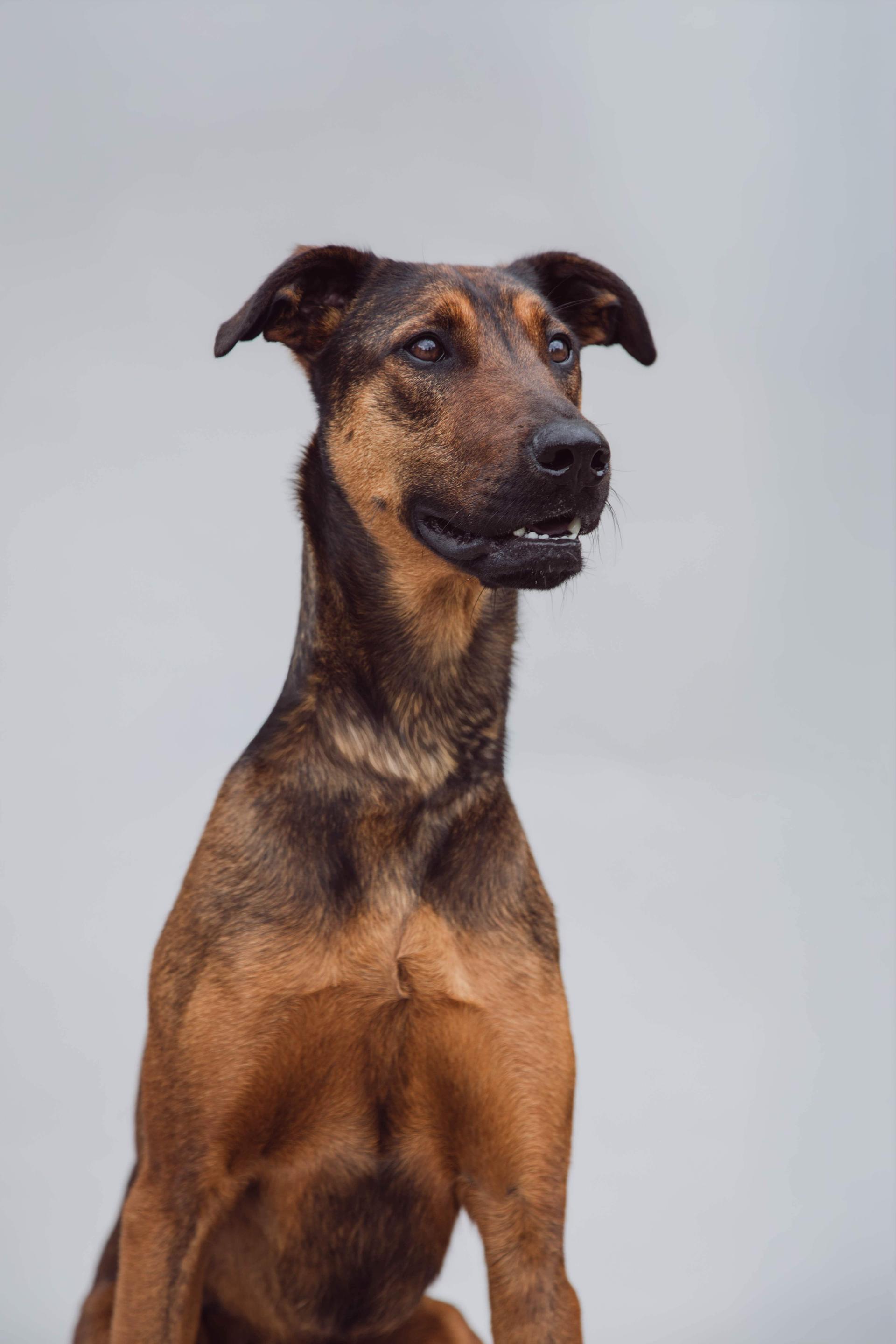
One thing that surprises adopters: an Australian rescue Doberman has natural, floppy ears and usually a full tail. Cosmetic ear cropping and tail docking are illegal in Australia, so the erect-eared look from overseas media is not what you will meet here, and natural ears are both normal and healthier.

Health and living with a Doberman in Wollongong

Dobermans are a serious screen-your-budget breed. The defining concern is dilated cardiomyopathy, a heart-muscle disease the breed is strongly predisposed to and which is monitored with cardiac screening rather than cured, and they also carry von Willebrand's disease, an inherited bleeding disorder with a DNA test, along with a susceptibility to cervical spinal issues and hypothyroidism. Ask the rescue what the in-care assessment found, insure the dog while it is young, and take any specific concern to your vet. The short single coat is almost no grooming but very little insulation, so a Doberman feels a cold snap and appreciates a coat, while the same dark coat heats up fast in summer, so exercise in the cooler hours.

The NSW health risk that catches new dog owners out is the paralysis tick, which lives along the NSW coast and in coastal bushland. RSPCA Australia says that "in the north, paralysis ticks may be found all year round, while in the more southern areas, the season generally begins in spring and finishes in late autumn", and that the season can start earlier after a mild winter (RSPCA Knowledgebase, kb.rspca.org.au, read 13 November 2026). Its toxin causes a paralysis that can be fatal without veterinary treatment, so ask your vet about a registered tick-prevention product and check your dog's coat after any bushwalk.

Under the NSW Companion Animals Act your dog must be microchipped by 12 weeks of age, or before it is sold or given away, and registered for life on the NSW Pet Registry "either by 12 weeks of age or immediately upon transfer (whichever happens first)" (NSW Office of Local Government, checked 13 November 2026). It is a single lifetime fee rather than an annual renewal, and lower for a desexed dog. A rescue dog comes to you already desexed and microchipped. Council leash and off-leash rules vary, so it is worth checking your own council's off-leash areas before you adopt.

If you ever see a dog advertised for sale or free in NSW, the ad must legally display an identification number, either the dog's microchip number or a rehoming-organisation or breeder identification number. Its absence is the clearest sign of a backyard breeder or a scam, and a good reason to adopt through a rescue, where the dog arrives desexed, vaccinated, microchipped, vet-checked and temperament-assessed in a foster home.

  • A velcro guardian that needs to live with the family, plus real daily exercise and training.
  • Screen the budget for dilated cardiomyopathy (DCM) and von Willebrand's disease, and insure young.
  • Natural floppy ears and full tail; ear cropping and tail docking are illegal in Australia.
  • Short coat feels the cold and overheats in summer; the coast also carries paralysis-tick risk.

Common Doberman health concerns

Breed-associated conditions worth asking any rescue about before you adopt. A good rescue will already know whether a dog has been assessed for these.

Dilated cardiomyopathy (DCM)

The leading cause of death in the breed; annual cardiac auscultation and screening are standard care.

Ask your vet about this before you adopt.

Von Willebrand disease

A hereditary blood-clotting disorder common in the breed; DNA testable.

Ask your vet about this before you adopt.

Hip dysplasia

Moderate prevalence; ask the rescue whether a vet has checked the joints.

Source: OFA →

Editorial summary for adopters, not medical advice. Ask the rescue about a specific dog's health, and consult your vet for individual guidance.

Breed and regulatory information cross-checked against NSW Office of Local Government (Dogs).

Doberman adoption elsewhere in New South Wales

Rescues rehome across the state, and many will consider adopters outside their immediate area. It is worth checking the nearby cities too.

Doberman adoption guides for Wollongong

The reading list for adopting a Doberman in Wollongong, written for local shelters, law and weather.

Doberman adoption in Wollongong: common questions

How many Dobermans are available for adoption in Wollongong?

No Dobermans are listed in Wollongong on LocalPetFinder right now. Availability turns over as dogs are adopted and new ones arrive, so setting an alert is the most reliable way to catch one. Doberman crosses are worth considering too.

Where can I adopt a Doberman near me in Wollongong?

LocalPetFinder lists Dobermans available for adoption from rescues across Wollongong and New South Wales. A dedicated single-breed rescue is not always active near Wollongong, so the fastest route is to watch the general rescues and set an alert. Every listing links straight to the rescue that has the dog, and the application is handled by them, not by us.

How long do Dobermans live?

Dobermans typically live 10 to 13 years.

How much exercise does a Doberman need?

Adult Dobermans need about 75 minutes of daily exercise. Adolescent dogs (under 2 years) typically need 90 minutes, more than mature adults.

What are common health concerns for Dobermans?

Breed-associated conditions to ask the rescue about include Dilated cardiomyopathy (DCM), Von Willebrand disease, Hip dysplasia. The health section above links a source where we have one. This is an editorial summary, not medical advice, so check with your vet for individual guidance.

How much does it cost to adopt a Doberman in Australia?

Adoption fees are set by each rescue, so check the fee on the rescue's own listing. For example, RSPCA NSW lists $500 for a dog and $620 for a puppy (read November 2026). Fees change, so check with the rescue; this is reference only, not a quote. The fee usually covers desexing, vaccinations and microchipping; ask the rescue what its fee includes.

Are these Dobermans for sale in Wollongong?

Not for sale, for adoption. Every Doberman here comes from an Australian rescue, a shelter or an owner rehoming them, not a breeder or pet shop. Each rescue sets its own adoption fee and shows it on the listing, and the fee usually covers desexing, vaccinations and microchipping when age-appropriate. For example, RSPCA NSW lists $500 for a dog and $620 for a puppy (read November 2026). Fees change, so check with the rescue; this is reference only, not a quote. A breeder sets its own price, so ask for it in writing and compare what is included. If you searched "doberman for sale wollongong" or "doberman puppies for sale", adopting gets you a dog a rescue has already vetted.

Where can I buy a Doberman in Wollongong, and should I?

You can buy from a registered breeder, and for some families that is a reasonable choice, but it is worth weighing against adoption first. A reputable Doberman breeder sets its own price and often has a waitlist, while a rescue Doberman comes with desexing, vaccinations and microchipping usually covered by the adoption fee shown on its listing. For example, RSPCA NSW lists $500 for a dog and $620 for a puppy (read November 2026). Fees change, so check with the rescue; this is reference only, not a quote. Be cautious of cheap doberman-for-sale ads on Gumtree and Facebook Marketplace, which are frequently backyard breeders or puppy-farm resellers with unvetted, sometimes sick animals and no health guarantee. If you do buy, insist on seeing where the puppies were raised and getting vet records, and check the breeder against your state's pet-sale rules. Adopting a rescue Doberman also gives a dog in need a home.

Are there free Dobermans in Wollongong, or dobermans under $500?

Adoption is the closest honest answer, and it is not free. Each rescue sets its own fee and shows it on the listing, so whether a rescue Doberman comes in under that depends on the rescue and the dog. For example, RSPCA NSW lists $500 for a dog and $620 for a puppy (read November 2026). Fees change, so check with the rescue; this is reference only, not a quote. What the fee buys is work already done: desexing, vaccinations and microchipping are usually included, so ask the rescue what its fee covers. Be wary of genuinely free doberman listings. An animal advertised free to a good home has usually not been vetted, and free rehoming ads are the route flippers and unregistered breeders use to move animals with no health guarantee and no recourse. Paying a rescue fee buys you a dog someone has already examined, treated, and been honest with you about.

Are there Doberman puppies in Wollongong, or only adults?

Rescues list both, and each listing on this page shows the dog's age. Puppies do come through, usually as accidental litters or with a surrendered mother. Setting an alert beats refreshing the page. It is also worth asking whether you actually want one: an adult arrives with a temperament a foster has already observed and described, where a Doberman puppy is a prediction.

Where can I find a Doberman near me in Wollongong?

Start with the listings on this page, which pull from rescues and shelters serving Wollongong and are refreshed regularly. If nothing suits today, listings change as animals arrive and are adopted, so setting an alert beats checking back. It is also worth widening to nearby suburbs and towns, and asking a rescue whether it will adopt to homes outside its own council area.

Are Dobermans dangerous or aggressive?

No more than any large, powerful breed, and far less than the stereotype suggests. A well-socialised modern Doberman is a stable, loyal family dog whose protectiveness is about its people rather than aggression, and NSW rescues rehome them into family homes regularly. What decides the outcome is socialisation, training and a job for the dog's mind, not the breed label. Ask the foster carer how the individual dog is with children and strangers.

Why do rescue Dobermans in Australia have floppy ears?

Because cosmetic ear cropping is illegal in Australia, as is tail docking for looks. The erect-eared, docked-tail Doberman most people picture comes from overseas media and older practices; an Australian rescue Doberman has its natural floppy ears and usually a full tail, which is both normal and healthier for the dog. It is purely cosmetic and changes nothing about the temperament.
Need to rehome your Doberman?

If you can no longer keep your Doberman, you can list them for free on LocalPetFinder. Your dog stays at home until you find the right family, you screen who applies, and there is no fee to list. Not sure yet? Our guide to surrendering a dog walks through every option first.

List your dog for free →

Browse more breeds in Wollongong

Towns near Wollongong

Adoptable dogs in towns near Wollongong, with any pets based in that town listed first.