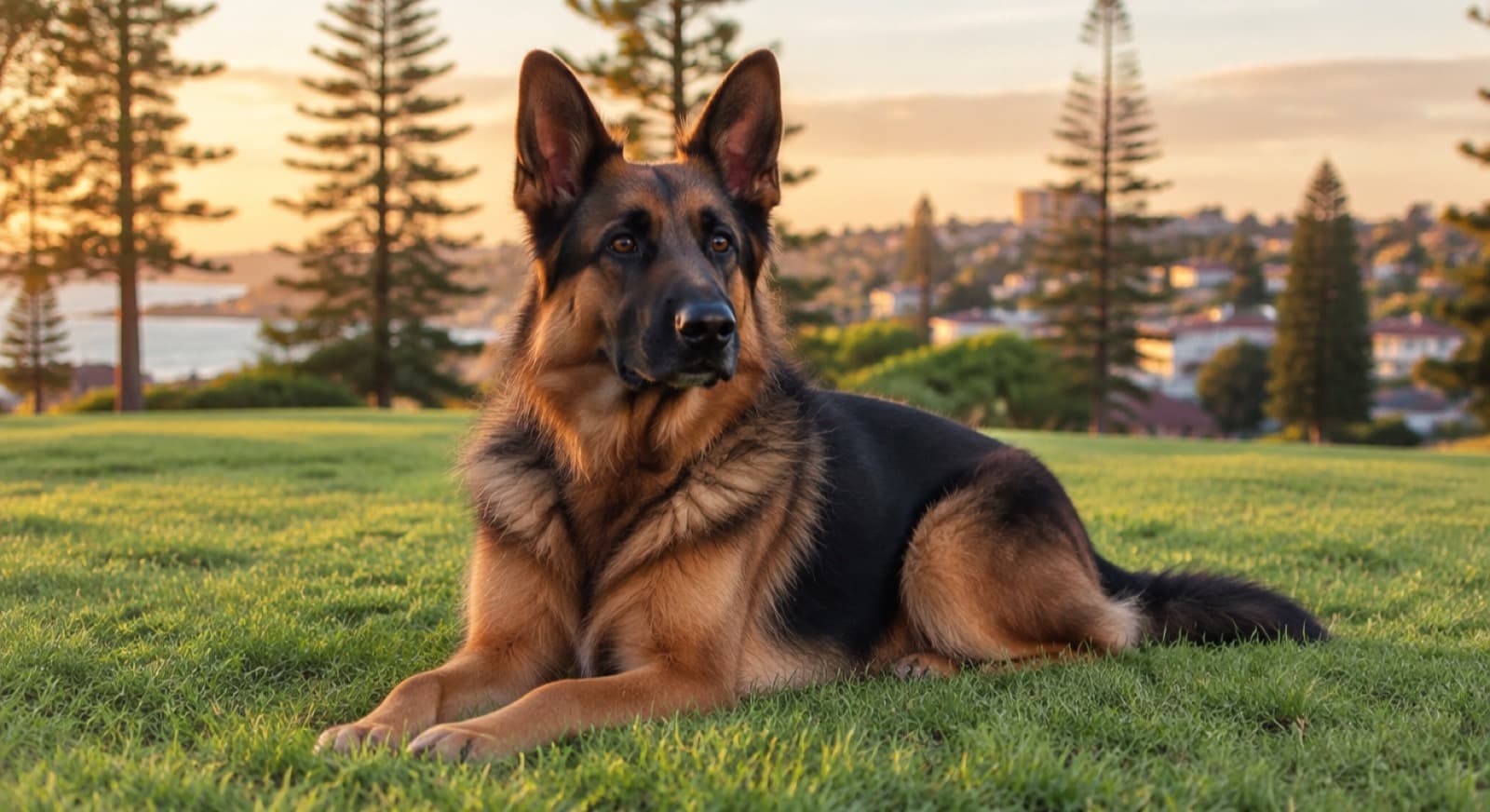
The short answer
German Shepherds and Shepherd crosses come up for adoption in Newcastle regularly. Look at Hunter Animal Rescue and Dog Rescue Newcastle, both foster-based charities, and the RSPCA's Hunter shelter at Rutherford, near Maitland. Rescue fees in the Hunter sit in the few-hundred-dollar range with desexing, microchipping and vaccination included, and a desexed rescue dog can register on the NSW Pet Registry for $0. The breed is not restricted in NSW. Expect a loyal, intelligent dog of around 30 to 35 kg that needs daily training, an hour or more of exercise, a secure yard and a vet who keeps an eye on hips and elbows.
Why German Shepherds reach Hunter rescue
The working drive was underestimated.
A Shepherd was bred to work alongside people all day. Without enough exercise and mental work, a young Shepherd paces, barks, chews and digs, and some families give up in the adolescent stage. The dog is usually not the problem; the lifestyle match was.
Size and strength.
A Shepherd grows into a strong dog of around 30 to 35 kg. Owners whose mobility changes, or who move into housing that will not take a large dog, sometimes have to surrender one they love.
Life changes.
Relationship breakdowns, new babies and moves all feed rescue. Shepherds live roughly 10 to 13 years, and plenty of good adult dogs come through after a family's circumstances changed rather than anything the dog did.
Where to look in Newcastle and the Hunter
- Hunter Animal Rescue. A foster-based, volunteer-run charity covering Newcastle, the Hunter Valley and the Central Coast. There is no shelter to visit; dogs live in foster homes, so the carer can tell you how a dog handles children, cats and time alone. See hunteranimalrescue.com.au.
- Dog Rescue Newcastle. Another foster-based, volunteer-run charity in Newcastle. Despite the name, it rehomes cats as well as dogs. See dogrescuenewcastle.com.au.
- RSPCA NSW Hunter Shelter. The RSPCA's Hunter shelter is at Rutherford, near Maitland, rather than in Newcastle itself. It adopts dogs, cats and other animals; bring photo ID showing your current address. See the Hunter Shelter page.
- The council pound is not an adoption centre. The City of Newcastle Animal Facility at Tighes Hill holds lost and impounded animals. Unclaimed animals go to rehoming organisations, and if you want to adopt or foster one, use the council's Animal Rescue Enquiry form on its Lost Pets in Ranger Care page.
Our guide to the best dog rescues in Newcastle compares these options in more detail, the Newcastle German Shepherd listings pull current dogs from Hunter rescues into one place, and the large dogs page shows every big dog listed right now, Shepherd crosses included.
What a German Shepherd costs: adopt versus buy
Rescue fees in the Hunter cover desexing, microchipping, vaccination and a vet check, which would add up quickly if you paid for them separately. As a guide, Hunter Animal Rescue lists $380 for an adult dog, $580 for a young dog and $200 for a senior, and RSPCA NSW lists $500 for an adult and $620 for a puppy. Always check the fee on the individual listing. A Shepherd puppy from a breeder usually costs several times a rescue fee, before any vet work.
| Cost | Rescue German Shepherd | Breeder puppy |
|---|---|---|
| Purchase or adoption fee | A few hundred dollars | Several times a rescue fee |
| Desexing, microchip, first vaccinations | Included | Often extra |
| NSW lifetime registration | $0 for an eligible desexed rescue dog | $84 lifetime fee for 2026-27 |
| Training | Ongoing, a class is worth it | Essential from day one |
| Tick prevention | Year-round, product chosen with your vet | Year-round, product chosen with your vet |
A big dog eats more, needs bigger gear and costs more at the vet, so budget for that whichever way you go. Pet insurance is worth pricing while the dog is young. Registration details, including the $0 rescue rate, are in our Newcastle dog registration guide.
German Shepherds Looking for Homes in the Hunter
Current German Shepherds and Shepherd crosses from Newcastle and Hunter rescues, with foster carer notes on temperament.
See Available German Shepherds →Drive, training and exercise
A German Shepherd is one of the most trainable dogs you can own, and one of the most demanding. The intelligence that makes them police, guide and search dogs also means a bored Shepherd invents its own jobs, and those jobs are rarely ones you like.
- Exercise. Plan an hour or more a day for an adult, split between a walk and active play. Even a seven-year-old Shepherd still wants 45 to 60 minutes.
- Mental work. Short training sessions, sniff games and puzzle feeders tire a Shepherd as much as a long walk.
- Reward-based training. Shepherds respond best to clear, consistent, reward-based training. A positive-reinforcement class in the first months home helps you and the dog learn the same language.
- Guarding and reactivity. Some Shepherds are wary of strangers or reactive to other dogs. The foster carer's notes are the best guide, so ask directly about visitors, walks and other dogs.
The health reality: hips, elbows and the checks that matter
- Hips and elbows. Hip and elbow dysplasia, where the joints form poorly, are well known in the breed. Ask the rescue whether the dog has shown any stiffness or lameness, and have your vet check the joints early. Keeping a Shepherd lean is one of the best things you can do for its joints.
- Spinal cord disease. Degenerative myelopathy, a slowly progressing weakness of the back legs, is seen in older Shepherds. Any change in how the back end moves is a reason to see your vet.
- Bloat. Deep-chested breeds are at risk of bloat, where the stomach fills with gas and can twist. A swollen belly, retching without bringing anything up and restlessness after a meal are an emergency. Newcastle's 24/7 emergency hospital is the Animal Referral and Emergency Centre at Broadmeadow.
- Skin and gut. Some Shepherds have sensitive skin or digestion. A rescue will usually know what food suits the dog, so ask before you change it.
None of this is a reason to pass on the breed, and a rescue Shepherd arrives already vet checked, so ask what the in-care assessment found. The RSPCA Knowledgebase has plain-language guidance on choosing and caring for a large dog, and your own vet is the right person for anything specific to your dog.
Settling a rescue Shepherd into a Newcastle home
- A secure yard. Shepherds can clear a low fence and dig under a weak one. Check the yard before the dog comes home.
- Renting or strata. A large dog needs written approval from your landlord or strata scheme in many buildings. Sort it out before you apply, not after.
- Humid summers. A Shepherd's double coat makes a humid Newcastle afternoon hard work. Exercise early or late, give shade and water, and never leave the dog in a parked car. Brush often during the seasonal shed and never shave the coat.
- Tick country. The paralysis tick lives along coastal and bushland NSW. Check the coat down to the skin after every bushy walk and ask your vet about year-round prevention.
- Off-lead time in the right places. Dogs must be on a leash in public places except designated leash-free areas, and a Shepherd's recall needs to be solid first. Our Newcastle dog parks guide lists the council's leash-free areas.
The first months home are a settling period. Many rescues use the 3-3-3 rule as a rough guide: three days to decompress, three weeks to start showing personality, three months to feel fully at home. Keep the world small and the routine predictable in the early weeks.
If you have been searching “German Shepherd puppies for sale”
Many people start with a for-sale search, and it is worth a reality check. A well-bred puppy from health-tested parents costs several times a rescue fee, and a cheap puppy from an online ad often comes from untested parents, which matters a great deal in a breed known for hip and elbow problems. In NSW a dog must be microchipped before it is sold or given away, so ask for the chip details before any money moves, meet the puppy and its mother in person, and never pay a deposit or transport fee for a dog you have not seen, which is the setup Scamwatch warns about. For most Hunter households an adult rescue Shepherd, already assessed by a foster carer, is the safer start.
Frequently Asked Questions
Can you adopt a German Shepherd in Newcastle?
Yes. German Shepherds and Shepherd crosses come through NSW rescue regularly, most often as adolescents and adults rather than puppies. Look at Hunter Animal Rescue and Dog Rescue Newcastle, both foster-based charities, and the RSPCA's Hunter shelter at Rutherford, near Maitland. Because foster carers live with the dog, they can tell you how a particular Shepherd copes with children, cats, other dogs and time alone, which matters more with this breed than most.
How much does it cost to adopt a German Shepherd in Newcastle?
Rescue fees in the Hunter usually sit in the few-hundred-dollar range and include desexing, microchipping, vaccination and a vet check. As a guide, Hunter Animal Rescue lists $380 for an adult dog, $580 for a young dog and $200 for a senior, and RSPCA NSW lists $500 for an adult and $620 for a puppy, so check the current fee on each listing. A Shepherd puppy from a breeder usually costs several times that, and a big dog's food, gear and vet bills add up quickly whichever way you go.
Is a German Shepherd the same as an Alsatian?
Yes. Same breed, different name. Alsatian is the older Australian and British name for the German Shepherd Dog, and many people in the Hunter still use it. Rescue listings may use either name, so search for both when you set an alert.
Are German Shepherds restricted in NSW?
No. The German Shepherd is not a restricted breed in NSW. The restricted list under the Companion Animals Act 1998 covers only the American Pit Bull Terrier, Dogo Argentino, Japanese Tosa, Fila Brasileiro and Perro de Presa Canario. A Shepherd is registered and rehomed like any other dog, although some landlords and strata schemes have their own rules about large dogs, so check before you apply.
Do I need to register a rescue German Shepherd in Newcastle?
Yes. Every NSW dog is registered once, for life, on the NSW Pet Registry by 6 months of age, after being microchipped by 12 weeks. The lifetime fee for 2026-27 is $84, but it drops to $0 for a desexed dog that comes from an eligible council pound, shelter or approved rehoming organisation, so ask your rescue whether that rate applies before you pay anything. Registration is state business, not something the City of Newcastle charges for.
Should I adopt a German Shepherd puppy or an adult?
For most households, an adult is the easier start. A Shepherd puppy means a year or more of intense work: toilet training, lead manners, chewing, recall and socialisation, all with a dog that grows to around 30 to 35 kg. An adult in foster has a known temperament, and the carer can tell you about energy, reactivity and how the dog goes with children and other animals. Senior Shepherds often wait longest and still have good years ahead.
Keep reading
Adoptable German Shepherds in Newcastle
Current listings with foster carer notes on temperament, children and other pets.
Kelpie Adoption in Newcastle
Another high-drive working breed common in Hunter rescue.
The Best Dog Rescues in Newcastle
How the Hunter's foster rescues and the RSPCA shelter compare.
Newcastle Adoption Guides
Rescues, registration, desexing and leash-free areas for Newcastle dog owners.
Ready to look beyond one breed? Start at the Newcastle dog adoption page for every dog currently listed by Hunter rescues.