The short answer
A Domestic Shorthair is any short-coated cat of mixed ancestry, and it is the easiest cat to adopt in Newcastle because most Hunter rescue cats are DSHs. Adoption costs about $200 to $220 for an adult or $250 to $270 for a kitten through Hunter Animal Rescue or the RSPCA NSW Hunter Shelter, with desexing, vaccination and microchipping included. Choose on the foster notes rather than the coat colour, and plan for an indoor or contained life.
What a Domestic Shorthair actually is
A Domestic Shorthair is any short-coated cat of mixed or unknown ancestry. That is the whole definition. It is not a breed with a written standard, the way a Ragdoll or a British Shorthair is. It is a type of cat: the ordinary pet most Australians grew up with and simply call a moggy.
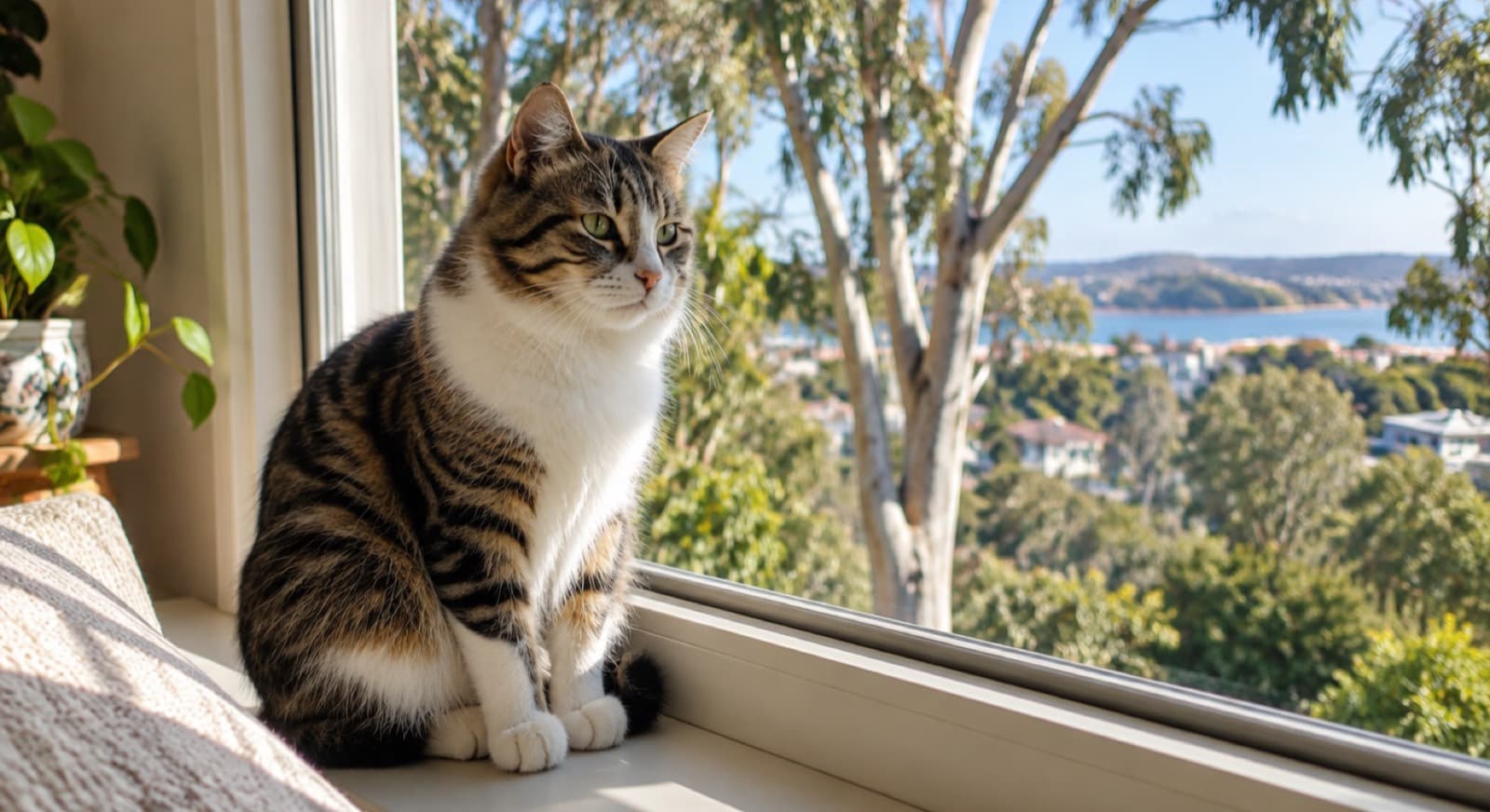
Because a DSH has a mixed family tree, it can be any colour or pattern: brown and grey tabbies, black, white, black-and-white tuxedos, gingers, tortoiseshells, calicos and every mix between. Two kittens from one litter can look completely different. A long-haired mixed cat is technically a Domestic Longhair, but in casual speech both get called moggies.
This is where our data comes in. Across the Newcastle rescues LocalPetFinder tracks, Domestic Shorthairs are the cats listed most often by a wide margin, ahead of every named breed combined. When you browse cats for adoption in Newcastle, most of what you see will be moggies, which means real choice and no waiting list.
Why a Domestic Shorthair is a great choice
The mixed background that makes a DSH hard to label is also its biggest advantage. Broad genetic diversity tends to make moggies hardy, and they avoid many of the inherited conditions that turn up in some closely bred pedigree lines. With good care, many live well into their teens.
You also choose on personality. With no fixed breed temperament, a foster carer can point you to a bold lap cat, a gentle quiet one or a playful youngster, whichever suits your home. And a DSH is the most affordable cat there is, because no breeder premium is built into the fee. For a first cat, hardy, affordable and personality-matched is hard to beat. The RSPCA Australia Knowledgebase is a good general reference as you plan.
Where to adopt a Domestic Shorthair in Newcastle
Every cat rescue in the Hunter rehomes moggies. These are the main ones:
Hunter Animal Rescue
A foster-based, 100% volunteer-run charity covering Newcastle, the Hunter Valley and the Central Coast. Every cat lives with a carer, so the listing tells you how it behaves at home with children, dogs and other cats. There is no shelter to visit; you enquire and meet the cat with its carer. See current cats at hunteranimalrescue.com.au.
Dog Rescue Newcastle
Despite the name, this volunteer-run Newcastle charity rehomes cats as well as dogs through foster homes in and around the city. All its cats are desexed, microchipped and vaccinated before adoption. See its animals at dogrescuenewcastle.com.au.
RSPCA NSW Hunter Shelter (Rutherford)
The RSPCA's Hunter shelter is at Rutherford, near Maitland, rather than in Newcastle itself. It is the place to meet several cats and kittens in one visit. It is closed Mondays, and you need photo ID showing your current address. Details on the RSPCA NSW Hunter shelter page.
The City of Newcastle Animal Facility at Tighes Hill is the council pound, not an adoption centre: unclaimed animals pass to rehoming organisations, and adoption or foster interest goes through the council's Animal Rescue Enquiry form. For a side-by-side comparison, see the best cat rescues in Newcastle.
What a Domestic Shorthair costs to adopt
Hunter rescue fees, as published by the rescues:
| Rescue | Adult cat | Kitten |
|---|---|---|
| Hunter Animal Rescue | around $200 (senior $150) | around $250 |
| RSPCA NSW Hunter Shelter | around $220 | around $270 |
Every fee includes desexing, microchipping and vaccination, which is hundreds of dollars of vet work done before you take the cat home. Lifetime registration on the NSW Pet Registry is free for a desexed cat from an eligible rehoming organisation, and NSW law requires a cat to be microchipped by 12 weeks of age or before it is sold or given away, and registered by six months. For ongoing costs, including year-round parasite prevention on the Hunter coast, see what cat adoption costs in Newcastle.
Browse Domestic Shorthairs in Newcastle
Moggies of every colour and age, from playful kittens to settled adults, from rescues across Newcastle and the Hunter.
See Available DSH Cats →Choosing your Domestic Shorthair
With a moggy there is no breed temperament to research, so the match comes down to the individual cat. Read the foster or shelter notes carefully: they tell you whether a cat is a confident lap cat or a shy slow-burner, how it is with children, dogs or other cats, and how much play it wants. Colour is not a reliable guide to personality, whatever the folklore about gingers and tortoiseshells says. Some groups of moggies are overlooked and wait longest:
- Adult and senior cats. Calmer, known personalities, and often the easiest fit for a busy household. Browse senior cats in Newcastle.
- Bonded pairs. Two cats that keep each other company while you are out. See bonded pairs in Newcastle.
- Kittens are the quickest to find homes, especially through the warmer months. If you want one, see kittens for adoption in Newcastle and our new kitten guide.
Keeping a moggy indoors in Newcastle
Hunter rescues will ask about your setup, and most recommend an indoor life or contained outdoor access such as a catio, a cat-proofed yard or harness walks. The reasons are local: busy roads, paralysis ticks along the NSW coast and in bushland, cat fights that spread disease, and native wildlife that free-roaming cats harm. A tick on a cat is an emergency; AREC at Broadmeadow is Newcastle's 24/7 emergency and referral hospital.
An indoor moggy is a happy one when the home gives it vertical space to climb, scratching posts, a window perch, daily play and ideally a companion cat. Our indoor versus outdoor cats guide for Newcastle covers catios and how to move an outdoor cat inside.
Moggy versus pedigree, and a scam warning
Some people set out wanting a pedigree and assume a moggy is second best. For most homes the opposite is closer to the truth: a DSH is generally hardy, costs a fraction to bring home, and arrives already vetted. There is no shortage of Domestic Shorthairs in Hunter rescue, so there is no need to buy one.
That matters for safety too. Scamwatch warns that pet scams usually ask for a deposit or transport fee for a kitten you never meet, and advises viewing a pet in person or on a video call first. Never send money before you have confirmed a real rescue with a current adoptable list. For the whole adoption process, see our Newcastle cat adoption guide.
Frequently Asked Questions
What is a Domestic Shorthair cat?
A Domestic Shorthair, or DSH, is any short-coated cat of mixed or unknown ancestry: the everyday moggy. It can be any colour or pattern, from tabby and tuxedo to ginger, black, grey, tortoiseshell or calico. The term describes the coat and the mixed background, not a pedigree. Across the Newcastle rescues LocalPetFinder tracks, Domestic Shorthairs are the cats listed most often by a wide margin.
Is a Domestic Shorthair a breed?
No. A Domestic Shorthair is a type of cat, not a recognised breed. A breed such as a Ragdoll or British Shorthair is bred to a written standard for a predictable look and temperament, while a DSH simply has a mixed family tree, so no two look or act exactly alike. That mixed background is a strength: broad genetic diversity tends to make moggies hardy compared with some closely bred pedigree lines.
How much does it cost to adopt a Domestic Shorthair in Newcastle?
Adopting a Domestic Shorthair in Newcastle costs about $200 to $220 for an adult or $250 to $270 for a kitten. Hunter Animal Rescue charges around $200 for a cat, $250 for a kitten and $150 for a senior, and the RSPCA NSW Hunter Shelter around $220 for a cat and $270 for a kitten. Those fees already include desexing, microchipping and vaccination, and lifetime NSW registration is free for a desexed cat from an eligible rescue.
Where can I adopt a Domestic Shorthair in Newcastle?
Almost any Hunter cat rescue, because most rescue cats are Domestic Shorthairs. Hunter Animal Rescue and Dog Rescue Newcastle are foster-based charities that both rehome cats, and the RSPCA NSW Hunter Shelter at Rutherford, near Maitland, is the shelter you can visit in person. The City of Newcastle Animal Facility at Tighes Hill is a council pound, not an adoption centre. Browse current listings, read the foster notes, and apply for the cats whose temperament suits your home.
Are Domestic Shorthairs good pets?
Yes, and for most households they are the best choice. Their mixed ancestry tends to make them hardy and long-lived, and because they come in every personality, a rescue can match you on temperament rather than looks. There is no breeder waitlist and no breed baggage to research. A settled adult moggy with known behaviour is often the easiest first cat a household can bring home.
Is a moggy the same as a Domestic Shorthair?
Yes, in everyday Australian use a moggy is a mixed-breed pet cat, and most moggies are short-haired, which makes them Domestic Shorthairs. A long-haired mixed cat is technically a Domestic Longhair, though people call it a moggy too. Either way, a moggy is a non-pedigree cat, exactly the kind that fills Newcastle and Hunter rescues.
Should I adopt a DSH kitten or an adult in Newcastle?
Both are good choices, and an adult is often the easier one. A kitten is playful and adaptable but needs supervision, kitten-proofing and time, and its adult personality is still forming. An adult has a known temperament a foster carer can describe, so you know whether it is a lap cat and how it is with children or other pets. Adults and seniors also wait longer for homes, and Hunter Animal Rescue charges less for a senior cat.
Should a Domestic Shorthair live indoors in Newcastle?
Yes, an indoor or contained life is the safer choice for a Newcastle cat. Busy roads, paralysis ticks along the NSW coast and in bushland, and cat fights that spread disease are all risks outside, and free-roaming cats harm native wildlife. A catio, a cat-proofed yard or harness walks give outdoor time safely. With climbing space, scratching posts, a window perch and daily play, an indoor moggy is a contented cat.
Keep reading
Domestic Shorthairs in Newcastle
Every moggy currently listed across Newcastle and Hunter rescues.
The Best Cat Rescues in Newcastle
How the Hunter's cat rescues work and which to contact first.
Cat Adoption in Newcastle: A Complete Guide
Where to adopt, what it costs, NSW law and choosing the right rescue cat.
All Newcastle Cat Resources
Guides on adopting, costs, kittens and indoor living in Newcastle and the Hunter.