The short answer
Yes, you can adopt a Ragdoll on the Central Coast, but be patient. Purebreds are rare in rescue, and crosses come up more often. Watch SoCares at Charmhaven and Erina, Hunter Animal Rescue and DCH Animal Adoptions, and set alerts. A rescue cat arrives desexed, microchipped and vaccinated, against about $1,500 to $3,000 that registered breeders typically list a kitten for. Keep any Ragdoll indoors or contained, because the breed is trusting and not street-smart.
What a Ragdoll actually is
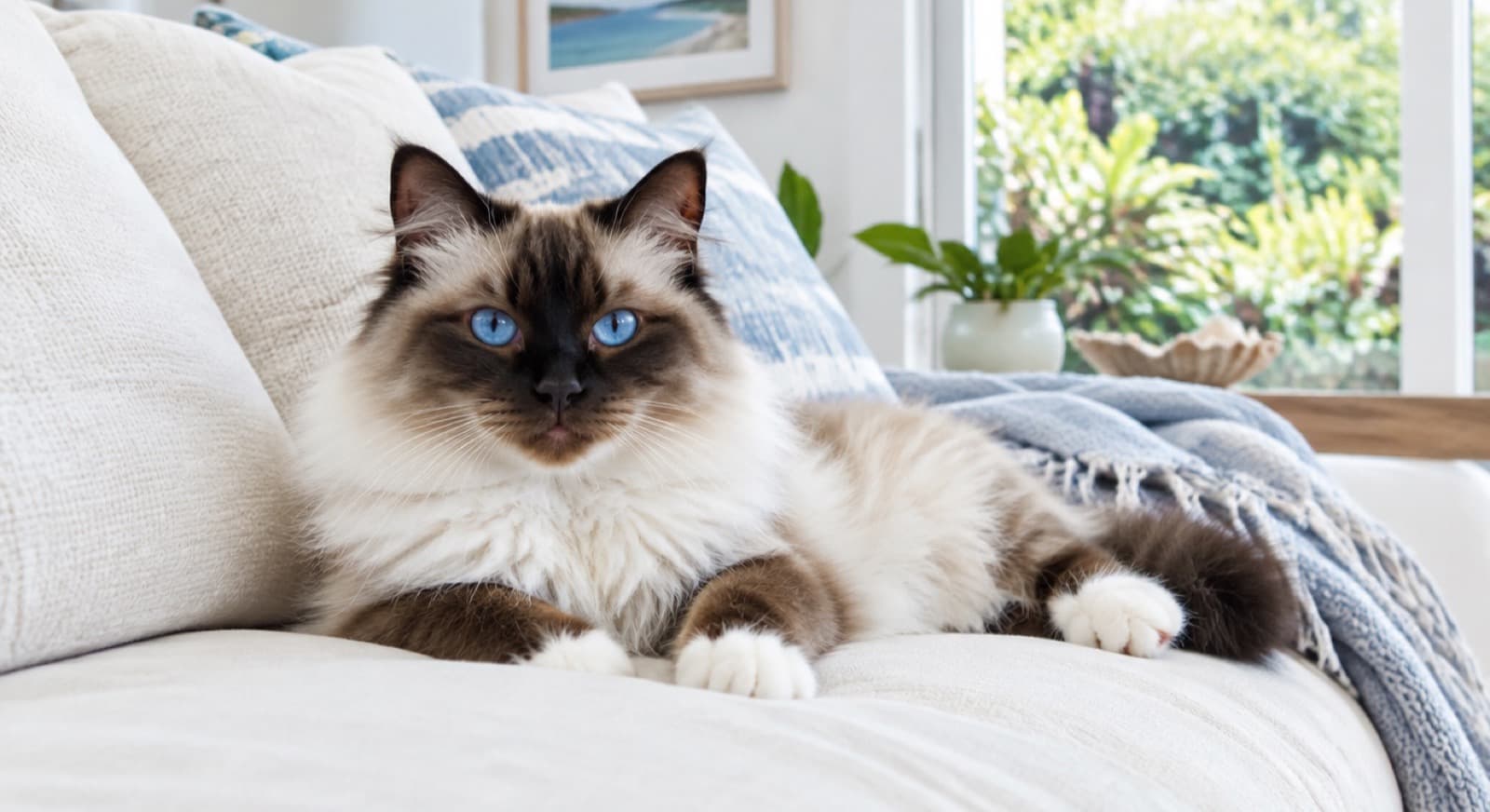
A Ragdoll is a large, docile pedigree cat known for going limp and relaxed when you pick it up, which gives the breed its name. It has a semi-long silky coat, blue eyes and an easygoing manner. Owners often call Ragdolls puppy-like, because they follow their people from room to room.
That gentle nature is the draw, and it comes with a catch. Ragdolls are trusting rather than wary, so they are poorly suited to life outdoors. That one fact shapes how you keep one on the Central Coast. For the breed profile and any Ragdolls listed now, see the Ragdoll breed page for the Central Coast.
Why Ragdolls are rare in rescue, and why they do turn up
Purebred Ragdolls are scarce in rescue for a simple reason. Nearly everyone who owns one bought it from a breeder, so few ever enter the system. Across the Central Coast rescues LocalPetFinder tracks, most cats listed are domestic shorthairs, the everyday moggy.
When a Ragdoll does come in, it is rarely the cat's fault. The usual story is a life change: a move to a rental that will not take pets, a new baby, illness, or a relationship ending. Some were bought for their looks by people who did not plan for a coat that needs regular brushing.
Crosses are the realistic target. A Ragdoll cross appears far more often than a purebred and carries much of the size, coat and gentle nature. If you want the personality rather than the papers, a cross is easier to find and often the better adoption.
Where to adopt a Ragdoll or Ragdoll cross on the Central Coast
Because Ragdolls are scarce, the best approach is to watch several rescues at once, set alerts, and be ready to apply the day one appears. These are the rescues rehoming cats between Gosford and Wyong:
SoCares (Charmhaven and Erina)
SoCares is a not-for-profit charity that runs the Central Coast Council's only two animal care facilities, at Charmhaven and Erina. It has the steadiest supply of cats and kittens you can meet in person, by appointment, and sets its fee per cat. See current cats at socaresanimalcarefacility.com.au.
Hunter Animal Rescue
A foster-based, volunteer-run charity covering Newcastle, the Hunter Valley and the Central Coast. Every cat lives with a carer, so the listing tells you how it behaves at home with children, dogs and other cats. See current cats at hunteranimalrescue.com.au.
DCH Animal Adoptions
A NSW non-profit rescue with foster carers across Sydney and the Central and South Coast. Its breeds page offers a wait list for purebred cats, including Ragdolls, so it is the one place to register interest in the breed itself. See the DCH breeds and wait list page.
Two notes. The Ninth Life Foundation at Erina Heights rehomes senior cats only, so it is worth a look if you want a calm older companion. And the RSPCA centre at Somersby is a dog behaviour and rehabilitation facility, not a cat shelter. For how each rescue works, see the best cat rescues on the Central Coast.
What it costs: adopt versus buy
Adopting a Ragdoll or Ragdoll cross costs the same as any rescue cat on the Central Coast:
- SoCares: the fee is set per cat and shown on each listing.
- Ninth Life Foundation: a flat $300 per senior cat, covering microchipping, flea and worm treatment and vaccinations.
- What a rescue fee covers: desexing, microchipping and vaccination as standard.
Buying is a different order of cost. Registered breeders typically list a pet-quality Ragdoll kitten at about $1,500 to $3,000 (we checked breeder listings in October 2026), and you then pay for desexing and vaccinations yourself. NSW registration is also cheaper through rescue: lifetime registration on the NSW Pet Registry is $0 for a desexed cat from an eligible pound, shelter or rehoming organisation.
Plan for ongoing costs too: regular brushing, quality food, litter, annual vet checks and parasite prevention. The Central Coast is in the paralysis tick's range, and ticks are dangerous to cats, so ask your vet for a cat-safe tick product.
If you have been searching “Ragdoll for sale Central Coast”
Plenty of people arrive here after searching for a Ragdoll kitten to buy. Pause first. Purebred kittens are the most scam-prone corner of the online pet market, because buyers will pay thousands sight unseen. Scamwatch advises viewing the pet in person or on a video call, and treating a very cheap pedigree kitten as a likely scam.
NSW law helps you check. Under the Companion Animals Act 1998, a cat must be microchipped by 12 weeks or before it is sold or given away. A genuine seller can give you the microchip details before any money moves. Never pay a deposit or “transport fee” for a kitten you have not met.
Why a Ragdoll should live indoors
This is the most important safety point here. A Ragdoll should live indoors, or with contained outdoor access such as a catio or harness walks. The breed's trusting nature is what makes roaming dangerous: a Ragdoll will walk up to strangers, and it handles traffic, dogs and cat fights badly.
The Central Coast adds its own reasons. Paralysis ticks live in coastal NSW bushland, and free-roaming cats harm the native wildlife around the lakes and reserves. An indoor Ragdoll is a happy cat when the home gives it climbing space, scratching posts, daily play and a window perch. If your cat ever seems wobbly or changes its voice or breathing, treat it as an emergency: SASH Central Coast at Tuggerah and the Animal Referral Hospital Gosford are both open 24/7.
Grooming, health and allergies
A Ragdoll's semi-long coat needs brushing a few times a week to stop mats forming, especially through a humid coastal summer. Like many pedigree breeds, Ragdolls carry some inherited conditions worth knowing before you adopt. Our Ragdoll health issues guide, written for NSW owners, covers what to watch for.
One myth to clear up: Ragdolls are not hypoallergenic. The Australasian Society of Clinical Immunology and Allergy says all cat breeds can cause allergies, because the main allergen comes from glands in every cat's skin. For general care, the RSPCA Australia Knowledgebase is a good starting point.
Browse adoptable Ragdolls on the Central Coast
Ragdolls and Ragdoll crosses are rare in rescue, so check the live listings and set an alert.
See Available Ragdolls →Choosing your Ragdoll
When a Ragdoll or cross does come up, three things make the match work. First, consider an adult, because a carer can tell you exactly what it is like. Second, read the notes over the photo, since how a cat behaves with children and handling predicts fit better than looks. Third, stay open to a cross, which gives you the temperament that matters and is what Central Coast rescue most often has.
Frequently Asked Questions
Where can I adopt a Ragdoll on the Central Coast?
Watch several rescues at once and set alerts, because Ragdolls appear rarely and go quickly. SoCares runs the Central Coast Council's two animal care facilities at Charmhaven and Erina, where you can meet cats by appointment. Hunter Animal Rescue is a foster-based charity that also covers the Central Coast. DCH Animal Adoptions, a NSW rescue with carers on the Central Coast, keeps a wait list for purebred cats including Ragdolls. You are more likely to find a Ragdoll cross than a purebred, so stay open to one.
Why are Ragdolls rare in rescue?
Almost every Ragdoll is bought from a breeder, so few ever enter the rescue system. Owners who paid a pedigree price tend to keep their cat. The ones that are surrendered usually come in after a life change, such as a move, a new baby, illness or a relationship ending, rather than a behaviour problem. Across the Central Coast rescues we track, most cats listed are domestic shorthairs. Ragdoll crosses turn up more often and carry much of the same gentle temperament.
How much does it cost to adopt a Ragdoll versus buy one?
A Central Coast rescue fee is far below a breeder price, and the cat arrives already desexed, microchipped and vaccinated. SoCares sets its fee per cat, and the Ninth Life Foundation at Erina Heights charges a flat $300 for its senior cats. Registered breeders typically list a pet-quality Ragdoll kitten at about $1,500 to $3,000, before any vet work. NSW lifetime registration is also $0 for a desexed cat adopted from a pound, shelter or approved rehoming organisation.
Is there a Ragdoll rescue on the Central Coast?
We could not verify a Ragdoll-only rescue anywhere in Australia. The closest thing is DCH Animal Adoptions, a NSW rescue that keeps a wait list for purebred cats including Ragdolls and has carers on the Central Coast. Beyond that, the realistic path is the general rescues, SoCares and Hunter Animal Rescue, plus alerts so you hear the moment a Ragdoll or Ragdoll cross comes in. PetRescue.com.au also lists smaller NSW rescues.
Should a Ragdoll be kept indoors on the Central Coast?
Yes. A Ragdoll should live indoors, or with contained outdoor access such as a catio, a cat-proofed yard or harness walks. The breed is trusting rather than wary, which leaves it exposed to theft, traffic, dogs and cat fights. The Central Coast also sits in the paralysis tick's range, which covers coastal and bushland NSW, and free-roaming cats harm native wildlife. An indoor Ragdoll with climbing space, scratching posts, play and a window perch is a safe, contented cat.
Are Ragdolls hypoallergenic?
No. No cat breed is hypoallergenic, and that includes the Ragdoll. The Australasian Society of Clinical Immunology and Allergy says all cat breeds can cause allergies, because the main allergen comes from glands in every cat's skin, not from the coat. Individual cats vary, so the only reliable test is time with the specific cat. Tell the rescue about any allergy in your household so they can arrange a longer meet.
Is it safe to buy a Ragdoll kitten online?
It is risky, because purebred kittens are exactly the high-value listing scammers use. Scamwatch warns that pet scams usually ask for a deposit or transport fee for a kitten you never meet, and that a very cheap pedigree kitten is a red flag. Never send money before you have seen the cat in person or on a live video call. In NSW a cat must be microchipped by 12 weeks or before it is sold or given away, so ask for the microchip details first.
Should I adopt an adult Ragdoll or a kitten?
An adult Ragdoll or Ragdoll cross is usually the easier choice. A carer can tell you exactly how an adult behaves, whether it is a lap cat, and how it is with children or other pets. Ragdolls stay affectionate at every age, so you lose nothing by skipping the kitten stage. If you want a calm older cat, the Ninth Life Foundation at Erina Heights rehomes senior cats only.
Keep reading
Adoptable Ragdolls on the Central Coast
The Ragdoll breed profile and any Ragdolls or crosses listed across Central Coast rescues.
The Best Cat Rescues on the Central Coast
How SoCares, Hunter Animal Rescue and the Ninth Life Foundation work, and which to contact first.
Ragdoll Health Issues
The inherited conditions worth knowing in a Ragdoll, written for NSW owners.
All Central Coast Cat Resources
Guides on adopting a cat on the NSW Central Coast.