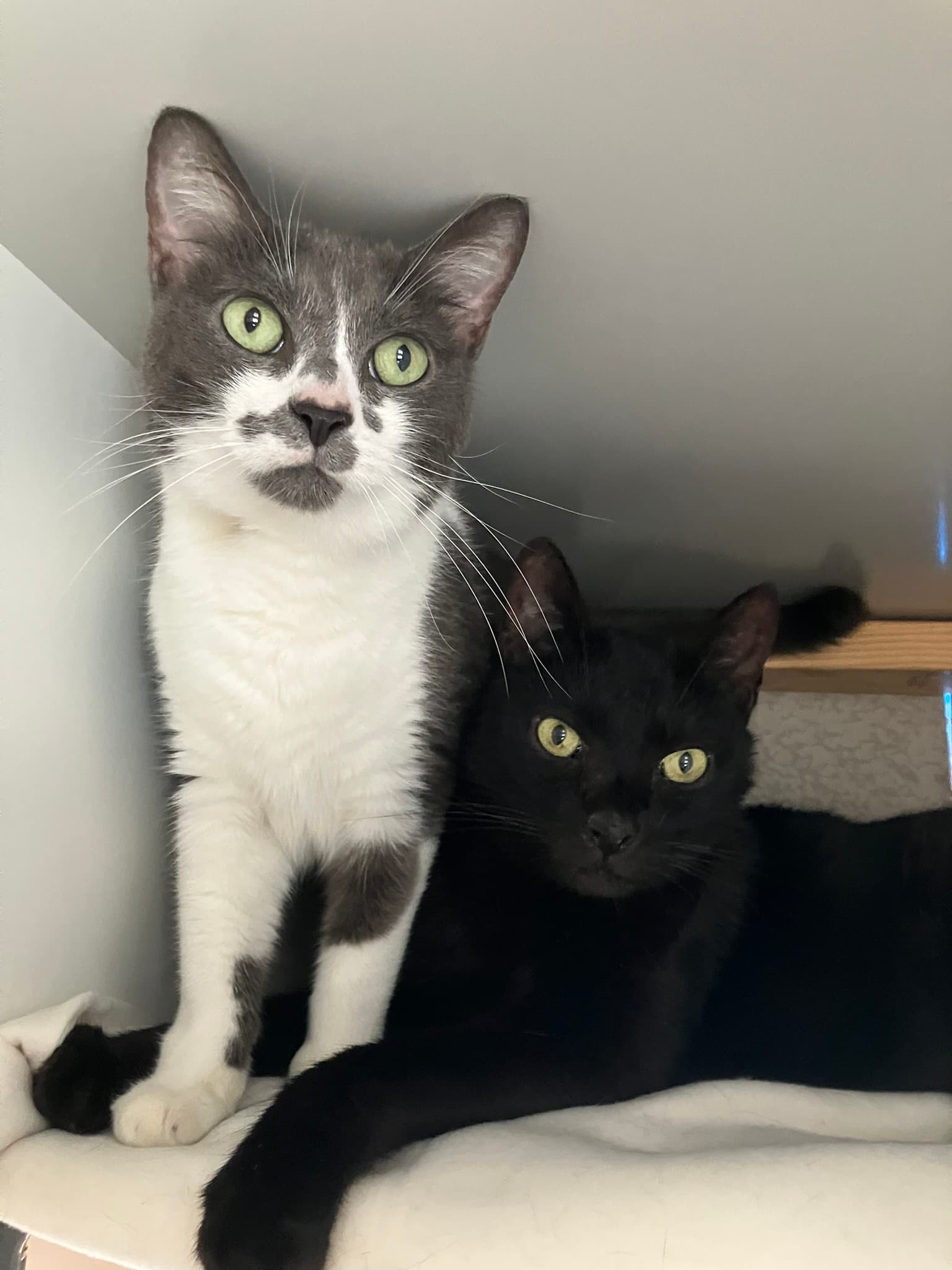
Charlie Brown and Edward
Unknown • Domestic Shorthair
Get notified about new cats in Central Coast
We will email you when new rescue cats become available in Central Coast, so you can be among the first to meet them.
Bonded cat pairs are two (occasionally three) cats that have lived together so long, or formed such a strong attachment, that separating them would cause significant distress. Central Coast and New South Wales cat rescues keep bonded pairs together and require they be adopted as a unit. The cats below come as a pair.
Adopting a bonded pair is often easier than adopting a single cat. The cats already have a built-in companion, so they entertain each other when you are at work, settle in faster, and do not suffer the loneliness that singleton cats can feel in working households. Most rescues offer a discounted pair fee rather than charging two single adoption fees.
Common bonded pair scenarios: littermates, a mother and kitten that grew up together, two adults rescued together from a hoarding situation, or two cats whose previous owner passed away. The cats know each other; you just need to provide the home.
What a Bonded Pair Really Is
A bonded pair is two cats, occasionally three, that have formed such a strong attachment that separating them would cause genuine distress. This is not just two cats who happen to tolerate each other. Bonded cats groom one another, sleep curled together, eat side by side, and become anxious and withdrawn when apart. Because the bond is real and important to their wellbeing, Central Coast and New South Wales rescues keep these cats together and rehome them as a single unit.
The bond usually forms in one of a few ways. Littermates who have never been apart are the classic example, as are a mother and a kitten who grew up together. Other pairs come from a shared history of hardship, such as two cats surrendered together when an owner died, or two adults rescued from the same difficult situation who leaned on each other to cope. Whatever the origin, the attachment is the point.
Rescues do not label cats as bonded lightly, because it makes them harder to rehome. When a rescue insists two cats go together, it is because their carers have watched the cats and judged that splitting them would harm them. Separated bonded cats can stop eating, over-groom, hide, or call for their missing companion, and the stress can affect their health, so keeping them together is a welfare decision, not a marketing one.
For an adopter, the key thing to understand is that you are committing to both cats for their lifetimes, not trying them out to see which one you prefer. In return, you get a ready-made, self-sufficient little family who already know and love each other. All you have to supply is the home, and the rest of the relationship is already built.
Why Two Cats Can Be Easier Than One
It surprises people, but a bonded pair is often less work than a single cat, especially in a household where everyone is out during the day. Two cats entertain each other, so the play, chasing, and grooming that a solo cat would demand from you happens between them instead. That means less pressure on your time and fewer of the boredom-driven behaviour problems that lonely single cats develop.
Companionship also prevents the loneliness that indoor single cats can feel in working households. A solo cat left alone all day has nothing to do and no one to interact with, which can lead to over-attachment, anxiety, or destructive behaviour. A bonded pair always has a friend on hand, so they cope far better with long days and settle more calmly when the house is empty.
The extra effort of a second cat is smaller than most people expect. You need one more litter tray, a second feeding station, and a little more food and litter, but you do not need to double your attention or your space. Two cats share the same environment happily, and the marginal running cost of the second cat is modest compared with the companionship it provides.
Bonded pairs also settle into a new home faster than a single cat would. Because they already have each other for security, the stress of moving is halved, and they explore, relax, and start behaving normally sooner. For a first-time cat owner in particular, a self-sufficient, mutually reassuring pair can be a gentler introduction to cat ownership than a single anxious newcomer.
Costs and Logistics of Adopting a Pair
Adopting two cats does not cost twice as much to bring home. Most Central Coast rescues charge a discounted pair fee rather than two full adoption fees, precisely because they want bonded cats to stay together and know that a fair price makes that more likely. Both cats still arrive fully vetted, desexed, vaccinated, microchipped, and FIV-checked, so the reduced fee reflects the rescue's priorities, not any shortcut in care.
The ongoing costs are where two cats genuinely add up, though not dramatically. You will buy more food and more litter, and you need enough litter trays, the rule of thumb being one per cat plus one spare, so a pair means three trays. Feeding stations should be separate to avoid any competition at mealtimes. None of this is expensive individually, but it is worth budgeting for the doubled consumables before you commit.
Space and setup need a little thought but not much more room. Two cats occupy vertical space happily, so a couple of cat trees or perches matter more than floor area. Give each cat somewhere it can retreat to alone if it wants, since even devoted pairs appreciate the option of solitude, and spread litter trays and resources around the home rather than clustering them in one spot.
Veterinary costs also scale with two cats rather than one, so factor in two annual checkups and two lots of parasite prevention. Many adopters take out pet insurance for each cat while they are young and healthy to spread the cost of any future treatment. Going in aware that a pair means doubled consumables and vet visits, but shared space and attention, gives you a realistic picture of the commitment.
Setting Up Your Home for Two
The golden rule for a multi-cat home is to avoid competition over resources, and with a bonded pair that is easy because they already share happily. Still, provide enough of everything: separate feeding spots, multiple water sources, litter trays following the one-per-cat-plus-one rule, and enough beds and perches that neither cat has to give one up. Abundance keeps a calm household calm.
Vertical territory is especially valuable with two cats. Cat trees, shelves, and window perches multiply the usable space and let each cat claim its own favourite spot at its own height. This matters even for a devoted pair, because it gives each cat a sense of ownership and a place to observe from, which reduces any low-level friction and keeps both cats confident and relaxed.
Give each cat a bolt-hole where it can be alone. Bonded cats spend most of their time together by choice, but every cat values the option of retreating somewhere quiet, whether a covered bed, a high shelf, or a spare room. Having those spaces available means the cats stay together because they want to, not because they have nowhere else to go, which keeps the bond healthy.
When you first bring a pair home, settle them together in one quiet room rather than splitting them up, since their bond is exactly what will keep them calm during the move. Let them explore the rest of the house gradually from that secure base. Because they have each other, bonded pairs generally need less hand-holding through the settling-in period than a lone newcomer would.
Who a Bonded Pair Suits
Bonded pairs are a particularly good fit for busy households and people who work full time. If you worry about leaving a single cat alone all day, a pair removes that concern entirely, because the cats always have company and constant, low-effort companionship keeps them content while you are out. For anyone whose schedule made them hesitate about a cat at all, a self-sufficient pair can be the answer.
They also suit first-time owners better than people expect. The cats' mutual reassurance smooths out the settling-in period, and much of the play and stimulation a beginner might struggle to provide happens naturally between the two cats. You get to enjoy the companionship while the cats handle a good deal of their own entertainment, which is a gentle way into cat ownership.
Families and apartment dwellers both do well with pairs, provided the practical setup is right. Two cats fit comfortably into a unit as long as there is vertical space and enough litter trays and feeding stations, and children often enjoy watching a bonded pair interact. The rescue can tell you honestly whether a particular pair suits children or a quieter adult household.
The one household a bonded pair does not suit is one that can only commit to a single cat, whether for reasons of space, budget, or preference. In that case, adopting a single cat from our other listings is the honest choice, and you leave the bonded pair together for an adopter who can take both. If you can take two, though, a bonded pair is one of the most rewarding adoptions there is.
A Bonded Pair Alongside Existing Pets
Bringing a bonded pair into a home that already has a cat or dog is entirely possible, but it needs the same slow, staged introduction any new cat deserves, just with two newcomers instead of one. Settle the pair together in their own room first, since their bond is what will keep them calm, and let the resident animals become familiar with their scent before any face-to-face meeting.
Build up contact gradually. Let the animals smell each other under the door, feed them on opposite sides of it so they associate the newcomers with good things, then move to short, supervised visits once everyone seems relaxed. Rushing this is the most common cause of lasting tension between cats, and with a bonded pair you simply have a little more introducing to manage, not a harder task.
Make sure resources are abundant so nobody has to compete. Follow the one-litter-tray-per-cat-plus-one rule across the whole household, provide separate feeding stations, and give every cat its own perches and retreats. A bonded pair keeps to itself for much of the day, which can actually ease introductions, because the newcomers are not desperate for the resident cat's attention and can integrate at their own pace.
The rescue is your best guide here. Because the pair has usually been in foster care, the carers can tell you honestly whether these particular cats have lived with dogs or other cats before and how they are likely to cope. Share the details of your existing pets when you enquire, and the rescue can help you judge whether a specific pair is a sensible fit for your household before you commit.
Bonded Pair Adoption FAQ
Tap a question to expand