The short answer
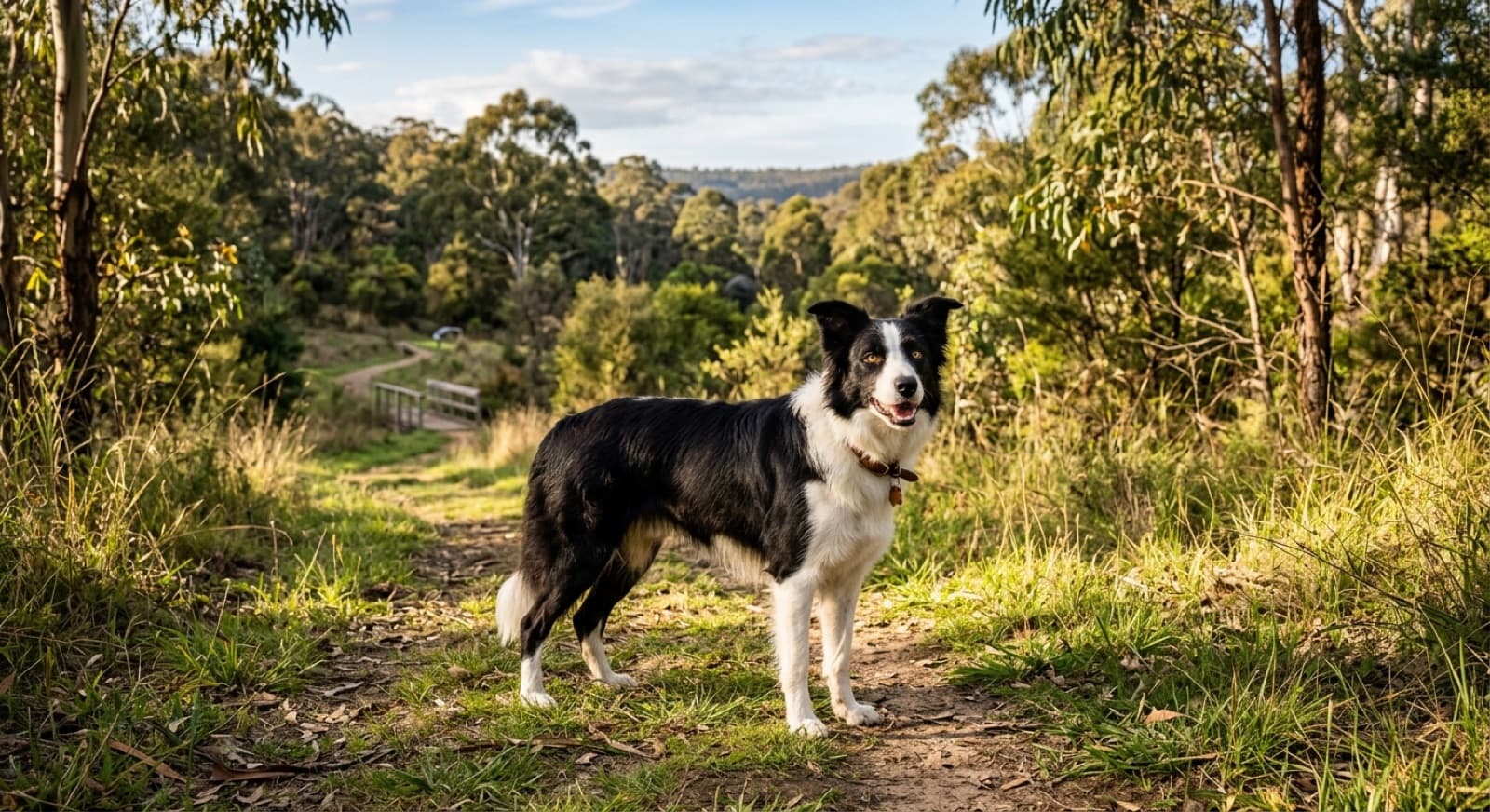
Border Collies live 12 to 15 years on average. The breed-specific issues to plan for are the MDR1 drug-sensitivity mutation (DNA test it, and tell every vet the result before any new medication), Collie Eye Anomaly (inherited, detected at puppyhood), hip dysplasia (treatable, weight management is the biggest lever), epilepsy (manageable with medication your vet prescribes), and Trapped Neutrophil Syndrome (rare but serious in puppies). Cancer rates rise from about age eight. The Melbourne seasonal layer is summer heat on a driven working breed, plus year-round fleas, intestinal worms and mosquito-borne heartworm. Paralysis ticks, the headline risk on the NSW coast, are low risk in metro Melbourne. Pet insurance pays off for the breed if you sign up while the dog is young. Your local Melbourne GP vet handles the day-to-day, and the Animal Referral Hospital runs 24/7 emergency and specialist care when it is needed (Lort Smith's emergency department is open every day, but only 8am to 10pm).
Melbourne's real seasonal danger: heatstroke on a dog that will not quit
A Border Collie is bred to keep working, so it will chase a ball or a frisbee well past the point where a more sensible dog would stop. On a 40-plus degree Melbourne heatwave day that drive becomes a genuine heatstroke risk. Warning signs are heavy panting that does not settle, bright red gums, thick drool, weakness, stumbling, vomiting or collapse. Heatstroke is a true emergency and it kills fast. Move the dog into shade, offer small amounts of water, wet the belly, groin and paws with cool (not icy) water, and get to a vet straight away. Do not wait to see if it settles. The RSPCA Australia summary at RSPCA on protecting pets from heat stress is worth reading and keeping on your phone.
For emergency care (24/7 unless noted), Melbourne options include Lort Smith (North Melbourne, 8am to 10pm daily), Animal Referral Hospital Essendon Fields and Animal Emergency Centre Mount Waverley, Advanced Vetcare (Kensington), and the University of Melbourne teaching hospital at Werribee.
Why Border Collies carry breed-specific health risks
Border Collies have been bred for working ability for several centuries. Intense selection on a relatively small founder population has concentrated certain genetic conditions, particularly those affecting drug metabolism (MDR1), eye development (CEA) and joint development (hip dysplasia). Modern responsible breeders screen for the major heritable conditions before breeding. The upside for adopters is that rescue Border Collies often come from broader gene pools, and the Victorian rescues on this page vet-check every dog before listing.
The most authoritative references on Border Collie health for Australian owners are the Australian Veterinary Association, the RSPCA Knowledgebase, and Washington State University's veterinary program for MDR1 reference information. If you are still weighing up the breed itself, our Border Collie adoption guide for Melbourne covers the rescues, the real costs and the process.
1. The MDR1 mutation (the most important one)
MDR1 (Multidrug Resistance 1, also called ABCB1) is a genetic mutation that affects how the body clears certain drugs. The healthy MDR1 gene produces a protein that pumps particular medications out of the brain and other tissues. The mutation produces a version that does not work properly, so an affected dog cannot remove those medications effectively, and levels build up until standard doses become toxic.
A meaningful share of Border Collies carry one or two copies of the mutation, and it also runs in several related herding breeds, including Australian Shepherds (at much higher rates), Old English Sheepdogs, Rough and Smooth Collies and Long-haired Whippets. Crosses of any of these breeds can carry it too, which matters for a mixed-breed rescue dog with a herding look.
The safe way to handle MDR1 is not to memorise a drug list. It is to know the dog's status and put the decision in your vet's hands. A number of commonly used medications, spanning several different treatment categories, can be dangerous for an affected Border Collie at doses that are perfectly safe for other dogs. Your vet knows which ones and has safe alternatives, but only if they know the dog carries the mutation.
What to do:
- DNA test for MDR1. A cheek swab from most Melbourne vets, or a mailed sample ordered direct from a lab, returns a clear result in a couple of weeks.
- Record the status on your vet file and on the microchip register. If your dog is ever seen by an emergency vet who does not know them, that status needs to be visible.
- Tell every vet before any new medication or anaesthetic. Your regular vet will remember, but locums and emergency vets may not, so say it every time.
- Never medicate an at-risk Border Collie on your own judgement. That includes over-the-counter and leftover products. Ask your vet first.
- Affected dogs live full, normal lives with this one standing precaution, because safe alternatives exist for almost every situation.
For an adopted Border Collie with an unknown background, MDR1 testing belongs at the first vet visit. It is inexpensive insurance against a potentially serious medication reaction, and the result is useful for the rest of the dog's life.
2. Collie Eye Anomaly (CEA)
Collie Eye Anomaly is an inherited disorder affecting the retina and other eye structures. It is present from birth and identified by a veterinary ophthalmology examination of puppies at 6 to 8 weeks of age. Severity varies considerably.
Severity grades:
- Mild (choroidal hypoplasia only). The most common form. The dog has normal vision throughout life. It is detectable on an ophthalmic exam but causes no functional problem.
- Moderate (with coloboma). Defects in the retina or optic nerve area. Some vision impairment is possible, but most dogs cope well.
- Severe (with retinal detachment). Significant vision loss or blindness. Less common, but irreversible when it occurs.
CEA is non-progressive, so what the dog has at puppyhood is what they keep. DNA testing identifies carriers, and reputable breeders test parents and avoid breeding two carriers together. An adopted Border Collie from an unknown background can be tested, but for most adult dogs with normal vision the practical impact is limited.
3. Hip dysplasia
Hip dysplasia is a developmental condition where the hip joint forms improperly during growth, so the ball does not sit cleanly in the socket. Over time the joint wears unevenly, arthritis develops, and mobility declines. Border Collies carry moderate breed risk, and reputable breeders score parent hips before breeding.
Signs to watch for:
- Reluctance to run, jump or use stairs in a young BC
- Bunny-hopping gait, using both back legs together
- Stiffness after rest, particularly in the morning
- Progressive lameness in middle age
- Decreased muscle mass in the back legs
Your vet confirms it with an orthopaedic exam and X-rays, and both hips need imaging because dysplasia is often asymmetric. The Orthopaedic Foundation for Animals (OFA) at ofa.org sets the international hip-scoring standard that Australian vets use.
Treatment depends on severity. Mild cases respond to weight control, joint supplements and a tailored exercise plan. Moderate to severe cases sometimes need surgery, which Melbourne specialty orthopaedic surgeons handle routinely through the referral hospitals listed further down. The single biggest preventable factor is weight, because an overweight BC puts substantially more load on developing or already-affected joints.
Browse adoptable Border Collies in Melbourne
Live listings from Victorian rescues, each with the dog's known health flags noted on the profile. MDR1 testing should be a priority at the first vet visit in the new home.
See Available Border Collies →4. Epilepsy
Idiopathic epilepsy, meaning seizures with no identifiable underlying cause, appears in Border Collies at higher rates than the general dog population. Onset is usually between one and five years of age. It has a genetic component, though the exact inheritance is not fully understood, and both purebred and crossbred BCs can be affected.
Signs of a seizure:
- Sudden uncontrolled muscle activity (rigidity, paddling, jerking)
- Loss of consciousness or altered consciousness
- Drooling, vomiting, or loss of bladder or bowel control during the seizure
- Disorientation, anxiety or aggression in the recovery phase
- Episodes usually last 30 seconds to a few minutes, with recovery over 15 minutes to a few hours
What to do during a seizure:
- Time the seizure with your phone
- Move objects away so the dog cannot hurt themselves
- Do not try to hold the tongue, because dogs do not swallow their tongues during seizures and you risk being bitten
- Keep the dog cool, because seizures generate heat
- Video it if you can do so safely, which helps the vet diagnose
- Stay calm and quiet during recovery, and do not approach until the dog is fully alert
When to seek emergency care:
- A single seizure lasting more than five minutes (a true emergency)
- Several seizures within 24 hours
- A first-ever seizure, which needs a full workup to rule out other causes
- Failure to recover normal awareness within an hour
A first-time seizure needs a full vet workup, which may include blood tests and, at a Melbourne specialty hospital, imaging to rule out a brain lesion. If no cause is found, idiopathic epilepsy is the working diagnosis. Treatment is anti-seizure medication that your vet prescribes and monitors, and most treated BCs live normal lives with seizure frequency reduced significantly. Remember the MDR1 point here too: tell your vet the dog's status so every medication choice is made safely.
5. Trapped Neutrophil Syndrome (TNS)
TNS is a rare but serious inherited disorder in which the dog's neutrophils, the white blood cells that fight infection, are produced normally in the bone marrow but cannot be released into the bloodstream. Affected puppies have severely compromised immune systems and recurrent serious infections from a young age. Most do not survive past the first year.
Signs:
- Recurrent severe infections from puppyhood, especially ear, skin, respiratory and joint infections
- Fever episodes without an obvious cause
- Failure to thrive, being smaller and weaker than littermates
- Poor response to antibiotic treatment
- Diarrhoea, vomiting and lethargy as repeated infections take a toll
DNA testing identifies carriers, and reputable breeders test parents and avoid breeding two carriers together. TNS is recessive, so both parents must be carriers for a puppy to be affected. There is no cure, and treatment is supportive, managing each infection as it appears. It is rare enough that most owners will never encounter it, but if you have a BC puppy with recurrent unexplained illness, mention TNS to your vet.
6. Cancer in older Border Collies
Border Collies have moderately elevated cancer rates from about age eight onwards. The most common types affecting the breed are lymphoma, haemangiosarcoma and various skin tumours.
Signs that warrant vet investigation:
- Enlarged lymph nodes (under the jaw, in front of the shoulder, behind the knee)
- New skin lumps (biopsy any new lump in a dog over six)
- Sudden collapse or weakness, which can indicate a splenic tumour
- Persistent weight loss without a diet change
- Decreased appetite or a behavioural change in an older dog
Twice-yearly vet checks from age eight catch many cancers earlier. Melbourne specialty oncology is available through the referral hospitals covered below, on referral from your GP vet.
Summer heat: the seasonal risk for a driven working breed
Border Collies have a moderately thick double coat, a guard layer over a dense undercoat, and the undercoat insulates against both cold and heat by trapping a layer of air close to the skin. The single most common mistake well-meaning owners make is shaving a BC in summer thinking it will help. It does the opposite, because it removes the insulation and exposes the skin to direct sun.
The bigger factor with this breed, though, is temperament. A Border Collie is bred to keep working and will not reliably stop chasing a ball when it starts to overheat, so the owner has to be the brake. Melbourne has a temperate, variable climate. Summer sits around a mild 14 to 27 degrees on an average day, then spikes into 40-plus degree days several times a season, and those spikes are the danger window. On those days the basic rules apply:
- Walk and play in the cooler parts of the day. Early morning and after sunset. Skip the middle of the day entirely on 40 degree days.
- Stop the game before the dog wants to stop. A BC will run itself into heatstroke if you let it.
- Test the footpath with the back of your hand. If you cannot hold it there for five seconds, the pavement is too hot for the dog's paws.
- Carry water on any walk over 20 minutes.
- Never leave the dog in a parked car. Even on a mild day the interior reaches dangerous temperatures within minutes, and on a hot day it is lethal within five.
- Watch for heavy panting that does not settle, extra drooling, weakness or stumbling. Those are heatstroke signs. Cool the dog with cool (not icy) water over the belly, groin and paws, and get to a vet.
- Brush the coat regularly during shedding seasons, because removing dead undercoat actually helps the dog cool more efficiently.
The flip side of Melbourne's climate is that winters are genuinely cool, so a Border Collie thrives in the cold and shoulder seasons when you can safely burn off its considerable energy. Melbourne has good off-lead options such as the parks listed in the Parks Victoria dog-friendly index, including Royal Park in Parkville and parts of Yarra Bend Park in Kew. A tired, well-exercised BC in the cool half of the year is a very different dog from a bored one.
Paralysis ticks: low local risk in Melbourne
If you have read a coastal NSW or Queensland dog-health article, you will have seen paralysis ticks treated as a year-round, life-or-death threat. In metropolitan Melbourne that framing does not apply. The Australian paralysis tick (Ixodes holocyclus) is an eastern-seaboard species whose established range runs down the coast, and it does not maintain populations in Melbourne's climate, so a dog that lives and walks in the metro area is at far lower paralysis-tick risk than a dog on the NSW coast. This is a genuine difference, not a technicality, and it is why localised advice matters.
The residual risk in Melbourne is mostly about travel and geography:
- Travel to endemic areas. If you take your BC to the NSW coast or into East Gippsland, you are heading into paralysis-tick country. Start tick prevention before the trip (ask your vet which product and how far ahead) and do a daily physical tick check while you are there and after you get home.
- A separate southern species. The southern paralysis tick (Ixodes cornuatus) is recorded in some parts of Victoria, mostly in cooler, wetter bushland rather than the suburbs. It is another reason to ask a local vet about your specific area.
- Ask your vet what suits where you live and travel. Many dogs are already on an all-in-one monthly product that covers ticks alongside fleas and worms, so make it a vet conversation rather than a default.
The RSPCA Australia paralysis tick page is a good reference for the biology and the prevention picture: RSPCA on keeping dogs safe from paralysis ticks.
Fleas, worms and heartworm: the year-round layer
Away from the seasonal heat risk, routine parasite prevention in Melbourne is the same as most of Australia. Fleas and intestinal worms are a year-round concern, and heartworm, which is spread by mosquitoes and is present in Victoria, needs its own prevention. Many owners cover all of these with a single monthly or annual product, and the right combination depends on the dog, so your vet will steer you. One extra note for a Border Collie: because of the MDR1 point, do not swap parasite products on your own, and confirm with your vet that whatever you use is appropriate for the breed. Agriculture Victoria's animal welfare pages are a useful reference for the broader responsibilities of dog ownership in the state, including council registration under the Domestic Animals Act 1994 (Vic).
Melbourne vet care: who handles what for a Border Collie
Day-to-day care: any Melbourne GP vet. Find one near you, take the dog in for an introductory check within a fortnight of adoption, and make sure the MDR1 status is on the file from the start. Border Collies do not need a breed specialist for ordinary care.
Emergencies and specialist referrals (orthopaedic surgery, neurology, internal medicine, oncology): Melbourne is well served. Lort Smith in North Melbourne runs an emergency service open every day of the year. The Animal Referral Hospital at Essendon Fields and the Animal Emergency Centre at Mount Waverley offer 24/7 emergency plus specialty referral across the north-west and east. Advanced Vetcare in Kensington is a 24-hour critical-care and specialist hospital, and the University of Melbourne's teaching hospital at Werribee provides 24/7 emergency and specialist care in the west. Your GP vet refers you when a case needs specialist input.
For genetic DNA testing, you can order direct from Embark or Wisdom Panel (a saliva sample sent by post), and both cover the Border Collie markers that matter, including MDR1, CEA and TNS. Most Melbourne vets can also arrange testing.
Pet insurance: is it worth it for a Border Collie?
For most owners, yes. The conditions the breed faces are expensive enough that the maths tends to work out over the dog's lifetime. A BC that develops hip dysplasia plus epilepsy plus eventual cancer treatment over a 12 to 15 year lifespan can run up a large bill, and even one major event covered usually makes the premiums worthwhile. Top-tier cover for a healthy adult BC in 2026 runs roughly $50 to $100 a month, depending on the dog's age at sign-up and your excess.
Timing matters more than provider choice. Sign up while the dog is young and healthy, before any joint or neurological note lands on the vet record, because insurers exclude pre-existing conditions and a single early note can lock out coverage for the life of the policy. Check the neurological coverage in particular, since some policies limit epilepsy, which is relevant for this breed.
The major Australian providers that cover Border Collies include PetSure (which underwrites many brand-name policies), Bow Wow Meow, Petplan Australia, and RSPCA Pet Insurance. Read the product disclosure statement on whichever you pick.
Frequently Asked Questions
How long do Border Collies live?
12 to 15 years is the breed average, which is long-lived for a medium-sized dog, and some reach further. The biggest levers on a Border Collie's quality of life are weight management, consistent exercise and prompt attention to any joint or neurological change. Cancer is the leading cause of death in older BCs. Across the Victorian rescues on this page, lean and well-exercised Border Collies commonly reach the top of that range.
What is the MDR1 mutation and why does it matter at every vet visit?
MDR1 (Multidrug Resistance 1, also written ABCB1) is a genetic mutation that is common in Border Collies and several related herding breeds. Dogs that carry it cannot properly clear a number of commonly used medications, so those drugs can build up to dangerous levels at doses that are perfectly safe for other dogs. That includes some products across several drug categories, so this is not a one-off caution, it is a standing one. The practical answer is simple: DNA test a Border Collie for MDR1, record the result on the vet file and microchip register, and tell any vet the status before they give a new medication or anaesthetic. Never medicate an at-risk BC on your own judgement. Your vet chooses safe alternatives once they know the status. Washington State University's veterinary program maintains the reference information on the mutation.
What is Collie Eye Anomaly?
Collie Eye Anomaly (CEA) is an inherited disorder affecting the retina and other eye structures. It is present from birth and identified by a veterinary ophthalmology examination of puppies at 6 to 8 weeks of age. Severity ranges from mild, where the dog has completely normal vision, to severe, where there is significant vision impairment or blindness. The condition is non-progressive, so what the dog has at puppyhood is what they keep. DNA testing identifies carriers, and reputable breeders test parents. An adopted BC with normal vision usually needs no action beyond awareness.
Are Border Collies prone to epilepsy?
Yes, more so than the general dog population. Idiopathic epilepsy, meaning seizures with no identifiable underlying cause, is one of the more common neurological conditions in the breed and usually appears between one and five years of age. Signs include sudden uncontrolled muscle activity, loss of consciousness, paddling movements and a disoriented recovery period afterwards. Most affected BCs are well controlled on medication your vet prescribes and monitors, and live normal lives. If your BC has a seizure, video it if you safely can and contact your vet that day. A first-ever seizure, a seizure lasting more than five minutes, or several seizures in a day are emergencies.
What is Trapped Neutrophil Syndrome (TNS)?
TNS is a rare but serious inherited disorder in which the dog's neutrophils, a type of white blood cell that fights infection, are made normally in the bone marrow but cannot be released into the bloodstream. Affected puppies have recurrent severe infections from a young age, fail to thrive, and most do not survive past the first year. DNA testing identifies carriers, and it is recessive, so a puppy is only affected when both parents are carriers. It is rare enough that most owners will never meet it, but if you have a BC puppy with recurrent unexplained illness, mention TNS to your vet.
Do Border Collies cope with Melbourne summer heat?
This is the seasonal risk that matters most for the breed in Melbourne. A Border Collie is a driven working dog that will keep chasing a ball or a frisbee well past the point of sense, so it does not reliably self-limit in heat the way a more laid-back breed might. Add the moderately thick double coat and a 40-plus degree Melbourne heatwave day becomes a genuine heatstroke risk. Exercise in the cool of early morning or after sunset, skip the middle of the day on hot days, carry water, never leave the dog in a car, and stop the game before the dog wants to stop. Do not shave the coat, because the undercoat insulates against heat as well as cold.
Do Melbourne dogs need paralysis tick prevention?
For most metropolitan Melbourne dogs the local paralysis-tick risk is low. The Australian paralysis tick (Ixodes holocyclus) is an eastern-seaboard species that runs down the coast and does not establish populations in Melbourne, so a dog living and walking in the metro area is at far lower risk than a dog on the NSW coast or in East Gippsland. The real risk is travel: if you take your dog to those areas, use tick prevention before the trip and do daily tick checks while you are there. A separate southern paralysis tick (Ixodes cornuatus) exists in parts of Victoria. Ask your vet about prevention suited to where you actually live and travel.
Is pet insurance worth it for a Border Collie?
For most owners, yes. Hip surgery, ongoing epilepsy management and eventual cancer treatment all add up over a 12 to 15 year lifespan, and even one major event covered usually makes the premiums worthwhile. Top-tier cover for a healthy adult BC in 2026 runs roughly $50 to $100 a month depending on the dog's age at sign-up and your excess. Timing matters more than provider choice, because insurers exclude pre-existing conditions, so sign up before any joint or neurological note lands on the vet file. Providers to compare include PetSure, Bow Wow Meow, Petplan Australia and RSPCA Pet Insurance.
Should I get my Border Collie DNA tested?
Yes, especially for MDR1, which is the test that can prevent a serious medication reaction and is worth doing on its own. A full Border Collie DNA panel also covers CEA, TNS and other breed markers, and for an adopted BC with an unknown background it gives you breed-specific information that guides vet care for life. Embark and Wisdom Panel both run breed and health panels ordered direct with a mailed sample, and most Melbourne vets can also arrange testing. Results typically take a couple of weeks.
Keep reading
Adoptable Border Collies in Melbourne
Live listings, each with the dog's known health flags noted on the profile.
Border Collie Adoption in Melbourne
The Victorian rescues, real costs versus breeder, and where to find one.
Border Collie Adolescence and Training
The 6 to 24 month phase that ends most BC adoptions.
How to Adopt a Dog in Melbourne
The full Melbourne adoption process, paperwork, vet questions and home checks.