The short answer
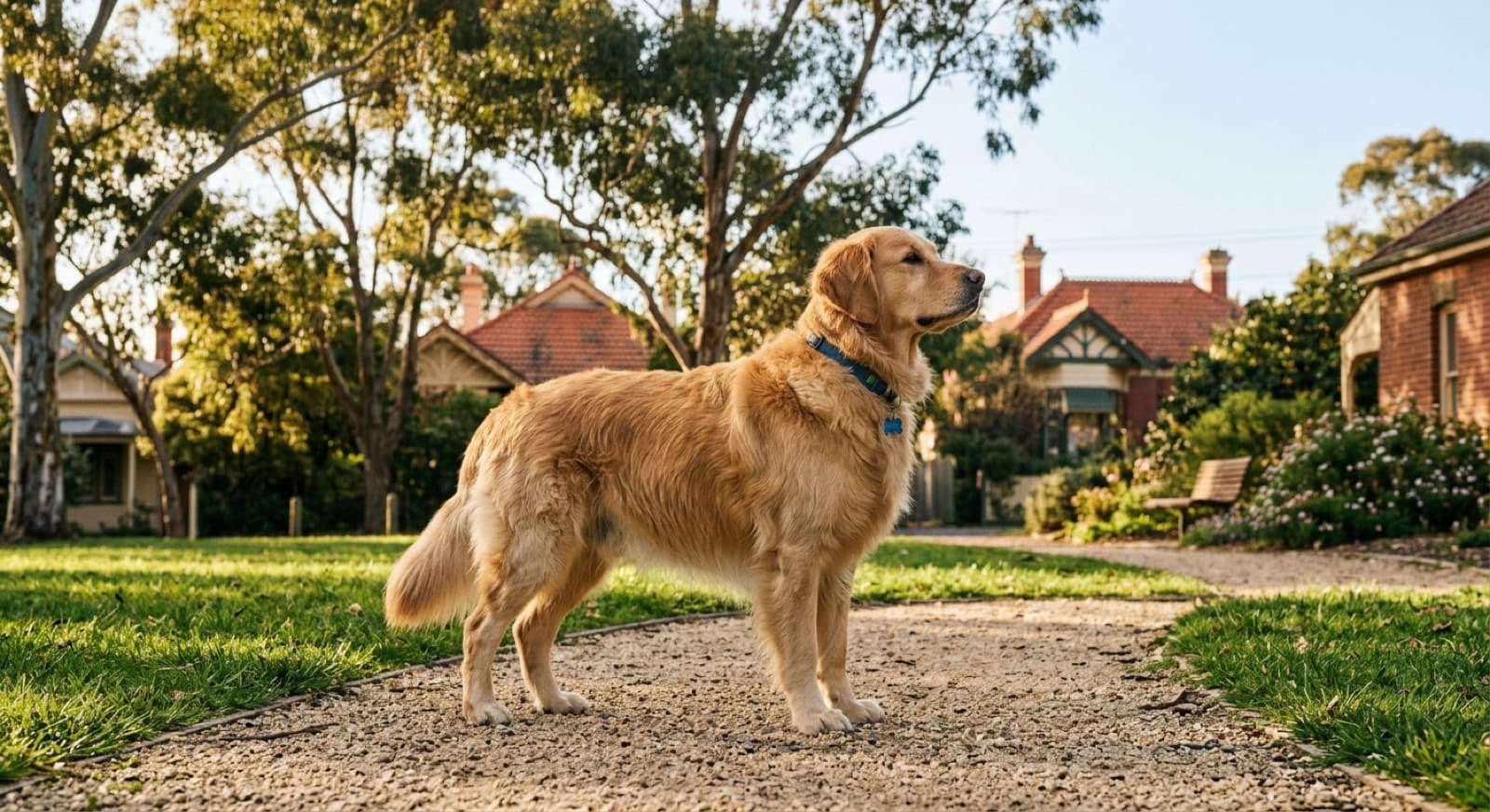
The Golden Retriever is a friendly, generally sound breed with one standout concern: an unusually high lifetime risk of cancer for a dog, including haemangiosarcoma, lymphoma, mast cell tumours and osteosarcoma. That means knowing your dog's normal, checking for lumps, and taking lethargy, weakness, lameness or a swollen belly seriously. Beyond cancer, plan for hip and elbow dysplasia, ear infections (floppy ears plus a love of water), skin allergies, hypothyroidism, cataracts and PRA, the heart condition SAS, and bloat in this deep-chested breed. Obesity makes everything worse. Lifespan is commonly around 10 to 12 years. Keep the dog lean and fit, care for ears and skin, manage the Melbourne summer heat, never shave the double coat, insure early, and treat problems fast. Paralysis ticks, the headline risk on the NSW coast, are low risk in metro Melbourne. This is general information, not veterinary advice; for your dog, always talk to your vet.
Melbourne's real seasonal danger: heatstroke on a heavy-coated dog
A Golden carries a dense double coat, and on a 40-plus degree Melbourne heatwave day that coat plus a dog that will keep playing is a genuine risk. Warning signs are heavy panting that does not settle, bright red gums, thick drool, weakness, stumbling, vomiting or collapse. Heatstroke is a true emergency and it kills fast. Move the dog into shade, offer small amounts of water, wet the belly, groin and paws with cool (not icy) water, and get to a vet straight away. Do not wait to see if it settles. The RSPCA Australia summary at RSPCA on protecting pets from heat stress is worth reading and keeping on your phone.
For emergency care (24/7 unless noted), Melbourne options include Lort Smith (North Melbourne, 8am to 10pm daily), the Animal Referral Hospital Essendon Fields and Animal Emergency Centre Mount Waverley, Advanced Vetcare (Kensington), and the University of Melbourne teaching hospital at Werribee.
Cancer: the breed's biggest health concern
The honest first thing to say about Golden health is the hardest: the breed has an unusually high lifetime risk of cancer for a dog, and it is the leading health concern in Goldens. This is not a reason to avoid the breed, but it is a reason to go in informed and to insure early. The Morris Animal Foundation Golden Retriever Lifetime Study exists precisely because the breed's cancer burden is so high. We are deliberately not attaching a single percentage, because published figures vary between studies and lines and one number would mislead more than it helps. The elevated risk itself is well established.
The cancers most associated with the breed are haemangiosarcoma (a blood-vessel cancer that often affects the spleen or heart and can cause a sudden internal bleed), lymphoma, mast cell tumours (skin lumps that can be more than they look) and osteosarcoma (bone cancer). What an owner does with this information is practical, not fearful:
- Know your dog's normal, and run your hands over the whole body regularly so you notice a new or changing lump early.
- Take whole-body signs seriously: unexplained lethargy or weakness, sudden collapse, pale gums, a swollen belly, persistent lameness, weight loss or a lasting loss of appetite.
- See the vet promptly rather than waiting, because early assessment gives the best options. Sudden collapse with pale gums is an emergency.
- Enrol in pet insurance while the dog is young and healthy, before anything becomes a pre-existing exclusion.
Most lumps on a Golden are not cancer, and most Goldens live full, happy lives. The point is simply that in this breed, a lump or an off-colour spell earns a vet visit rather than a wait-and-see.
Joints: hips and elbows
After cancer, the joints are the next thing to plan for in a large, fast-growing breed. Hip and elbow dysplasia are developmental conditions where the joint does not form or fit correctly, leading to pain, stiffness and arthritis over time. Responsible breeders screen for them, databases like the Orthopedic Foundation for Animals track hip and elbow scores, and Dogs Victoria promotes screening for member breeders, but you rarely know a rescue dog's breeding history. What you control matters most day to day:
- Keep the dog lean, because every extra kilo loads the joints and Goldens gain weight easily.
- Avoid forced high-impact exercise in a growing puppy (under about 18 months) to protect developing joints.
- Choose regular moderate exercise and swimming over repetitive hard jumping.
- See your vet for any limping, stiffness after rest, or reluctance to jump or climb stairs.
Ears, skin and thyroid
Ears. Goldens are prone to ear infections, and it is a combination of anatomy and habit: long floppy ears trap warmth and moisture, and the breed loves water, so a swim leaves the canal damp. Signs are head shaking, scratching, a smell, redness or discharge. Dry the ears after every swim or bath, check them regularly, use only a vet-recommended cleaner rather than cotton buds pushed into the canal, and see your vet at the first sign of trouble, because a low-grade infection left alone can become chronic.
Skin. Skin allergies (atopic dermatitis) are common. An allergic Golden shows itchy, inflamed skin, licks or chews the paws, and gets recurrent ear and skin infections, with triggers that may be environmental, food, or both. It is manageable but usually lifelong, and the underlying allergy has to be managed rather than just each flare, so persistent itching or recurring infections need a vet. The RSPCA Knowledgebase has sound general guidance on skin and allergy care.
Thyroid. Hypothyroidism, an underactive thyroid, occurs in the breed and can show as weight gain, lethargy, a poor or thinning coat and recurrent skin problems. It is straightforward to diagnose with a blood test and manage with daily medication once identified, so mention any of those signs to your vet.
Meet an adoptable Golden Retriever in Melbourne
Rescue Goldens arrive already desexed, vaccinated, microchipped and vet-checked, and an adult often comes with a known health history. Browse live listings across the Victorian rescues we aggregate.
See Available Golden Retrievers →Eyes and heart
Eyes. Goldens are prone to hereditary cataracts (a clouding of the lens) and progressive retinal atrophy (PRA), a gradual degeneration of the retina that leads to vision loss, and responsible breeders screen for eye disease. Any cloudiness, bumping into things, hesitancy in dim light or a change in the appearance of the eyes is worth a vet check, because some conditions can be treated and all benefit from being caught early.
Heart. The breed is associated with subvalvular aortic stenosis (SAS), a narrowing below the aortic valve that a vet may first pick up as a heart murmur, sometimes in a young dog. Many murmurs are harmless, but a vet can decide whether one needs a cardiac work-up, which a Melbourne referral hospital can provide. If a rescue notes a murmur on a Golden, ask about it and follow the vet's advice rather than assuming the worst.
Bloat: the emergency every owner must know
Bloat, or gastric dilatation-volvulus (GDV), is a sudden, life-threatening emergency where the stomach fills with gas and can twist on itself, cutting off its own blood supply. Deep-chested breeds like the Golden are at higher risk, and a dog can go from healthy to critical within an hour or two. This is the one health issue where knowing the signs in advance genuinely saves lives.
The signs to memorise: a swollen or distended belly, unproductive retching (trying to vomit but bringing nothing up), heavy drooling, restlessness, pacing and obvious distress. If you see these, treat it as a true emergency and get to a vet immediately, at any hour, because surgery within the first few hours is what saves these dogs. Melbourne has 24/7 emergency hospitals, including the referral hospitals at Essendon Fields, Mount Waverley, Kensington and Werribee (Lort Smith in North Melbourne's emergency department also opens daily, 8am to 10pm), so know your nearest before you ever need it. As sensible precautions, feed smaller meals rather than one large daily feed, and avoid hard exercise right around mealtimes.
Heat, the double coat and the Melbourne climate
Goldens feel the heat because of their heavy double coat, so summer management matters even in temperate Melbourne. The city has a mild oceanic climate for much of the year, then spikes into 40-plus degree days several times a summer, and those spikes are the danger window. Exercise in the cool of the early morning or evening, keep sessions sensible on hot, humid days, provide constant shade and water, and never leave the dog in a car or a hot yard. Learn the signs of heat stress: heavy laboured panting, drooling, weakness, bright red gums and collapse. Treat overheating as an emergency, cool the dog and get to a vet.
One firm rule: never shave a Golden's double coat to keep it cool. The coat insulates against heat as well as cold and shields the skin from sunburn, and shaving can change how it regrows and how the dog regulates temperature. Brush it out instead, two or three times a week, with heavier moults in spring and autumn. The upside of Melbourne's climate is that the cool half of the year suits this breed well, and off-lead spots like Royal Park in Parkville and parts of Yarra Bend Park in Kew, listed in the Parks Victoria dog-friendly index, are good places to burn off a Golden's energy and keep the weight in check.
Parasites are the routine layer. For most metropolitan Melbourne dogs the paralysis tick is a low local risk, because the Australian paralysis tick is an eastern-seaboard species that does not establish populations in the city. The real tick risk is travel to the NSW coast or East Gippsland, where you should start prevention before the trip and check the coat down to the skin daily. Closer to home, fleas and intestinal worms are a year-round concern, and heartworm, spread by mosquitoes and present in Victoria, needs its own prevention. Many owners cover all of these with a single monthly product, so make it a vet conversation. Agriculture Victoria's animal welfare pages also cover the broader responsibilities of dog ownership in the state, including council registration under the Domestic Animals Act 1994 (Vic).
Melbourne vet care: who handles what for a Golden
Day-to-day care is any Melbourne GP vet. Take the dog in for an introductory check within a fortnight of adoption, and get a baseline weight, body-condition score, ear check and a listen to the heart on the file from the start. Goldens do not need a breed specialist for ordinary care.
Emergencies and specialist referrals (orthopaedic surgery, cardiology, oncology) are well served in Melbourne. Lort Smith in North Melbourne runs an emergency service open every day of the year. The Animal Referral Hospital at Essendon Fields and the Animal Emergency Centre at Mount Waverley offer 24/7 emergency plus specialty referral across the north-west and east. Advanced Vetcare in Kensington is a 24-hour critical-care and specialist hospital, and the University of Melbourne's teaching hospital at Werribee provides 24/7 emergency and specialist care in the west. Your GP vet refers you when a case needs specialist input.
Budgeting and insurance
A Golden Retriever is a large dog with large-dog vet bills. The routine costs (quality food in the volume a big dog eats, an annual check, ear and skin care, dental care, year-round parasite prevention, grooming, registration) are manageable, but the breed carries a real risk of larger one-offs. Cancer treatment, joint management, bloat surgery and chronic skin or ear care can each run well into four figures at a Melbourne referral hospital.
That is why pet insurance is a sensible decision with this breed, more so than with most. Enrol while the dog is young and healthy, before anything becomes a pre-existing exclusion, and compare a few Australian providers on chronic and hereditary cover, the annual limit and the excess. Top-tier cover for a healthy adult Golden in 2026 runs roughly $50 to $110 a month, depending on the dog's age at sign-up and your excess. The major providers that cover the breed include PetSure (which underwrites many brand-name policies), Bow Wow Meow, Petplan Australia, and RSPCA Pet Insurance. Read the product disclosure statement on whichever you pick. We cover the full cost of adopting and keeping the breed in our Golden Retriever adoption guide, and the day-to-day of living with one in our family and first-dog guide.
Frequently Asked Questions
What health problems are Golden Retrievers prone to?
Golden Retrievers are generally sound, friendly dogs, but the breed carries a few predictable risks worth knowing before you adopt. The one that sets Goldens apart is an unusually high lifetime risk of cancer for a dog breed, including haemangiosarcoma, lymphoma, mast cell tumours and osteosarcoma. Beyond cancer, plan for hip and elbow dysplasia, ear infections (a combination of floppy ears and a love of water), skin allergies, hypothyroidism, eye conditions like cataracts and progressive retinal atrophy, a heart condition called subvalvular aortic stenosis, and bloat because they are a deep-chested breed. Obesity is common and makes joints and general health worse. Lifespan is commonly around 10 to 12 years. None of this should scare you off a lovely breed, but it is a reason to insure early, keep the dog lean and fit, and build a good relationship with a vet. This is general information, not veterinary advice.
Do Golden Retrievers really have a high cancer rate?
Yes. Golden Retrievers are recognised as having an unusually high lifetime risk of cancer compared with dogs generally, and it is the leading health concern in the breed. The Morris Animal Foundation's Golden Retriever Lifetime Study, which has followed thousands of Goldens over years, exists precisely because the breed's cancer burden is so high. The cancers most associated with Goldens include haemangiosarcoma (a blood-vessel cancer, often of the spleen or heart), lymphoma, mast cell tumours and osteosarcoma (bone cancer). We are deliberately not putting a single percentage on it, because figures vary between studies and lines and one number would mislead, but the elevated risk is well established. What this means for an owner is practical rather than frightening: know your dog's normal, check regularly for new or growing lumps, and take signs like unexplained lethargy, weakness, collapse, lameness, weight loss or a swollen belly seriously and to the vet promptly. Early assessment gives the best options.
What are the early signs of cancer to watch for in a Golden?
There is no single sign, which is exactly why knowing your dog's normal matters. Run your hands over the whole dog regularly and note any new lump, a lump that is growing or changing, or a sore that will not heal, and have your vet check anything you find rather than waiting. Whole-body signs are just as important: unexplained tiredness or weakness, sudden collapse, pale gums, a distended or swollen belly, persistent lameness or limping, unexplained weight loss, a lasting loss of appetite, or difficulty breathing. Haemangiosarcoma in particular can cause a sudden internal bleed with collapse and pale gums, which is an emergency. None of these signs is proof of cancer, and most lumps on a Golden are not cancerous, but in a breed with elevated cancer risk they earn a prompt vet visit rather than a wait-and-see. This is general information, not a diagnosis.
Do Golden Retrievers get hip and elbow dysplasia?
Yes, joint problems are one of the main non-cancer concerns for the breed. Hip and elbow dysplasia are developmental conditions where the joint does not form or fit correctly, which leads to pain, stiffness and arthritis over time, and they are common in large, fast-growing breeds like this one. Responsible breeders screen their dogs, databases such as the Orthopedic Foundation for Animals track hip and elbow scores, and Dogs Victoria promotes screening for member breeders, but you rarely know a rescue dog's breeding history. What you can do matters more day to day: keep the dog lean because every extra kilo loads the joints, avoid forced high-impact exercise in a growing puppy under about 18 months, and see your vet for any limping, stiffness after rest, or reluctance to jump or climb stairs. Treatment ranges from weight and activity management to medication and, in some cases, surgery through a Melbourne referral hospital.
Why do Golden Retrievers get so many ear infections?
It is a combination of their anatomy and their habits. Goldens have long floppy ears that cover the ear canal and trap warmth and moisture, and they love water, so a swim or a wet Melbourne day leaves the ear canal damp, which is exactly the environment ear infections thrive in. The signs are head shaking, scratching at the ear, a smell, redness or discharge, and pain when you touch the ear. The prevention is straightforward: dry the ears after every swim or bath, check them regularly, and use only a vet-recommended ear cleaner rather than cotton buds pushed into the canal. If an ear looks sore, smells, or is discharging, see your vet, because a low-grade infection left alone can become chronic and much harder to treat. Recurrent ear trouble can also be a sign of underlying skin allergy, which is worth investigating.
What skin and thyroid problems do Golden Retrievers have?
Skin allergies (atopic dermatitis) are common in the breed. An allergic Golden shows itchy, inflamed skin, often licks or chews at the paws, and tends to get recurrent ear and skin infections, and the triggers can be environmental (pollens, grasses, dust mites), food, or both. It is a manageable but usually lifelong condition, and the underlying allergy has to be managed rather than just each flare, so persistent itching, hair loss or recurring infections warrant a vet rather than repeated home remedies. Separately, hypothyroidism (an underactive thyroid) occurs in the breed and can show as weight gain, lethargy, a poor or thinning coat, and skin problems. It is simple to diagnose with a blood test and manage with daily medication once identified, so mention any of those signs to your vet. Keeping a Golden lean also helps its skin, joints and general health.
What is bloat and why is it an emergency in Golden Retrievers?
Bloat, or gastric dilatation-volvulus (GDV), is a sudden, life-threatening emergency where the stomach fills with gas and can twist on itself, cutting off its own blood supply. Deep-chested breeds like the Golden Retriever are at higher risk, and a dog can go from healthy to critical within an hour or two, so it kills quickly if not treated. Learn the signs: a swollen or distended belly, unproductive retching or trying to vomit without bringing anything up, drooling, restlessness, pacing and obvious distress. If you see these, treat it as a true emergency and get to a vet immediately, at any hour, because surgery within the first few hours is what saves these dogs. Melbourne has 24/7 emergency hospitals, so know your nearest before you ever need it. As precautions, feed smaller meals rather than one large one, and avoid hard exercise right around mealtimes.
What eye and heart conditions do Golden Retrievers get?
A few are worth knowing. On the eyes, Goldens are prone to hereditary cataracts (a clouding of the lens) and progressive retinal atrophy (PRA), a gradual degeneration of the retina that leads to vision loss, and responsible breeders screen for eye disease. Any cloudiness, bumping into things, hesitancy in dim light or a change in the eyes' appearance is worth a vet check, because some conditions can be treated and all benefit from being caught early. On the heart, the breed is associated with subvalvular aortic stenosis (SAS), a narrowing below the aortic valve that a vet may first pick up as a heart murmur, sometimes in a young dog. Many murmurs are harmless, but a vet can decide whether a murmur needs a cardiac work-up. If a rescue notes a murmur on a Golden, ask about it and follow the vet's advice rather than assuming the worst. This is general information, not veterinary advice.
How do I keep a Golden Retriever safe in the Melbourne heat?
Goldens feel the heat because of their heavy double coat, so summer management matters even in temperate Melbourne. The city sits mild for much of the year, then spikes into 40-plus degree heatwave days several times a season, and those spikes are the danger window. Exercise in the cool of the early morning or evening, skip the middle of the day on hot days, provide constant shade and water, and never leave the dog in a car or a hot yard. Swimming is a great way for a Golden to cool off, just rinse and dry the ears afterwards. One rule to hold firmly: never shave a Golden's double coat to keep it cool. The coat insulates against heat as well as cold and protects the skin from sunburn, and shaving can damage how it regrows and how the dog regulates temperature. Brush it out instead. Watch for heat stress (heavy laboured panting, drooling, weakness, bright red gums, collapse) and treat it as an emergency.
Do Melbourne Golden Retrievers need paralysis tick prevention?
For most metropolitan Melbourne dogs the local paralysis-tick risk is low. The Australian paralysis tick (Ixodes holocyclus) is an eastern-seaboard species that runs down the coast and does not establish populations in Melbourne, so a Golden living and walking in the metro area is at far lower risk than a dog on the NSW coast or in East Gippsland. The real risk is travel: if you take your dog to those areas, use tick prevention before the trip and do daily tick checks down to the skin, which matters for a swimmer that walks in bush and coastal areas. Fleas, intestinal worms and mosquito-borne heartworm are the year-round parasites that matter more in Melbourne. Ask your vet for prevention suited to where you actually live and travel.
How long do Golden Retrievers live, and how can I help mine stay healthy?
Golden Retrievers commonly live around 10 to 12 years, and the way you care for the dog makes a real difference to both the length and the quality of that time. The biggest levers you control are keeping the dog lean (obesity worsens joints, cancer risk and general health), regular gentle-to-moderate exercise to keep it fit without hammering the joints, staying on top of ears, skin and dental care, feeding sensibly to reduce bloat risk, managing the Melbourne summer heat, and above all treating any lump, lameness, lethargy or off-colour spell promptly rather than waiting. Regular vet checks matter more than average in a breed with elevated cancer risk, because early detection changes the options. A rescue Golden arrives already desexed, vaccinated, microchipped and vet-checked, and adopting an adult means you often know its health history, which is a genuine advantage.
Keep reading
Adoptable Golden Retrievers in Melbourne
Live listings of Golden Retrievers and Golden crosses across the Victorian rescues we aggregate.
Golden Retriever Adoption in Melbourne
Where to adopt, why Goldens are uncommon in rescue, and what it costs against a breeder.
Golden Retriever as a Family & First Dog
The gentle temperament that earns the reputation, and the exercise, shedding and cost people underestimate.
All Melbourne Adoption Guides
Browse every breed and how-to guide for adopting a rescue dog in Melbourne.