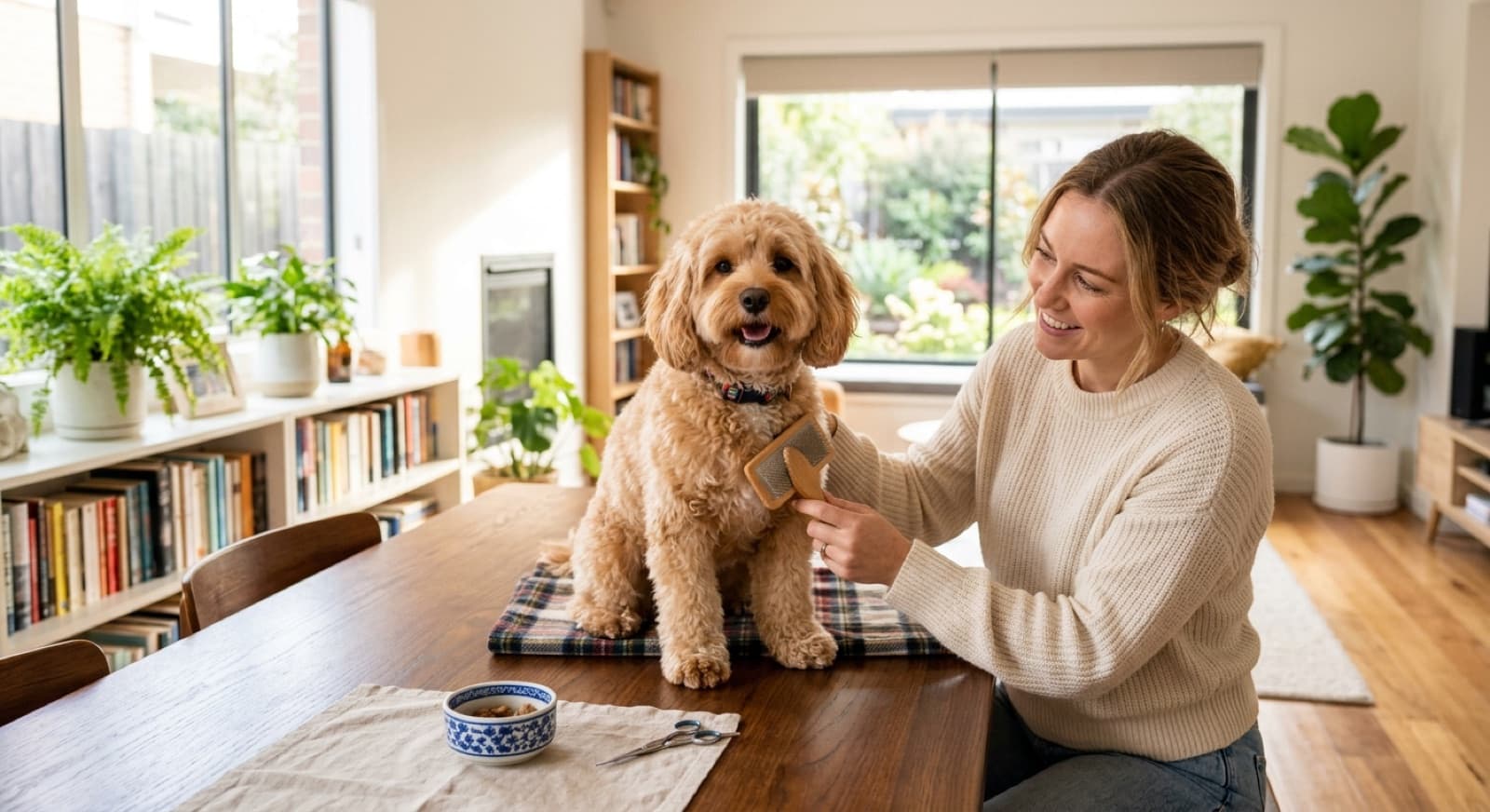
The short answer
Cavoodle grooming routine: brush three to seven times a week at home, professional groom every six to eight weeks, and a full body check for mats once a week (behind the ears, armpits, chest, under the collar). A Melbourne professional groom costs roughly $90 to $150 per visit, more for mobile groomers or a shave-down on a matted coat. Through summer, switch to a shorter 10 to 20mm summer cut rather than shaving the dog to the skin; a Cavoodle is not a heavy double coat, so a summer trim is fine. The single biggest grooming mistake is going longer than 10 weeks between professional visits without intensive home brushing; that almost always means matting requiring a shave-down.
Why Cavoodle coats need so much work
A Cavoodle coat is unusual in the dog world. The Cavalier parent contributes a silkier outer coat, and the Poodle parent contributes the tight curl and the low-shedding undercoat. The cross result is a coat that grows continuously (it does not shed out seasonally the way most double-coated breeds do) and that tangles easily when the curl interacts with itself, with the dog's skin moisture, and with anything sticky the dog rubs against.
Three biological realities to understand:
- The coat grows forever. A Cavoodle coat does not stop at a natural length. Left untrimmed, it will keep growing year after year. Without intervention the dog ends up trapped in its own coat. Clipping every six to eight weeks is not cosmetic; it is necessary.
- The curl traps everything. Pollen, dirt, grass seeds, leaves, mud, water. Walks through Melbourne's parks and creek trails deposit plant material and dirt, and inner-city walks add dust and street debris. All of it lodges in the coat unless removed promptly.
- Matting starts at the skin. By the time you can see a mat from the surface, the underside is already tightly packed against the skin. Severe matting is impossible to brush out without causing pain. The only humane response is to shave the coat down to start over, then commit to a stricter routine.
Coat types: F1, F1B, F2 and what they mean
Cavoodle generation determines a lot about how the coat behaves.
| Generation | Genetics | Coat tendency | Shedding |
|---|---|---|---|
| F1 | 50% Cavalier and 50% Poodle | Wavy, soft, variable | Moderate (some dogs more than others) |
| F1B | 25% Cavalier and 75% Poodle | Tight curls, dense | Very low |
| F2 | F1 to F1 (still 50/50 average but more variable) | Highly variable within a litter | Variable |
| F2B | F1 to Poodle | Tighter curls, dense | Low |
For grooming purposes: F1B and F2B coats need more frequent professional clipping (the tight curl mats faster) but are easier for allergy sufferers because they shed less. F1 coats are slightly easier to brush out at home but shed more visibly and need attention to the softer texture, which tangles in moisture. F2 coats are unpredictable; what you do depends on the specific dog.
A rescue Cavoodle's generation is sometimes specified in the listing, sometimes not. Either way, your groomer will assess the coat at the first visit and recommend a routine.
The home routine that actually works
Owners who never have matting trouble share a consistent pattern. Here is what works.
Daily (60 seconds):
- Quick face wipe after meals (Cavoodles get food in their facial coat)
- Check around the eyes for tear-staining and clean if needed
- Pat-down after walks to remove obvious debris
Three to four times a week (10 to 15 minutes):
- Slicker brush through the body coat, working from head to tail
- Check the matting hotspots: behind ears, armpits, chest, under collar, tail base
- Comb through with a metal comb to catch any tangles the slicker missed
- Spritz with detangler if the coat feels dry or static
Once a week (30 to 45 minutes):
- Full body brush with both slicker and comb
- Inspect ear canals (Cavoodles are prone to ear infections; clean if waxy)
- Check paw pads for matting and trim hair between toes if growing into the pads
- Wipe under the collar and harness area
- Sanitary area check (trim if hair is catching debris)
Every 4 to 6 weeks (one hour):
- Full bath with dog-safe shampoo and conditioner
- Towel-dry then blow-dry on a cool setting while brushing (this prevents the coat curling tight as it dries, which is what causes new mats)
- Trim any obvious overgrowth around eyes and feet
Every 6 to 8 weeks (professional groomer):
- Full clip to maintain a manageable coat length
- Sanitary trim, ear hair removal, nail trim
- Anal gland check (some groomers include this, some refer to a vet)
The matting hotspots and how to catch them early
Matting starts in predictable places. Knowing where to look prevents most of the problem.
- Behind the ears. The single most common matting spot. The skin behind the ears is naturally warmer and slightly moist, the hair is fine, and the dog scratches there frequently. Run your fingers behind both ears every brushing session.
- Inside the ear flap. The leather of the ear flap rubs against the coat, creating friction tangles. Also a hotspot for ear infection (the floppy ear traps moisture).
- Armpits. Constant skin-on-coat friction during walking. Lift each front leg and check weekly.
- Chest. The chest hair is dense and the harness or collar rubs through it. Cavoodles in regular harness use mat at the harness contact points if not brushed.
- Under the collar. Remove the collar weekly and brush the underneath thoroughly.
- Belly and groin. Skin-on-coat friction. Cavoodles that sit and slide on grass collect debris here.
- Between the back legs. Moisture, friction and skin folds all together.
- Tail base. The coat changes direction here and tangles easily.
- Around the eyes. Tear-staining hardens the coat; trim regularly.
- Between the toes. Grass, dirt and debris trap here; matting in the paw pad makes the dog walk strangely.
A useful weekly habit: while watching TV, run your fingers through each of these spots. Any tangle you can feel with your fingers is a developing mat. Brush it out immediately with the slicker and metal comb, working a small amount of detangler in if needed. The RSPCA takes the same practical line on coat care, that regular brushing and grooming are part of a dog's basic welfare, not an optional extra; you can read its guidance in the RSPCA Knowledgebase.
Browse Cavoodles available in Melbourne rescue
Across the Victorian rescues we aggregate, listing notes often describe a dog's coat type and grooming history, so you can plan the routine before you bring one home.
See Available Cavoodles →Realistic Melbourne grooming costs
Melbourne professional grooming pricing varies by suburb and salon type. Treat the ranges below as directional 2026 figures and confirm with the salon when you book.
| Service | Approx. cost (AUD) |
|---|---|
| Standard full groom (inner-city, inner-east salons) | $110 to $150 |
| Standard full groom (outer and western suburbs) | $90 to $130 |
| Mobile groomer at home | $110 to $180 |
| Shave-down on a matted coat | $150 to $250 |
| Bath-only or tidy-up between full grooms | $50 to $80 |
| Nail trim only | $15 to $25 |
| Annual cost (a professional groom every six weeks) | $770 to $1,300 |
That recurring groom is a real part of the honest cost of Cavoodle ownership, and it is worth budgeting for before you adopt rather than being surprised by it. Mobile groomers cost more per visit but save the dog the stress of a salon environment and save you the drive. Many Cavoodles do better with mobile grooming, particularly anxious dogs. Standard salons are quicker and often have more clipping experience with Cavoodle coats specifically.
Look for a Melbourne dog groomer who has hands-on experience with Cavoodle and oodle coats specifically. Some general pet salons clip a Cavoodle like they would a smaller poodle, and the result is uneven. Ask the groomer at the booking call how many Cavoodles they typically see in a week. The right answer is several. If they hesitate, try another salon.
Summer clip vs winter coat in Melbourne
Melbourne's weather shapes the grooming routine, and heat is the seasonal factor that matters most for coat care here. Paralysis ticks are a low risk in metro Melbourne, so the everyday grooming check is about mats and moisture, not ticks; a tick check only becomes important after travel to the New South Wales coast or East Gippsland. The decisions worth thinking through:
The summer clip (December to February).
A shorter all-over clip (10 to 20mm body, slightly longer face) gives the dog a cooler coat without exposing the skin to direct sun. Most Melbourne groomers know this as the puppy cut or summer cut. Because a Cavoodle is not a heavy double-coated breed, a shorter summer trim is fine and does not damage how the coat grows back, unlike a Shepherd or a husky, where a summer shave can ruin the coat for good. On 40C and heatwave days a well-clipped, well-brushed coat also stays cleaner and drier, which matters because a hot, damp coat mats faster.
Do not shave to the skin in a Melbourne summer. Cavoodles need some coat for sun protection and the cooling air gap; a full shave exposes pale Cavoodle skin to sunburn and removes the insulation the curls provide against radiant heat from concrete.
The winter coat (June to August).
Melbourne winters are cool and damp, with metro lows often around 6 to 10 degrees Celsius, but they are not cold enough that a Cavoodle needs a long coat for warmth. Many owners keep a 20 to 30mm teddy-bear length through winter for the look, but the function is mostly cosmetic. If your dog feels the cold, a small coat for outdoor walks is more practical than growing the coat out.
Rain and the after-walk routine.
Melbourne's damp winter drizzle and its summer storms both leave a Cavoodle wet through to the skin. A wet Cavoodle coat that air-dries curls back tightly and creates new mats overnight, so the damp climate is genuinely a matting risk if you let the coat dry on its own. Always towel-dry thoroughly after wet walks, and brush the coat as it dries. If you have time and a willing dog, the same blow-dryer-and-brush routine used after baths works for wet walks too.
Tools worth owning
The basic grooming kit for a Cavoodle owner:
- Slicker brush (medium size, metal pins). The workhorse. Spend on a quality one rather than the cheap dual-pack supermarket option.
- Metal greyhound comb. Used for finishing and finding mats the slicker missed.
- Detangling spray. Makes brushing through tangles painless. Look for dog-specific products; human conditioners can irritate skin.
- Small grooming scissors (rounded tips). For trimming around eyes, paw pads and tidy-ups. Rounded tips prevent accidental injury.
- Dog-safe shampoo and conditioner. Avoid anything heavily perfumed; sensitive skin is common in Cavoodles.
- Microfibre dog towel. Absorbs more than cotton and speeds drying significantly, which matters in Melbourne's damp weather.
- Ear-cleaning solution. Use weekly to help prevent the ear infections that floppy-eared breeds are prone to.
- Nail clippers or grinder. Most owners pay the groomer for nails; doing it at home is a learned skill.
A quality starter kit is a reasonable investment for tools that last years and save multiple shave-downs.
When to call the vet, not the groomer
Some coat and skin issues need veterinary attention rather than grooming:
- Hot spots (acute moist dermatitis). Red, weeping, painful patches that appear suddenly. The groomer cannot treat these; the dog needs the area shaved, cleaned and probably antibiotics. More common in warm, humid weather.
- Persistent ear infections. Visible redness, dark waxy discharge, head-shaking, scratching at the ears. The groomer can clean the outer ear but cannot treat an infection.
- Skin allergies showing up in the coat. Excessive scratching, coat thinning, scaly patches, recurring hot spots. Cavoodles inherit allergy tendencies; a vet may need to prescribe medicated shampoo or anti-itch treatment.
- Lumps or unusual growths. If you find anything under the coat during brushing that does not move with the skin, get it checked. Most lumps in dogs are benign, but the time to find out is before they grow.
- Eye irritation or tear staining that suddenly worsens. Could be entropion, conjunctivitis or a blocked tear duct. Worth a vet visit if it persists.
Frequently Asked Questions
How often does a Cavoodle need to be groomed in Melbourne?
Professional grooming every six to eight weeks is the standard for most Cavoodles, plus weekly to daily brushing at home in between. Through the Melbourne summer many owners shorten the cycle to every five to six weeks and keep the coat in a shorter clip. Skipping professional groomings beyond 10 to 12 weeks almost always means matting that needs a full shave-down at the next visit.
How much does Cavoodle grooming cost in Melbourne?
A standard full groom (bath, clip, ear clean, nail trim, sanitary trim) for a Cavoodle in Melbourne typically costs around $90 to $150 depending on the salon and location. Inner-city and inner-east salons around Richmond and Fitzroy sit at the higher end, outer and western suburbs at the lower. Mobile groomers charge roughly $110 to $180 with the convenience of coming to your home. A shave-down visit for a heavily matted coat runs about $150 to $250. Treat these as directional 2026 ranges and confirm with the salon.
Can I groom my Cavoodle at home?
Yes for brushing, bathing and basic trims. No for full clipping unless you invest in proper clippers and learn the techniques, because Cavoodle coats are tricky and uneven home cuts look uneven for months. The realistic split most owners settle into: home brushing three to seven times a week, home bath every four to six weeks, professional groom every six to eight weeks.
What does a matted Cavoodle coat look like and why is it serious?
Matting happens when the curly outer coat tangles into the softer undercoat and forms tight pads against the skin. It usually starts behind the ears, in the armpits, on the chest and around the collar. Severe matting pulls on the skin constantly, like wearing a too-tight jumper all day, creates moisture pockets where skin infections develop, and traps pollen and dirt. A heavily matted Cavoodle has to be shaved down by a professional groomer; there is no brushing out severe matting humanely.
Should I clip my Cavoodle shorter in a Melbourne summer?
A shorter clip is sensible for a Melbourne summer with its heat spikes; a full shave down to the skin is not. Because a Cavoodle is not a heavy double-coated breed, a shorter summer trim is fine and does no harm to how the coat grows back, unlike double-coated breeds where a summer shave can wreck the coat. Keep some length, though: the curly outer layer blocks UV and the air gap insulates against radiant heat from concrete. A puppy cut or summer cut of 10 to 20mm is the usual compromise. Discuss the length with your groomer.
What coat type does my Cavoodle have?
Cavoodle coat types vary by generation. F1 (first-cross, 50% Cavalier and 50% Poodle) typically has a softer, wavier coat that sheds moderately. F1B (cross back to Poodle, 25% Cavalier and 75% Poodle) has a tighter curly coat that sheds minimally. F2 (second-cross, F1 to F1) is the most variable. Your groomer will assess the coat type at the first visit and recommend a suitable cycle and tools.
What tools do I need to groom a Cavoodle at home?
A slicker brush (medium size, with metal pins) for the outer coat, a metal comb for finishing and finding mats, a pair of small grooming scissors for face and feet touch-ups, dog-safe shampoo and conditioner for baths, and a microfibre towel for drying. Optional but useful: a detangling spray, a slicker brush for ears, and ear-cleaning solution. Skip the cheap dual-purpose tools; they will not get through a Cavoodle coat properly.
Keep reading
Adoptable Cavoodles in Melbourne
Live listings with notes on coat type and grooming needs.
Cavoodle Adoption in Melbourne
Where to find one, the real cost versus a breeder, and the demand-supply reality.
Cavoodle Health Issues to Plan For
MVD, syringomyelia, hip dysplasia, patellar luxation, and pet insurance ROI.
How to Adopt a Dog in Melbourne
The full Melbourne adoption process, paperwork, vet questions and home-check tips.