The short answer
Plan for seven things: Boxer cardiomyopathy (an inherited rhythm disorder that can cause sudden collapse), aortic stenosis (a narrowed heart valve), mast cell tumours and other cancers, hip dysplasia, bloat (Boxers are deep-chested), hypothyroidism, and heat sensitivity from the short muzzle. Build a relationship with a vet early and ask for a heart listen at every check. Insure the dog the week you adopt, before anything is found, and keep it lean. In the Illawarra, add year-round paralysis tick prevention and know where the after-hours emergency hospital is. This is general information, not veterinary advice.
Why Boxers carry breed-specific health risks
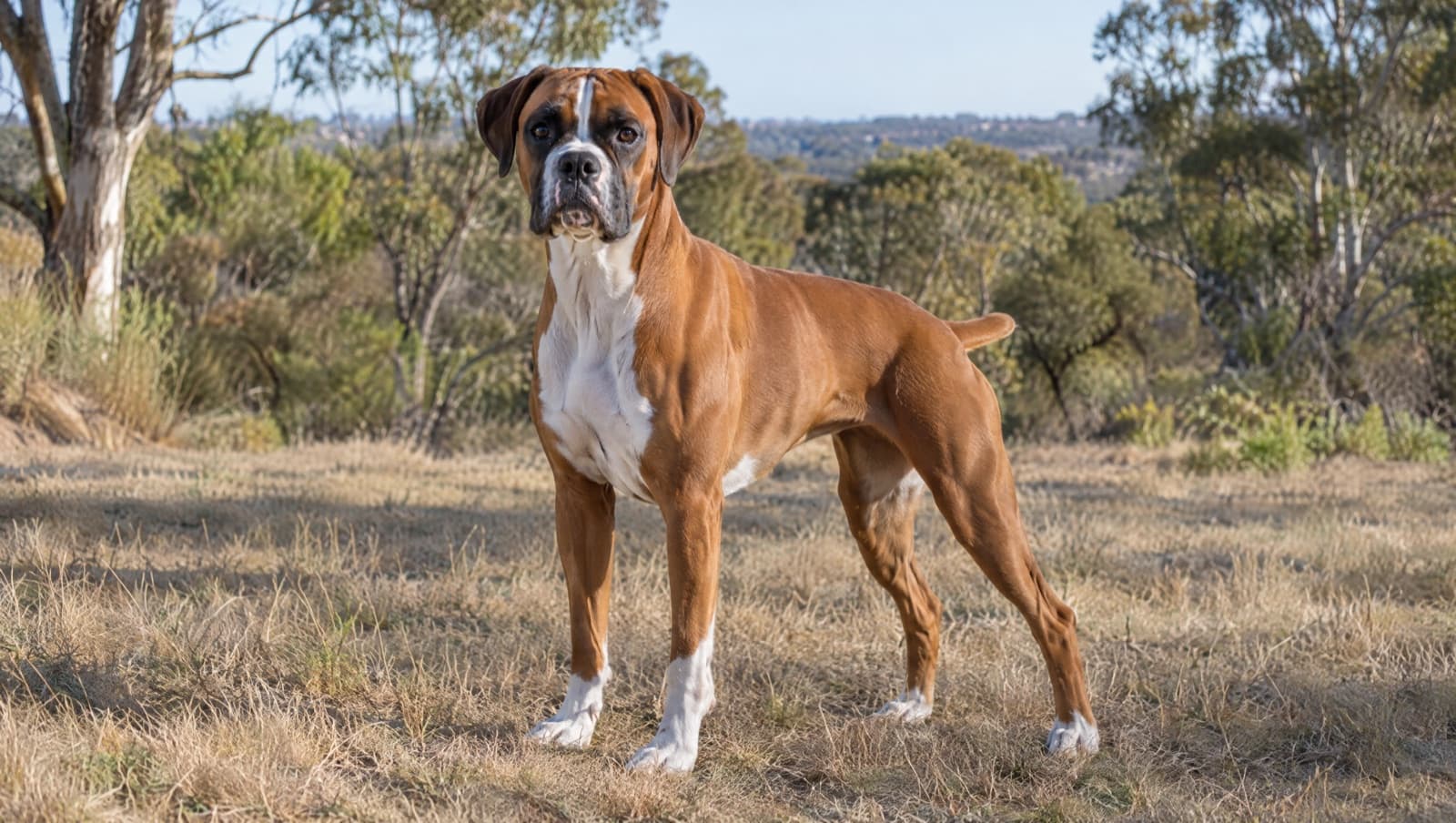
Boxers were developed in Germany in the late 1800s as a working and guarding breed. More than a century of selection fixed the traits people recognise (a powerful build, short muzzle and deep chest) along with some inherited conditions. Heart disease in particular is a defining breed concern, and responsible breeders now screen their dogs for it.
Good starting points for Australian owners are the Australian Veterinary Association, the RSPCA Knowledgebase and, for the inherited screening schemes, the Orthopedic Foundation for Animals, which keeps health databases for heart, hip and elbow results.
1. Boxer cardiomyopathy (ARVC)
Boxer cardiomyopathy, or arrhythmogenic right ventricular cardiomyopathy (ARVC), is an inherited disease of the heart muscle. Over time, the electrical signals in the heart become disorganised and the dog develops abnormal heartbeats. Some dogs never show signs. Others faint, weaken suddenly or, in the worst cases, die without warning.
Signs to watch for:
- Fainting or sudden weakness, often during exercise or excitement
- A brief collapse followed by a quick recovery
- Tiring earlier than usual on walks
- An irregular pulse
How it is found and managed:
Your vet listens for an irregular rhythm at each check. If something sounds wrong, the next step is usually an ECG, an echocardiogram and often a 24-hour Holter monitor, which records every heartbeat over a full day and catches rhythm problems a short consult can miss. Your vet will refer you to a veterinary cardiologist if the dog needs one. Treatment is prescribed by your vet or cardiologist, and many dogs on treatment live comfortably for years.
2. Aortic stenosis
Aortic stenosis is a narrowing at the heart's aortic valve that is present from birth. The heart has to work harder to push blood through it. Boxers are among the breeds most often affected.
- Mild. Often found only as a murmur during a routine check, with no effect on daily life.
- Moderate. Some dogs tire more easily and need a more measured exercise routine.
- Severe. Exercise is limited, there is a risk of collapse, and specialist care is needed.
A murmur at the vet is the usual first clue, and an echocardiogram grades the severity. Breeding dogs should be screened before they are bred. A rescue Boxer from unknown breeding should have a heart check at its first visit.
3. Mast cell tumours and other cancers
Boxers are well known among vets for skin tumours, especially mast cell tumours, and the breed is also over-represented for lymphoma and brain tumours. Cancer is one of the leading causes of death in the breed.
Mast cell tumours.
These can look like almost anything: a small raised bump, a soft swelling, a red patch, or a lump that seems to change size. Your vet can take a fine-needle sample during a normal consult. Early, low-grade tumours are usually removed surgically with good results. Higher-grade tumours need an oncology referral. The rule for Boxers is simple: get every new lump checked.
Other cancers to know about:
- Lymphoma. Often shows up as firm, enlarged lymph nodes under the jaw, in front of the shoulders or behind the knees.
- Brain tumours. New seizures in a middle-aged Boxer, behaviour changes or balance problems need prompt investigation, which may include an MRI at a referral hospital.
- Hemangiosarcoma. A cancer of blood vessel cells that can bleed internally and cause sudden weakness or collapse.
Moving to six-monthly vet checks from around age six helps catch cancers earlier.
Browse Boxers available around Wollongong
Rescue Boxers come vet-checked, and any known health issues are noted on the listing. Ask about the heart check before you commit.
See Available Boxers →4. Hip dysplasia
Hip dysplasia is a developmental condition where the hip joint forms loosely and wears into arthritis over time. Boxers carry a moderate breed risk. Responsible breeders score their dogs' hips before breeding, and the OFA hip dysplasia overview and the Merck Veterinary Manual explain how it is assessed.
Signs:
- Reluctance to run, jump or climb stairs
- A bunny-hopping gait, with both back legs moving together
- Stiffness after rest
- Lameness that slowly gets worse in middle age
Keeping the dog lean is the single most helpful thing you can do. Your vet will advise on pain relief, joint support and, for severe cases, surgical options. A padded bed off a hard floor helps older dogs.
5. Bloat (gastric dilatation volvulus)
Bloat happens when the stomach fills with gas and can twist on itself, cutting off its blood supply. It is a true emergency, and deep-chested breeds such as the Boxer are at higher risk. The Merck Veterinary Manual describes the warning signs.
Signs to act on immediately:
- A swollen, tight belly that comes on quickly
- Retching or trying to vomit with nothing coming up
- Heavy drooling
- Restlessness and pacing
- Pale gums and fast breathing as it progresses
If you see these, go straight to a vet. During business hours, ring your regular vet on the way. After hours, the Animal Referral Hospital Wollongong at Fairy Meadow describes itself as an after-hours emergency service for the Illawarra and South Coast, open after hours seven days a week.
Lowering the risk:
- Two or three smaller meals a day instead of one big one
- A slow-feeder bowl, since Boxers gulp
- No hard exercise for about an hour either side of meals
- Ask your vet whether a preventive gastropexy (stomach tacking) suits your dog
6. Hypothyroidism
An underactive thyroid slows the metabolism, and Boxers are at somewhat higher risk. The signs creep in slowly and are easy to blame on age: weight gain without eating more, lethargy, a thinning coat, repeated skin infections, and feeling the cold more than usual. A blood test diagnoses it, and the daily treatment your vet prescribes usually works well.
7. The short muzzle and coastal heat
Boxers are mildly brachycephalic, meaning their muzzle is shortened. Most breathe well, but they still cool less efficiently than long-nosed dogs, and a minority have Brachycephalic Obstructive Airway Syndrome (BOAS, narrowed nostrils and airways that make breathing harder). Signs of BOAS include loud snoring, noisy breathing on easy walks, tiring quickly and overheating on mild days. Your vet can assess the airway and explain medical or surgical options.
The Illawarra sits on the humid NSW coast, with hot summer days and sticky nights. Humid air makes panting less effective, so a Boxer can overheat on a day that does not feel extreme to you. The RSPCA guide to heatstroke in dogs covers the warning signs, and our Boxer exercise and heat guide has a full routine for the coast.
Paralysis ticks and other parasites
The Australian paralysis tick is native to the east coast, from north Queensland to eastern Victoria, and that includes all of coastal NSW. Around Wollongong, the bushland on the escarpment and along the creeks is typical tick country. The risk runs all year, with a peak from about August to February. The tick's toxin causes paralysis that starts in the back legs and can be fatal without veterinary treatment.
- Keep prevention going all year. Your vet will recommend a suitable product and schedule.
- Check by hand after bush walks. Run your fingers over the whole dog, including the head, neck, ears, lips and between the toes.
- Know the signs. Wobbly back legs, a changed bark, vomiting or gagging, and laboured breathing are an emergency. Go straight to a vet.
Fleas and intestinal worms are present all year, and mosquito-borne heartworm occurs in NSW, so ask your vet for a plan that covers those too. Our Wollongong dog parks guide has more on tick and snake safety near the escarpment.
Pet insurance for a Boxer
Insurance usually makes sense for this breed. Heart investigations, cancer surgery, cruciate repairs and hip surgery can each be expensive, and a Boxer is more likely than an average dog to need at least one of them.
- Insure before the first vet visit if you can. Every Australian insurer excludes pre-existing conditions, and a murmur or lump noted early becomes uninsurable.
- Choose a high annual limit. Boxer vet bills tend to be large ones.
- Get accident and illness cover. Accident-only cover misses most of what Boxers need.
- Read the cardiac and cancer terms. These are the two areas that matter most for the breed.
- Check tick paralysis cover and breathing-condition exclusions. Both matter on the NSW coast and for a short-faced breed.
Compare providers such as PetSure, Bow Wow Meow and RSPCA Pet Insurance before you choose.
Emergency care in the Illawarra
Your regular vet handles most care and refers you to a specialist when needed. For emergencies outside business hours, such as a collapse, bloat or a paralysis tick, the Animal Referral Hospital Wollongong at Fairy Meadow is an after-hours emergency service for the Illawarra and South Coast. It is an after-hours service, so during the day call your regular vet first. Save both numbers in your phone now, not during a crisis.
A year-by-year health plan
- The first year with you: a baseline vet visit with weight, heart listen and joint check. Insurance in place. Paralysis tick, flea, worm and heartworm prevention sorted with your vet.
- Ages 2 to 5: yearly checks, with a heart listen every time. Get any new lump sampled. Keep the dog lean.
- Ages 6 to 9: six-monthly checks. Senior blood tests including thyroid. Lumps checked promptly.
- Age 10 and up: more frequent check-ins, pain management for stiff joints, and quality-of-life conversations with your vet.
Frequently Asked Questions
How long do Boxers live?
Most Boxers live around 10 to 12 years. That is shorter than many breeds of a similar size, largely because heart disease and cancer are more common in Boxers. Regular vet checks, a heart listen at every visit from middle age, keeping the dog lean and getting any new lump checked quickly all help a Boxer reach the top of that range.
What is Boxer cardiomyopathy and how serious is it?
Boxer cardiomyopathy, also called arrhythmogenic right ventricular cardiomyopathy (ARVC), is an inherited heart muscle disease that causes irregular heart rhythms. It is serious, because some affected Boxers collapse or die suddenly with few warning signs. Signs include fainting, sudden weakness during exercise or excitement, and tiring early. Your vet listens for an irregular rhythm at each check and may refer you to a veterinary cardiologist for an ECG, an echocardiogram or a 24-hour Holter monitor. Many dogs do well for years on treatment your vet or cardiologist prescribes.
What is aortic stenosis in Boxers?
Aortic stenosis is a narrowing at the aortic valve of the heart that a dog is born with. Boxers are one of the breeds most often affected. Mild cases may never cause problems, while severe cases limit exercise and shorten life. A vet usually finds it as a heart murmur, then confirms how severe it is with an echocardiogram. A rescue Boxer from unknown breeding should have its heart checked at the first vet visit.
Why are skin lumps such a concern in Boxers?
Boxers are prone to mast cell tumours, a skin cancer that can look like almost any lump, from a small raised bump to a soft swelling. You cannot tell a harmless lump from a mast cell tumour by looking. Your vet can sample it with a fine needle in a normal consult. Caught early, most mast cell tumours are removed surgically with good results, so any new lump on a Boxer deserves a vet visit rather than a wait-and-see approach.
Are paralysis ticks a risk for Boxers around Wollongong?
Yes. The Australian paralysis tick lives along the whole NSW coast, and the bushland of the Illawarra escarpment and the creeks running down from it are typical habitat. It is a year-round risk with a peak from about August to February. The tick's toxin causes paralysis that can be fatal without veterinary treatment. Keep your Boxer on a tick prevention product your vet recommends, check the dog by hand after bush walks, and treat a wobbly back end, a changed bark or laboured breathing as an emergency.
Does the Illawarra climate affect Boxer health?
Mostly through heat. Boxers have a shortened muzzle, so they overheat faster than long-nosed dogs, and hot, humid summer days on the NSW coast make panting less effective. Walk early and late on warm days and skip the walk on the hottest ones. Winters on the coast are mild, but an older or arthritic Boxer still appreciates a warm bed off the floor on a cool morning.
Is pet insurance worth it for a Boxer?
For most Boxer owners, yes. Heart investigations, cancer surgery and orthopaedic surgery can each be expensive, and Boxers are more likely than average to need them. Take out cover as soon as you adopt, because every Australian insurer excludes pre-existing conditions, and a murmur or lump found at the first vet visit becomes uninsurable. Compare annual limits, cardiac and cancer cover, tick paralysis cover and any exclusions for breathing conditions.
Keep reading
Adoptable Boxers in Wollongong
Current listings, each with a vet check from the shelter or rescue.
Boxer Adoption in Wollongong
Where to find one, why Boxers reach rescue, and what adoption costs.
Boxer Exercise and Illawarra Heat
The daily exercise plan and how to handle hot, humid coastal days.
Dog Registration in Wollongong
Microchip first, then one lifetime registration on the NSW Pet Registry.
Wollongong Dog Guides
Registration, desexing, off-lead areas and more for Illawarra dog owners.
Dog Adoption in Wollongong
Every adoptable dog we track from Illawarra and NSW shelters and rescues.