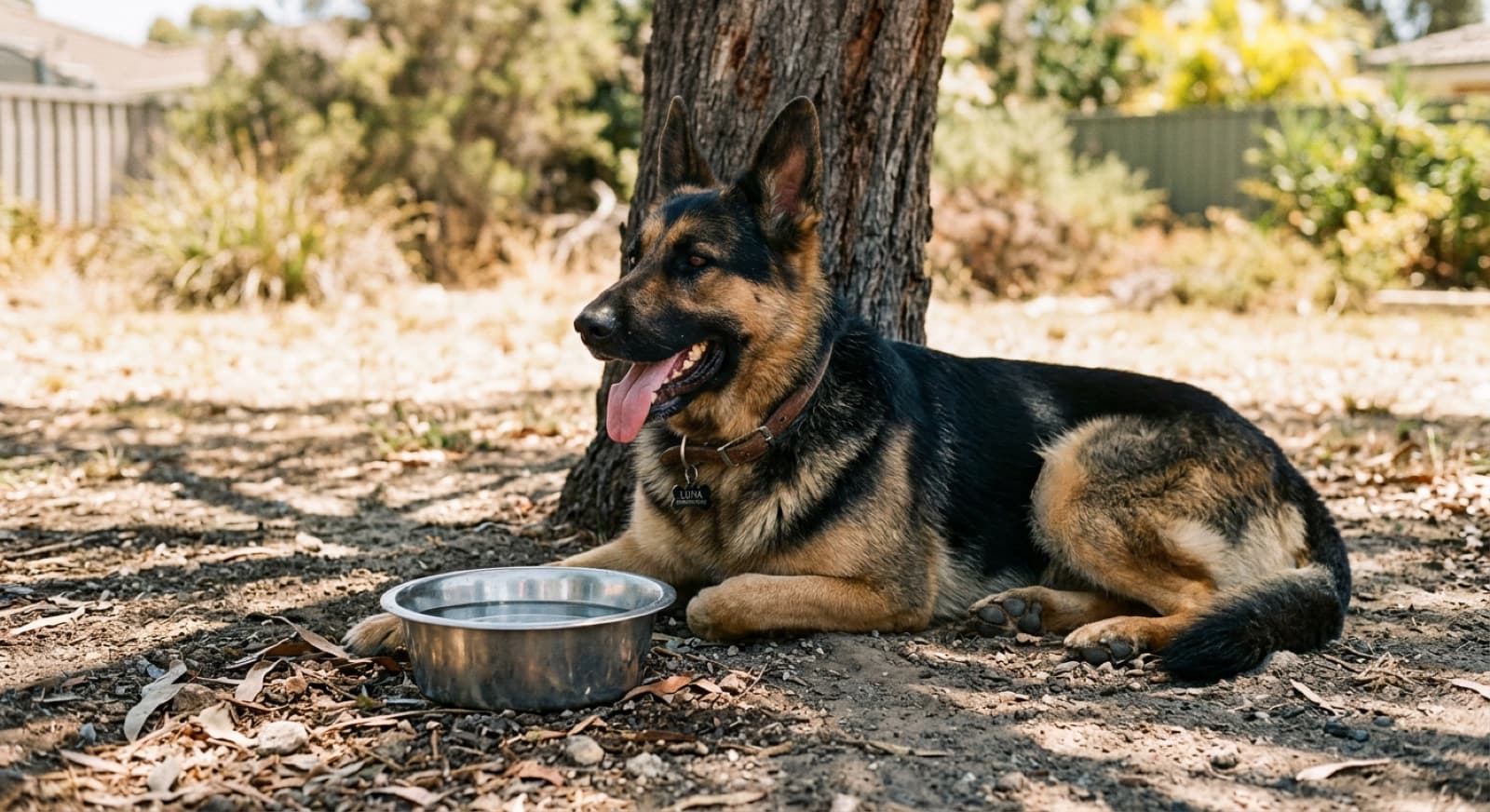
The short answer
A German Shepherd's double coat insulates against heat as well as cold and shades the skin, so you never shave it, even in the Perth summer. Instead, brush out the dead undercoat two or three times a week (daily during a coat blow) so air can move through the coat, which is what actually keeps the dog cool. Manage the heat by exercising only in the cool of early morning or evening, testing hot pavement first, and providing shade, water and never a parked car. Know the WA hazards too: snakes in the warmer months, 1080 baiting in reserves, and grass seeds in the coat. One WA upside is that paralysis ticks are not established here, so the local tick risk is low. Get the coat and heat right and the hardest part of a Perth Shepherd is solved.
How the double coat works
A German Shepherd has two layers: a coarser, weather-resistant outer coat of guard hairs, and a soft, dense undercoat beneath. Together they were built to keep a working dog comfortable across cold and heat alike, and the part most owners miss is that the coat works in both directions. The layer of air trapped in a well-maintained coat slows heat transfer either way, so it insulates against the sun and outside heat, not just the cold, while the guard coat shades the skin from direct sun.
That is why the coat is an asset in Perth rather than a liability, as long as it is looked after. A clean, brushed-out coat with the dead undercoat removed lets air circulate against the skin and does its job. A matted, clogged coat cannot, which is where heat problems and skin trouble begin. The maintenance, not the coat itself, is what matters.
Why you never shave a German Shepherd
It is the most common double-coat care mistake, and it is tempting in a hot, sunny climate. Shaving a double coat:
- Removes the dog's temperature regulation. Take away the coat and you take away the insulating air layer that slows heat gain, so a shaved Shepherd can feel the heat more, not less.
- Exposes the skin to sunburn. The coat shades pale skin from harsh WA ultraviolet, and a shaved Shepherd is at real risk of sunburn and, over time, a higher skin-cancer risk.
- Can grow back wrong. A shaved double coat often grows back patchy, with the soft undercoat coming in faster than the guard coat, sometimes permanently changing the texture and the coat's ability to insulate.
The only time clipping is appropriate is a coat so severely matted that brushing it out would be painful, and that is a call for a professional groomer or your vet, not a routine summer measure. For everyday heat, brushing beats shaving every time.
The shedding, and a brushing routine
German Shepherds shed heavily and continuously, with two bigger seasonal coat blows a year, so a routine keeps the hair manageable and keeps the coat doing its cooling job:
- Brush two to three times a week, stepping up to daily during a coat blow. Consistency beats the occasional marathon session.
- Use an undercoat rake or deshedding tool that reaches down to the undercoat, where the volume is, along with a slicker brush for the finer hair.
- Work down to the skin in sections rather than just over the top, so you remove the dead undercoat rather than tidying the surface.
- Make it a two-in-one job: brushing is the perfect time to check the coat and skin for grass seeds, ticks (if you have travelled east), lumps or irritation.
Managing the Perth heat
Perth has a Mediterranean climate: hot, dry summers and mild, wet winters. The double coat handles the winters easily; the summer is the challenge, because on the long runs of 35-to-40-degree days a double-coated dog heats up fast. The daily habits matter:
- Exercise in the cool hours only, early morning or late evening, never the middle of the day. Test the footpath with the back of your hand first, because hot bitumen and sand burn paw pads.
- Shade, water and cool space. Constant fresh water, shade in the yard, and the coolest part of the house on extreme days; a paddling pool or a hose session is a good low-heat outlet.
- Never leave a Shepherd in a parked car, even briefly, and never leave it outside without shade and water on a hot day.
- Know the heat-stress signs: heavy or frantic panting, drooling, wobbliness, bright red gums, vomiting or collapse. Move the dog to shade, wet it with cool (not icy) water, and get to a vet urgently.
Browse German Shepherds available in Perth rescue
Live listings from Perth shelters and WA rescues. Foster carer notes describe temperament, coat condition and household fit before you apply.
See Available German Shepherds →The WA outdoor hazards to know
Walking a dog in Western Australia comes with a few local hazards worth planning around.
Snakes. Dugites, gwardars and tiger snakes are active around Perth's bushland corridors, wetlands and river foreshores in the warmer months, roughly September to April. A curious dog that disturbs one can be bitten, which is a serious emergency, so keep your dog under close control on bush tracks and around water, and know your nearest 24/7 emergency hospital, such as Perth Vet Emergency at Cannington. If you suspect a snake bite, get to a vet immediately.
1080 baiting. Across many WA reserves and bushland, the state's Western Shield 1080 baiting program is used to protect native wildlife from feral predators. The poison is lethal to dogs, so watch for 1080 signage, treat every baited area as dangerous, and keep your dog under control and away from baits at all times.
Grass seeds. Through the WA spring and summer, barbed grass seeds work into a coat and can burrow into the skin, between the toes and into the ears and eyes, causing painful abscesses. A dense Shepherd coat catches them, so check the dog, especially the feet and ears, after any walk through long or dry grass, and see a vet for a sudden limp, head-shaking or a weepy eye.
One thing you can worry less about in Perth than on the east coast is the paralysis tick: it is an eastern-seaboard species and is not established in WA, so the local risk is low. The main time to think about it is before you travel east with your dog, when you should ask your vet about prevention. For where to walk off-lead, WA off-lead areas are set by each council, so check your council's dog exercise areas, for example the City of Stirling list, before assuming a park allows it.
Frequently Asked Questions
Should you shave a German Shepherd in summer?
No. It feels logical in the Perth heat, but shaving a double coat does more harm than good. The coat insulates against heat as well as cold and shades the skin from the sun, so shaving removes the dog's own temperature regulation and exposes pale skin to sunburn under harsh WA ultraviolet. A shaved double coat can also grow back patchy or with a changed texture. The right approach is the opposite: brush out the dead undercoat so air can move through the coat, which is what actually helps the dog stay cool. Only a severely matted coat should ever be clipped, and that is a decision for a groomer or vet.
How much do German Shepherds shed?
A lot, all year, with two heavier seasonal coat blows when the undercoat lets go in quantity (Shepherd owners half-jokingly call it 'German shedders'). A brush two or three times a week keeps most of it under control and keeps the coat doing its cooling job, stepping up to daily during a coat blow. A deshedding tool that reaches the undercoat removes far more than a standard brush. You will still find hair around the house, but consistent brushing is the difference between manageable and overwhelming.
How do I keep a German Shepherd cool in the Perth summer?
Exercise only in the cool of the early morning or late evening, never in the middle of a 38-degree day, and test the pavement with the back of your hand first: if you cannot hold it there comfortably, it is too hot for paws. Provide shade and constant fresh water, keep the dog in the coolest part of the house on extreme days, and never leave it in a parked car even briefly. Keep the coat brushed out so air moves through it, and watch for heat-stress signs (heavy panting, drooling, wobbliness, bright red gums, collapse) and cool the dog and get to a vet urgently if you see them.
What outdoor hazards should I know about walking a Shepherd in WA?
Three worth knowing. Snakes (mainly dugites, gwardars and tiger snakes) are active around Perth's bushland, wetlands and river foreshores in the warmer months, roughly September to April, and a snake-bitten dog is an emergency needing a vet fast, so keep your dog under control on bush tracks. In many WA reserves the Western Shield program uses 1080 baiting to protect native wildlife, which is lethal to dogs, so watch for 1080 signage and treat any baited area as dangerous. And grass seeds work into a coat and burrow into skin, paws and ears through summer, so check the dog over after walks in dry grass.
Do I need to worry about paralysis ticks in Perth?
Much less than on the east coast. The Australian paralysis tick is an eastern-seaboard species and is not established in Western Australia, so the local paralysis-tick risk to a Perth dog is low. The time to think about it is before you travel east with your dog, when you should ask your vet about tick prevention and do daily tick searches while you are away. At home in Perth, your routine parasite prevention is about fleas, worms and heartworm rather than paralysis ticks, but your vet can confirm the right plan.
Keep reading
German Shepherd Adoption in Perth
Where to find a rescue Shepherd, real costs vs a breeder, and what to expect.
German Shepherd Health Issues
Hips and elbows, degenerative myelopathy, bloat, EPI and the vet budget.
Adoptable German Shepherds in Perth
Live listings with foster carer notes on temperament and coat condition.
Perth Adoption Resources
Guides on adopting, costs, council rules and settling a rescue dog in Perth.