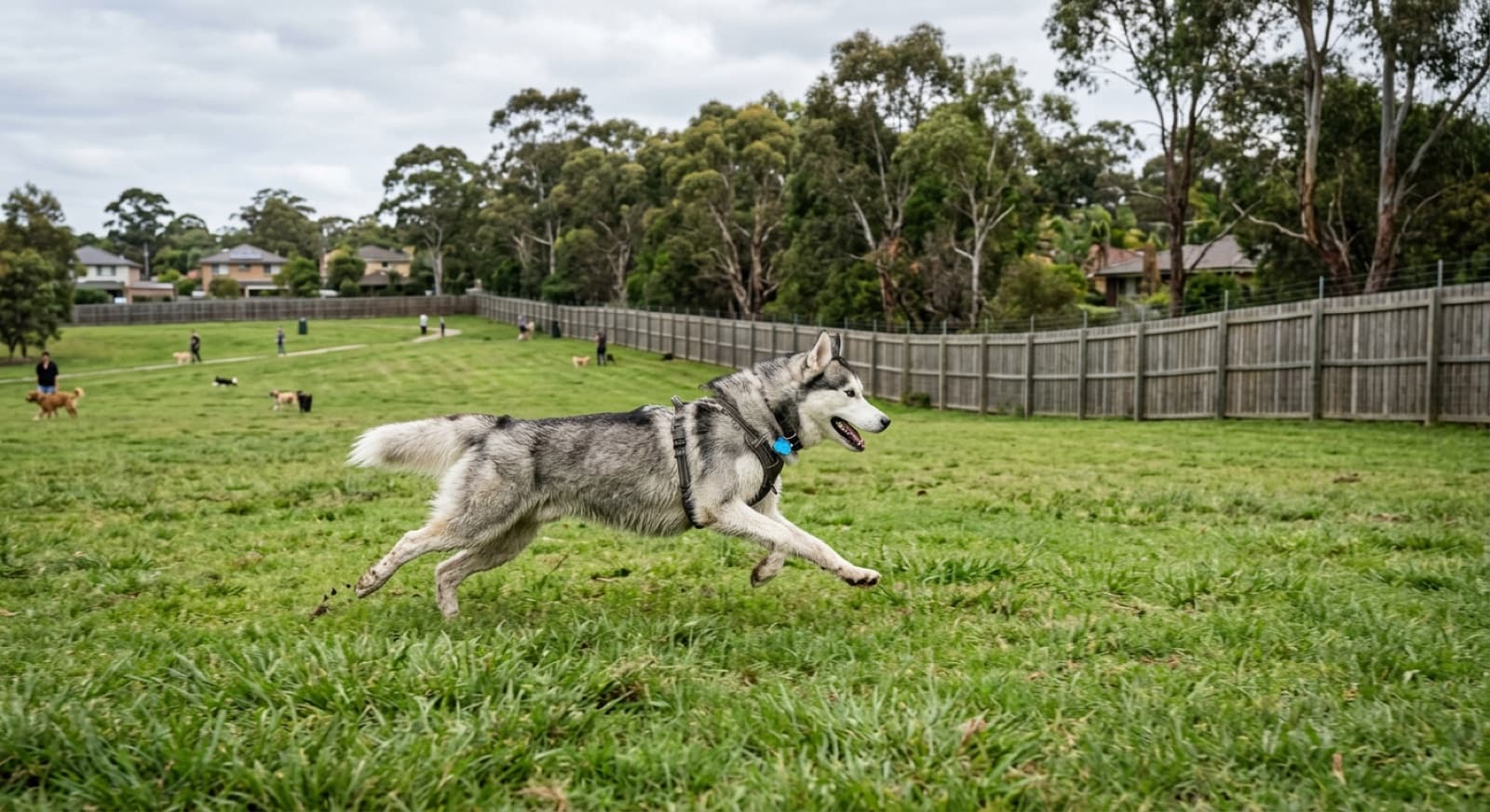
The short answer
A Husky needs one to two hours of real exercise a day plus mental work, and a securely fenced, escape-proof yard. The breed climbs, digs and bolts and has an unreliable recall, so containment is a fencing job, not a training one: think 1.8 metres or more, dig-proofed at the base, with an inward-angled top for climbers. Off-lead only in fully enclosed spaces where the council allows it; a lead or long-line everywhere else, including open beaches and bushland. Through the humid Illawarra summer, exercise early and late and keep it light on the hottest days. Keep tick prevention going all year and check the coat after bush walks.
Why exercise and escape make or break Husky ownership
The Siberian Husky was bred to pull a sled across long distances for hours, which produced a dog with huge stamina, a powerful drive to run and roam, and the athleticism and problem-solving to act on it.
In a home that meets those needs, that heritage is a joy. In a home that does not, it becomes the destruction, howling, digging and escaping that fills rescues with Huskies. A well-exercised Husky in a secure yard is usually a calm, friendly housemate, and the problems appear when the exercise or the containment fall short. When you adopt, ask how the dog behaved in care around fences and gates. With a council adoption through Wollongong's Find a Pet page, the meet and greet before the adoption is finalised is the moment to ask.
How much exercise a Husky truly needs
Plan on one to two hours of real activity a day for an adult Husky. A slow walk around the block does not touch the sides. The breed needs to move: running, secure off-lead play, purposeful walking, hiking, and dog sports. Many Huskies love activities that use their pulling heritage, such as canicross, where the dog runs attached to a harness and waist belt, or scootering and bikejoring for experienced handlers.
Mental exercise matters as much as physical. A Husky is intelligent and gets bored, so training sessions, puzzle feeders and scent games all help drain energy that otherwise becomes trouble. On the coast, autumn, winter and spring are the Husky's best seasons for hard exercise. Summer is when you work around the weather rather than through it.
Escape-proofing an Illawarra yard
Because a Husky will climb, dig, jump and bolt, get the yard right before the dog comes home. Walk the boundary thinking like an athletic, determined escape artist and check four things:
- Height. Aim for at least 1.8 metres, and understand that even that is no guarantee for a keen climber. An inward-angled top section stops a Husky getting a paw over.
- The dig line. Huskies dig, and soft ground after rain makes it easier. Dig the fence in, back it with buried mesh, or run it along a concrete or paved strip. This matters as much as the height.
- Climb aids. Remove anything near the fence the dog could use as a step: bins, kennels, outdoor furniture, firewood stacks, low retaining walls. Sloping blocks on the escarpment side of town can put a fence lower than it looks from the uphill side.
- Gates and doors. Gates must be tall, self-latching and flush to the ground. Deliveries and visitors are exactly when a Husky shoots out, so manage doors carefully.
Supervise a new Husky in the yard until you know what it can do, because rescue dogs sometimes reveal skills their carers never saw. Shade and water in the yard matter in summer too, since a hot, bored dog is a more motivated escaper. If you rent, raise fencing changes with your landlord first; NSW Fair Trading explains renting with a pet in NSW. And meet the exercise need: a tired Husky is far less motivated to engineer a breakout.
Off-lead: only in fully enclosed spaces
The rule is simple: a Husky is off-lead only in a fully fenced, secure area that the council has declared off-lead, and on a lead everywhere else. The drive to run combined with an unreliable recall means a Husky in open ground will take off. Each Illawarra council sets its own off-lead areas: Wollongong City Council lists its areas on its off-leash dog parks page, and Kiama Council has its own off-leash areas page. Check whether an area is fenced before you unclip, and keep the dog under effective control as the law requires. Our Wollongong dog parks guide explains how the council rules work.
This is not a recall you can train to a level you would trust with the dog's life in an unfenced space; it is a management reality of the breed. A long-line, a light five to ten metre lead clipped to a harness, lets a Husky range and sniff safely on a beach or bush track while you stay in control.
Humid summer days
The Illawarra has a humid coastal climate with hot summer days and warm nights. A double-coated Husky heats up fast, and humid air makes panting less effective, so the dog has less margin than the temperature suggests. Check the Bureau of Meteorology forecast, including humidity, and through summer exercise in the early morning or late evening only. Carry water, test the pavement with the back of your hand, and on the hottest days skip the hard running and move the mental enrichment indoors. Never shave the coat to beat the heat: it insulates against heat as well as cold, and shaving can leave the dog hotter and sunburnt.
Know the signs of heat stress. Heavy or frantic panting, thick drool, weakness or stumbling, bright red or bluish gums, vomiting or collapse are a veterinary emergency. Move the dog to shade, offer cool (not icy) water, wet the coat with cool water, and get to a vet immediately. During business hours, call your regular vet on the way. After hours, the Animal Referral Hospital Wollongong at Fairy Meadow runs an after-hours emergency service for the Illawarra and South Coast. Never leave a Husky in a parked car, even briefly.
Bush walks and paralysis ticks
A cool-morning hike on the escarpment is exactly the kind of exercise a Husky loves, on a long-line. It is also paralysis tick country. The Australian paralysis tick lives along the whole NSW coast, the risk runs all year, and it peaks from about August to February. The toxin can be fatal without veterinary treatment.
- Prevention all year. Use a product your vet recommends and keep it current.
- A full coat search after every bush walk. Part the thick Husky coat down to the skin, and check the head, neck, ears and between the toes.
- Treat the signs as an emergency. A wobbly back end, a changed bark, gagging or laboured breathing mean a vet visit straight away.
Our Husky health guide covers ticks, the coat and heat in more detail.
Thinking about adopting a Husky?
With the exercise and fencing sorted, a Husky is a friendly, funny, devoted companion. Browse adoptable Huskies from the Illawarra and wider NSW.
See Available Huskies →If your Husky gets loose
Even careful owners have a gate left open or a dog slip a lead, so know the response before it happens. Do not chase: a Husky treats a chase as a game and runs faster and further, often toward traffic. Get low, turn side-on, and call in a bright, happy voice, or run away from the dog so it follows you. An open car door, a favourite toy or high-value food can sometimes turn a loose Husky. If the dog is already gone, note the exact direction, start a calm, systematic search, and widen it sooner than you would for another breed.
If your Husky is genuinely lost, work several channels at once. Confirm your contact details on the NSW Pet Registry are current, because that is what a vet or council scans against. An uninjured stray goes to the local council, so contact Wollongong, Shellharbour or Kiama council depending on where the dog went missing, and keep checking daily. The RSPCA NSW Illawarra Shelter at Unanderra takes in injured strays only. Ring nearby vets, post a clear photo, the location last seen and your number to local community and lost-pet groups, and tell neighbours. Our Wollongong registration guide explains how to keep the Registry record right. For the wider picture, read Husky Adoption in Wollongong.
Frequently Asked Questions
How much exercise does a Husky really need?
A lot. An adult Husky needs one to two hours of real activity a day, every day, not a stroll around the block. That means running, secure off-lead play, brisk walking, hiking or dog sports, plus mental work like training and puzzle feeding. A dog bred to pull a sled for hours has enormous stamina, and an under-exercised one turns that energy into destruction, howling, digging and escaping. If you cannot commit to it for the life of the dog, this is not the breed for you.
Why are Huskies such escape artists?
Because they are built for it. Huskies were bred to run, and they combine a strong drive to roam with real athleticism and problem-solving. A Husky will climb a fence, dig under it, squeeze through a gap, or shoot through an open gate, and once loose it runs and does not look back. This is not disobedience or a training failure; it is the breed. Poor containment is one of the main reasons Huskies are surrendered.
How high does a fence need to be for a Husky?
Higher than for most dogs, because Huskies climb and jump. A minimum of 1.8 metres is a sensible starting point, and even that is no guarantee for a determined climber, so many owners add an inward-angled top section. The bottom matters as much: Huskies dig, so the fence needs to be dug in, backed with buried mesh, or run along a concrete or paved base. Remove anything near the fence the dog could climb on, and make sure gates are tall, self-latching and flush to the ground. If you rent, talk to your landlord before making fencing changes.
Can a Husky ever be trusted off-lead around Wollongong?
Only in a fully fenced, secure area, and only where the council has declared dogs may be off-lead. Huskies have a strong drive to run and a notoriously unreliable recall, so a loose Husky in open ground will take off and can travel a long way fast. Wollongong, Shellharbour and Kiama councils each keep their own off-lead lists. Treat any unfenced area, including open beaches and bushland, as long-line territory for a Husky.
How do I exercise a Husky through a humid Illawarra summer?
Shift the exercise to the coolest hours and cut the intensity. Humid coastal air makes panting less effective, so a double-coated Husky heats up faster than the temperature suggests. Through summer, exercise in the early morning or late evening only, carry water, test the pavement with the back of your hand, and move hard running and mental work indoors on the hottest days. Never shave the coat. Heavy panting, drooling, weakness, bright red gums or collapse are heat stress and a veterinary emergency.
Is it safe to hike the escarpment with a Husky?
It can be a great outing on a cool morning, on lead or a long-line, but plan for ticks. The Australian paralysis tick lives along the whole NSW coast, the escarpment bushland is typical habitat, and the risk runs all year with a peak from about August to February. Keep your Husky on a vet-recommended prevention product and part the thick coat down to the skin to check after every bush walk. Keep the dog close in long grass on warm days because of snakes.
What happens if a Husky does not get enough exercise?
It becomes a problem dog, and this is the root of most Husky surrenders. An under-exercised Husky redirects its energy into chewing furniture and gardens, digging craters, howling, pacing and escaping. None of this is the dog being bad; it is a working athlete with nothing to do. A well-exercised, mentally engaged Husky is usually a calm, friendly housemate.
What should I do the instant my Husky gets loose?
Do not chase, because a Husky treats a chase as a game and runs faster and further, often toward a road. Instead, get low, turn side-on, and call in a happy voice, or run the other way so the dog follows you. An open car door, a favourite toy or high-value food can sometimes turn a loose Husky. If the dog is already gone, note the exact direction, start a calm, systematic search, and get help quickly.
My Husky is lost in Wollongong. How do I get it back?
Move fast across several channels and search wider than you would for most breeds. Make sure your details on the NSW Pet Registry are current, because that is what a vet or council uses to reunite you. An uninjured stray goes to the local council, so contact Wollongong, Shellharbour or Kiama council depending on where the dog went missing. The RSPCA NSW Illawarra Shelter at Unanderra takes injured strays only, and nearby vets may also be handed a found dog. Post a clear photo, the location last seen and your number to local community and lost-pet groups, and tell neighbours.
Keep reading
Husky Adoption in Wollongong
Where to adopt locally, what it costs, and why so many Huskies end up in rescue.
Husky Health Issues in Wollongong
Eyes, skin and thyroid, the coat, coastal heat and paralysis ticks.
Adoptable Huskies in Wollongong
Current listings of Huskies and Husky crosses, with filters for age and compatibility.
Dog Parks and Off-Lead Areas in Wollongong
How Illawarra councils set off-lead areas, plus tick, heat and snake safety.
Wollongong Dog Guides
Registration, desexing, off-lead areas and more for Illawarra dog owners.
Dog Adoption in Wollongong
Every adoptable dog we track from Illawarra and NSW shelters and rescues.