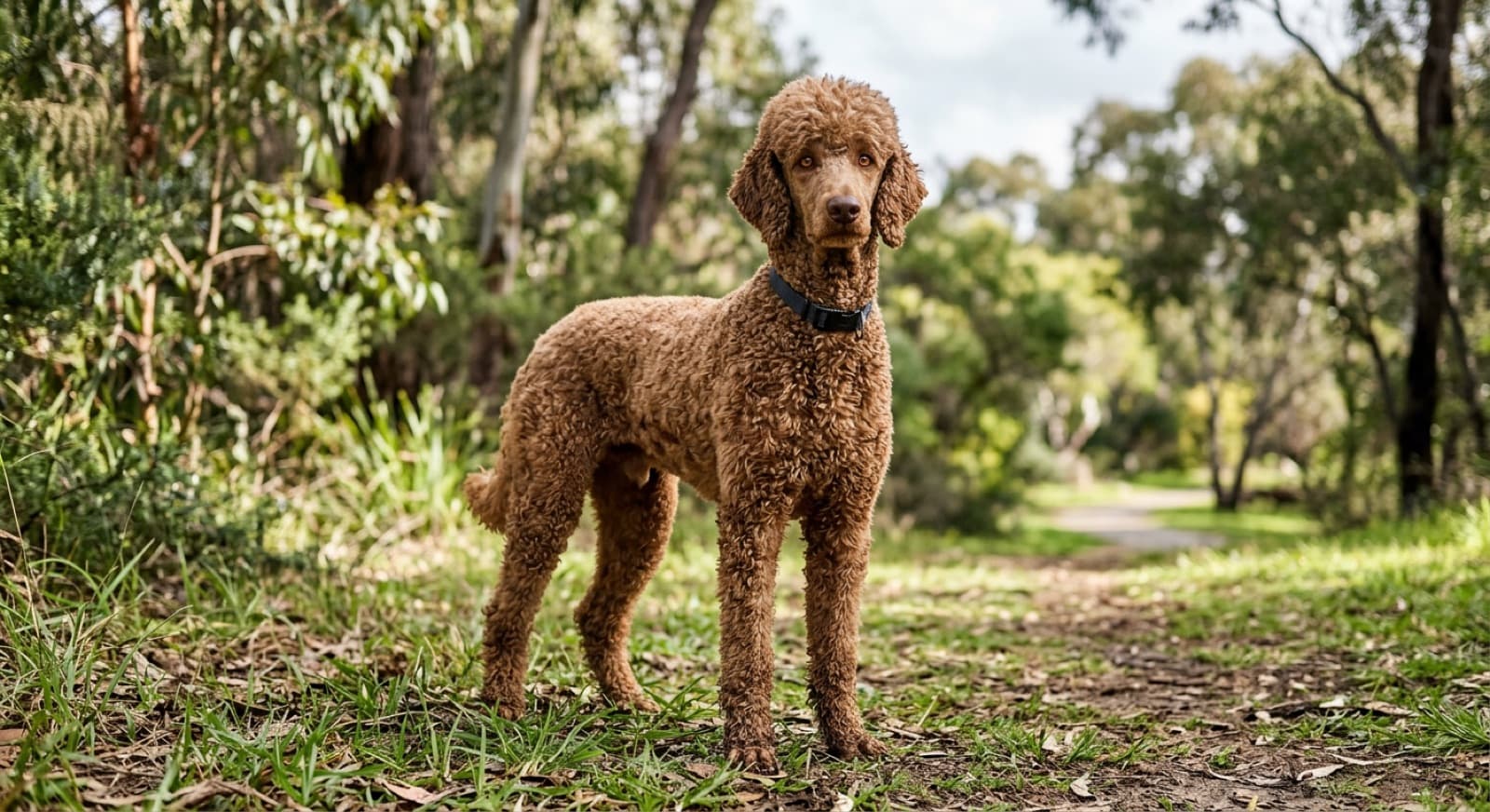
The short answer
Poodles are generally healthy and long-lived, but the conditions to watch depend on size. Toy and miniature Poodles skew toward patellar luxation (slipping kneecaps), dental disease and other small-breed issues; Standard Poodles toward bloat, Addison's disease and some skin and joint conditions. Progressive retinal atrophy and other eye disease is seen across all sizes. A rescue Poodle arrives desexed, vaccinated, microchipped and vet-checked, so ask what the in-care assessment found, book your own baseline check, keep the dog lean and its teeth cared for, and take out pet insurance while it is young. This is general information, not veterinary advice.
Toy and miniature Poodles: the small-dog conditions
The smaller Poodles share the health profile of small breeds generally, with a few to know:
- Patellar luxation. A kneecap that slips out of its groove, common in small breeds, ranging from an occasional skip in the step to a problem needing surgery. Watch for an intermittent hop or a held-up back leg, and raise it with your vet.
- Dental disease. Small mouths crowd the teeth, so tartar, gum disease and tooth loss are more common and more consequential in toys and minis. Regular dental care, and professional cleaning when your vet advises, matters more in these sizes than in most breeds.
- Legg-Calve-Perthes disease. A hip condition of small breeds where the head of the femur loses blood supply and degenerates, usually appearing in young dogs as lameness. It is managed medically or surgically, so an early vet assessment of any limp is worthwhile.
- Tracheal collapse and puppy hypoglycemia. Toys in particular can be prone to a weakened windpipe (a honking cough is the classic sign) and, as very young puppies, to low blood sugar. Both are veterinary matters.
Standard Poodles: the large-dog conditions
The Standard Poodle carries a different set of risks as a large, deep-chested dog:
- Bloat (gastric dilatation-volvulus). The stomach fills with gas and can twist, cutting off blood supply. It is a life-threatening emergency, most associated with large deep-chested breeds, and worth learning the signs of: a distended belly, unproductive retching, restlessness and distress. If you suspect it, get to a vet immediately.
- Addison's disease (hypoadrenocorticism). Standard Poodles are over-represented for this hormonal condition, in which the adrenal glands under-produce. The signs are vague and intermittent, so it is under-diagnosed, but it is manageable with lifelong medication once identified. See the FAQ below, and raise repeated unexplained off-colour episodes with your vet.
- Sebaceous adenitis. An inherited skin disease seen in Standard Poodles, where the coat's oil glands are destroyed, leading to a dull, flaky coat and hair loss. It is a lifelong management condition rather than a cure, guided by your vet.
- Hip dysplasia. Like most large breeds, standards can carry hip dysplasia; keeping the dog lean is the most protective everyday step. Screening standards such as those maintained by the Orthopedic Foundation for Animals are what responsible breeders use.
Across all sizes: eyes and epilepsy
Two things run across the whole breed. Progressive retinal atrophy, a gradual inherited loss of vision, is seen in Poodles of all sizes, along with cataracts, which is why breeding dogs should hold a current eye certificate. And epilepsy (a seizure disorder) occurs in the breed as it does in many others. A rescue Poodle will not come with a breeding health history, so a baseline vet check after adoption is worthwhile, and any change in vision, or a seizure, is an immediate veterinary conversation.
Browse Poodles available in Perth rescue
A rescue Poodle arrives desexed, vaccinated, microchipped and vet-checked, so its health has already had professional eyes on it. Live listings with foster carer notes on temperament and any known health needs.
See Available Poodles →Everyday care that does the most
Whatever the size, the same handful of habits protect a Poodle's health most:
- Keep the dog lean. Excess weight worsens joints, hearts and just about everything else, and it is the single most protective thing an owner controls.
- Stay on top of dental care, especially for toys and minis, with tooth-friendly habits and professional cleaning when your vet advises.
- Keep the coat and skin healthy. Regular grooming keeps the skin able to breathe and lets you spot lumps, irritation or the early skin changes of sebaceous adenitis; the Poodle grooming guide covers the routine.
- Book regular vet check-ups, so conditions are caught early, and keep parasite prevention (flea, worm, heartworm) continuous.
- Insure early, while the dog is young and healthy, so nothing is later excluded as pre-existing.
Why a rescue Poodle is a good start
A rescue Poodle actually puts you ahead on the practical side. It arrives desexed, vaccinated, microchipped and vet-checked, so a professional has already looked it over and the rescue can tell you what the in-care assessment found. Ask specifically about knees and teeth for a toy or mini, and about the belly, skin and any off-colour history for a standard, book your own baseline vet visit in the first week, keep the dog lean and well-groomed, and insure it straight away. General guidance from the RSPCA Knowledgebase and the Australian Veterinary Association is useful background, but your vet is the one to guide care for your individual dog.
Frequently Asked Questions
Do Poodles have a lot of health problems?
Poodles are generally a long-lived, robust breed, often reaching twelve to fifteen years, but like every purebred they carry some known conditions, and which ones matter most depends on the size. Toys and miniatures skew toward knee, dental and small-dog issues; standards toward bloat, Addison's disease and some skin and joint conditions. Eye disease is seen across all sizes. None of this should put you off a rescue Poodle, but it is a reason to ask what the in-care vet check found, keep up routine care, and insure the dog while it is young. This is general information, not veterinary advice.
What health problems do toy and miniature Poodles have?
The main ones are patellar luxation (a kneecap that slips out of place, common in small breeds), dental disease (small mouths crowd teeth, so dental care matters more), and Legg-Calve-Perthes disease (a hip condition of small breeds). Toys can also be prone to a collapsing trachea and, as very young puppies, to low blood sugar. Progressive retinal atrophy, a gradual loss of vision, is seen across all Poodle sizes. A rescue toy or mini should have a good dental and knee check as part of settling in, and your vet can advise on management.
What health problems do standard Poodles have?
Standards, as large deep-chested dogs, are prone to bloat (gastric dilatation-volvulus), a twisting of the stomach that is a life-threatening emergency, so it is worth learning the signs. The breed is also notably over-represented for Addison's disease (a hormonal condition), can carry sebaceous adenitis (an inherited skin disease), and is prone to hip dysplasia and, across all sizes, eye disease and epilepsy. Responsible breeders screen for the heritable conditions, and a rescue standard should have a baseline vet check after adoption, with any concern raised with your vet.
What is Addison's disease, and are Poodles prone to it?
Addison's disease (hypoadrenocorticism) is a condition where the adrenal glands do not produce enough of certain hormones, and Standard Poodles are one of the breeds it is seen in more often. The signs can be vague and come and go (lethargy, poor appetite, vomiting, weakness), which is why it is sometimes called the great pretender, and a crisis can be serious. It is diagnosed with blood tests and, once identified, managed well with lifelong medication. If a Poodle seems repeatedly off-colour without an obvious cause, it is worth asking your vet about, but diagnosis and treatment are entirely a veterinary matter.
Should I get pet insurance for a rescue Poodle?
It is well worth it, taken out while the dog is young and healthy so nothing is later excluded as pre-existing. A Poodle can carry conditions from knee surgery in a toy to bloat surgery or lifelong Addison's medication in a standard, any of which can be costly, and insurance turns an unpredictable emergency into a manageable premium. Compare policies on their exclusions, waiting periods and annual limits rather than on price alone, and read the product disclosure statement. Insurance sits alongside, not instead of, keeping the dog lean and up to date on routine vet care.
Keep reading
Poodle Adoption in Perth
Where to find a rescue Poodle, the three sizes, real costs and the doodle reality.
Poodle Grooming in Perth
The coat that must be clipped, the real cost, and DIY vs a groomer.
Adoptable Poodles in Perth
Live listings with foster carer notes on size, temperament and health needs.
Perth Adoption Resources
Guides on adopting, costs, council rules and settling a rescue dog in Perth.