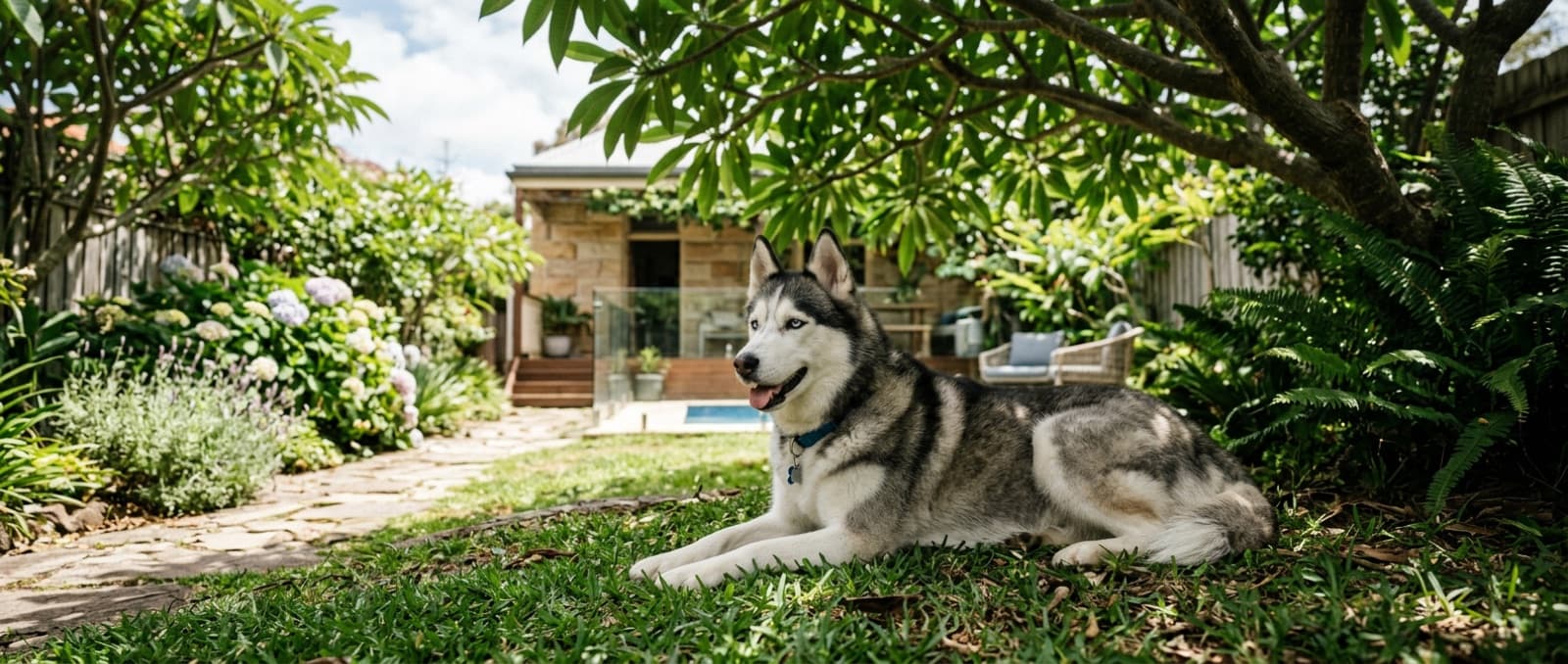
The short answer
Huskies are among the healthier, hardier breeds, and a lean, well-exercised Husky often lives 12 to 15 years. The area to watch is the eyes, where the breed carries several inherited conditions, along with a breed-associated skin problem (zinc-responsive dermatosis), hypothyroidism, and hip dysplasia at a lower rate than many large breeds. The biggest everyday commitment is the coat: heavy shedding, two coat blows a year, and never shaving. Melbourne's cool climate suits the breed, so the weather job is narrow: plan for 40-degree heatwave days. Paralysis ticks are a low risk in metropolitan Melbourne, but fleas, worms and heartworm need year-round prevention your vet can recommend.
A note on this guide. This is general breed information to help you plan, not veterinary advice. Every dog is different. Always see your own vet for diagnosis, treatment and any decision about your Husky's care, and never medicate or supplement a dog based on an article.
Eyes: the breed's signature issue
If there is one area to know about with Huskies, it is the eyes. The breed is over-represented for several inherited eye conditions, which is why responsible breeders screen breeding dogs through eye-certification schemes such as those run by the Orthopedic Foundation for Animals.
Juvenile cataracts can appear in young dogs, clouding the lens. Progressive retinal atrophy gradually reduces sight, often first noticed as trouble seeing in low light. Corneal dystrophy shows as cloudiness in the cornea. Any squinting, cloudiness, redness, or a change in how your Husky gets around in dim conditions is worth a vet visit, and your vet may refer you to a veterinary ophthalmologist. A rescue Husky's history is often unknown, so a baseline eye check at your first vet visit is sensible.
Skin and thyroid
The notable skin condition is zinc-responsive dermatosis, a condition veterinary references associate particularly with northern breeds such as Siberian Huskies and Alaskan Malamutes (the Merck Veterinary Manual is a good plain-clinical starting point on skin disease). The dog does not absorb or use zinc properly, causing crusty, scaly skin, often around the face. Diagnosis and treatment belong with your vet. Any persistent scaling, crusting, hair loss or itchiness deserves a vet check rather than guesswork, because the right treatment depends on the cause.
Hypothyroidism, an underactive thyroid, appears in the breed and shows as weight gain, lethargy, and coat and skin changes. It is diagnosed on bloodwork and is very manageable once identified. If your normally energetic Husky becomes sluggish and starts gaining weight or losing coat condition, mention it to your vet.
The coat: shedding and never shaving
The double coat sheds year-round and blows completely twice a year, and the volume of fur surprises new owners. Brushing is part of the routine, daily during a coat blow, and an undercoat rake or de-shedding tool helps keep the skin healthy. Melbourne's changeable weather can make the timing of a coat blow less predictable than in a cold climate, so expect fur at odd times of year.
The single most important coat rule is never shave a Husky. It seems logical before a hot spell, but the double coat insulates against heat as much as cold and shields the skin from sunburn, so shaving can leave the dog hotter and the coat patchy or damaged when it regrows. Manage heat with shade, water and timing, not clippers.
Melbourne weather, ticks and parasites
Melbourne's temperate climate is kind to a Husky. The Bureau of Meteorology records cool, wet winters and mild summers, broken by heatwave days that can climb above 40 degrees. Those days are the risk window. Walk only in the early morning or late evening, test the footpath with the back of your hand, keep shade, water and a cool indoor space available, and never leave a Husky in a parked car or a shadeless yard. Heavy panting, thick drool, weakness, bright red gums or collapse are heat stress and an emergency. After-hours cases go to 24/7 hospitals such as the Animal Referral Hospital at Essendon Fields and the Animal Emergency Centre at Mount Waverley (emergencyvet.com.au), or the Greencross Vet Hospital at the University of Melbourne in Werribee.
Unlike Sydney or Brisbane, paralysis ticks are a low risk in metropolitan Melbourne, because the eastern paralysis tick does not establish in this climate. The risk comes with travel: a dog that has been to the NSW coast or East Gippsland can bring a tick home, and a separate southern paralysis tick occurs in parts of Victoria. Ask your vet about tick prevention before those trips, and part the thick coat down to the skin to check afterwards. Year-round, the parasites to prevent are fleas, intestinal worms and heartworm, which is spread by mosquitoes and present in Victoria. The RSPCA Knowledgebase and the Australian Veterinary Association publish plain, non-commercial guidance on parasite prevention and hot-weather safety.
Meet an adoptable Husky in Melbourne
Rescue Huskies arrive already desexed, vaccinated, microchipped and vet-checked. Browse current listings across Melbourne and Victoria.
See Available Huskies →Hips, weight and budgeting
Hip dysplasia occurs in Huskies, though less often than in many large breeds, and keeping the dog lean and well-exercised is the best protection. The Orthopedic Foundation for Animals runs the hip-screening database most breeders use. Huskies are naturally lean, efficient athletes, but an under-exercised, over-fed Husky can gain weight, which stresses the joints, so feed to the dog's activity level and ask your vet to score body condition at each visit.
Financially, the Husky is one of the more economical breeds to keep medically. Routine yearly costs are food, an annual check, parasite prevention and grooming tools. The larger potential bills are the inherited eye conditions, which can involve specialist care, and long-term skin or thyroid management. Pet insurance taken out while the dog is young can buffer those. For the full adoption picture read Husky Adoption in Melbourne, and for exercise and containment read our Husky exercise and escape guide.
Your rescue Husky's first vet visit
A Husky adopted through a Melbourne rescue arrives desexed, vaccinated, microchipped and vet-checked. Treat the first month as a baseline: see your own vet, transfer the records, have the eyes and skin looked at, confirm the microchip is registered to you, set up flea, worm and heartworm prevention, and register the dog with your council. From there, an annual check, attention to the eyes and coat, and plenty of exercise cover most of what the breed needs.
Frequently Asked Questions
Are Siberian Huskies a healthy breed?
Relatively, yes. Huskies are a hardy, athletic, long-lived breed, commonly reaching 12 to 15 years, and they carry fewer of the extreme structural problems seen in some breeds. Their signature health concern is the eyes, with several inherited conditions worth knowing about, plus a few breed-associated skin and thyroid issues. Hip dysplasia occurs but is less common than in many large breeds. A rescue Husky arrives vet-checked, and a lean, well-exercised Husky with good eye and coat care generally lives a long, healthy life.
What eye problems do Huskies have?
Eyes are the breed's main health area. Huskies are prone to several inherited eye conditions: juvenile cataracts, which can appear in young dogs; progressive retinal atrophy, which gradually reduces vision; and corneal dystrophy, a cloudiness of the cornea. Not every Husky is affected, but the breed is over-represented, so squinting, cloudiness, redness or a change in how the dog navigates in low light is worth a vet visit, and your vet may refer you to a veterinary ophthalmologist. Many Huskies with managed eye conditions live full lives, and early detection helps.
What skin conditions are Huskies prone to?
The notable one is zinc-responsive dermatosis, a breed-associated condition in which the dog does not absorb or use zinc properly, leading to crusty, scaly skin, often around the face. It is diagnosed and managed by your vet. Hypothyroidism can also show up as coat and skin changes. Any persistent scaling, crusting, hair loss or itchiness deserves a vet check rather than guesswork, because the right treatment depends on the cause. Never start supplements on your own.
Do I need to worry about my Husky's thyroid or hips?
Both are worth knowing about. Hypothyroidism, an underactive thyroid, appears in the breed and shows as weight gain, lethargy, and coat and skin changes; it is diagnosed on bloodwork and is very manageable with your vet's treatment. Hip dysplasia occurs in Huskies, though less often than in many large breeds, and keeping the dog lean and well-exercised helps protect the joints. Watch for stiffness, reluctance to exercise or a change in gait. An annual vet check catches most of this early.
How much do Huskies shed, and how do I manage the coat?
A lot. Huskies have a dense double coat that sheds year-round and blows completely twice a year. Regular brushing, daily during a coat blow, removes loose undercoat and keeps the skin healthy, and an undercoat rake or de-shedding tool helps. The rule that matters most: never shave a Husky. The double coat insulates against heat as well as cold and protects the skin from sunburn, so shaving can leave the dog hotter and the coat damaged. Brush, do not shave.
How do I keep my Husky safe in a Melbourne heatwave?
Plan for the hot days rather than the whole summer. Melbourne summers are usually mild, but heatwave days can spike above 40 degrees, and a double-coated dog heats up fast. On those days walk only in the early morning or late evening, test the footpath with the back of your hand, keep shade, water and a cool indoor space available, and never leave a Husky in a parked car. Heavy panting, thick drool, weakness, bright red gums or collapse are heat stress and a veterinary emergency.
Is paralysis tick a risk for Huskies in Melbourne?
Much less than in Sydney or Brisbane. The eastern paralysis tick does not establish in metropolitan Melbourne's climate, so local risk is low. The risk comes from travel: a dog that has been to the NSW coast or East Gippsland can bring a tick home, and a separate southern paralysis tick is found in some parts of Victoria. Ask your vet about tick prevention before trips, and search the coat down to the skin afterwards, because a thick Husky coat hides ticks well. A wobbly back end, changed bark or breathing trouble is an emergency.
What parasites should I prevent in Melbourne?
Fleas and intestinal worms year-round, and heartworm, which is spread by mosquitoes and is present in Victoria. Ask your vet which prevention suits your dog; they will recommend specific products and a schedule. A rescue Husky arrives wormed and treated, so the first vet visit is a good time to set up an ongoing plan.
Are Huskies prone to obesity?
Less than many breeds, because they are naturally lean athletes, but an under-exercised, over-fed Husky can gain weight, and extra weight worsens any joint problem. Huskies were bred to work hard on modest food, so they often need less than owners expect. Feed measured meals suited to the dog's activity level, keep treats in check, and ask your vet to score body condition at each visit.
Should I get pet insurance for a Husky?
It is worth considering. Huskies are relatively hardy, but inherited eye conditions can need specialist care, and skin or thyroid conditions mean ongoing costs, so insurance can buffer the larger bills. Enrol while the dog is young and healthy, before anything becomes a pre-existing exclusion, and compare a few Australian providers on hereditary and chronic cover, the annual limit and the excess.
How long do Huskies live?
Twelve to fifteen years is typical, which makes adopting one a long-term commitment. Keeping a Husky lean, well-exercised, well-groomed and up to date on vet care supports both length and quality of life, and early attention to the eyes and skin heads off most problems. A healthy, active Husky usually stays vigorous well into its later years.
Keep reading
Husky Adoption in Melbourne
Where to adopt, what it costs, and why so many Huskies end up in rescue.
Husky Exercise & Escape in Melbourne
The exercise needs, the escape-artist reality, and how to escape-proof a Melbourne yard.
Adoptable Huskies in Melbourne
Current listings of Huskies and Husky crosses, with filters for age, size and compatibility.
Melbourne Adoption Resources
Guides on adopting, costs, council registration and settling a rescue dog in Melbourne.