The short answer
A German Shepherd's double coat sheds heavily year-round with two bigger seasonal blows, and the way to manage it in the Brisbane heat is regular brushing (a few times a week, daily during a coat blow) to pull out the dead undercoat, never shaving, which strips the coat's heat and sun protection and can damage its regrowth. Keep the dog cool by exercising only in the early morning or evening, testing the pavement with the back of your hand before you set out, providing shade, water and a cool indoor surface, and using water play instead of hot-day exercise. Treat heavy panting, drooling, wobbliness or collapse on a hot, humid day as a heat-stress emergency and get to a vet. This is general information, not veterinary advice.
Understanding the double coat
A Shepherd has two layers: a dense, soft undercoat for insulation and a longer, coarser outer coat of guard hairs. The breed was developed to work outdoors in cold European conditions, and the coat is superbly designed for that. It also does more than most owners realise in the heat, because a well-kept coat traps a layer of cooler air against the skin and shades it from the sun.
What the coat needs is not less coat but less dead coat. When the shed undercoat is left in place it mats, traps heat against the skin and stops air circulating, which is exactly the opposite of what you want in a Brisbane summer, and worse in the humidity. Brushing it out is the fix, and it is why shaving, which removes the protective coat rather than the dead undercoat, makes the dog worse off.
The brush-out routine, and why you never shave
There is no getting around the shedding: a Shepherd sheds a lot, constantly, and then more during the two seasonal coat blows. A routine keeps it under control and keeps the dog cool.
- Brush a few times a week, daily during a coat blow. A slicker brush lifts loose hair from the outer coat and an undercoat rake reaches the dead undercoat underneath. Together they clear the coat so the skin can breathe and capture the hair before it lands on your floor.
- Bath occasionally, not often, and dry thoroughly. A wash every few weeks or after a muddy outing is plenty; over-bathing strips the coat's oils, and a damp double coat in the humidity can cause skin problems, so dry it well.
- Use grooming as a health check. Every session is a chance to check the skin for irritation or hot spots, the ears, and the paws, and to keep a food-motivated dog used to handling.
On shaving, it feels intuitive that clipping a thick-coated dog would cool it down, and it is wrong. The coat insulates both ways, so a shaved dog can be hotter, not cooler; it exposes pale skin to a fierce Queensland sun and the risk of sunburn; and shaved double coats often grow back patchy or with a changed texture. The only time clipping is justified is a coat so severely matted that brushing would hurt the dog, and even then it is a reset, not a style. Brushing out the undercoat is what keeps a Shepherd cool. The RSPCA Knowledgebase has general guidance on coat and skin care.
Browse German Shepherds available in Brisbane rescue
A rescue Shepherd comes with a foster carer's read on its coat and temperament, so you know what you are taking on. Live listings from Queensland shelters and rescues.
See Available German Shepherds →Keeping a Shepherd cool and safe through a Brisbane summer
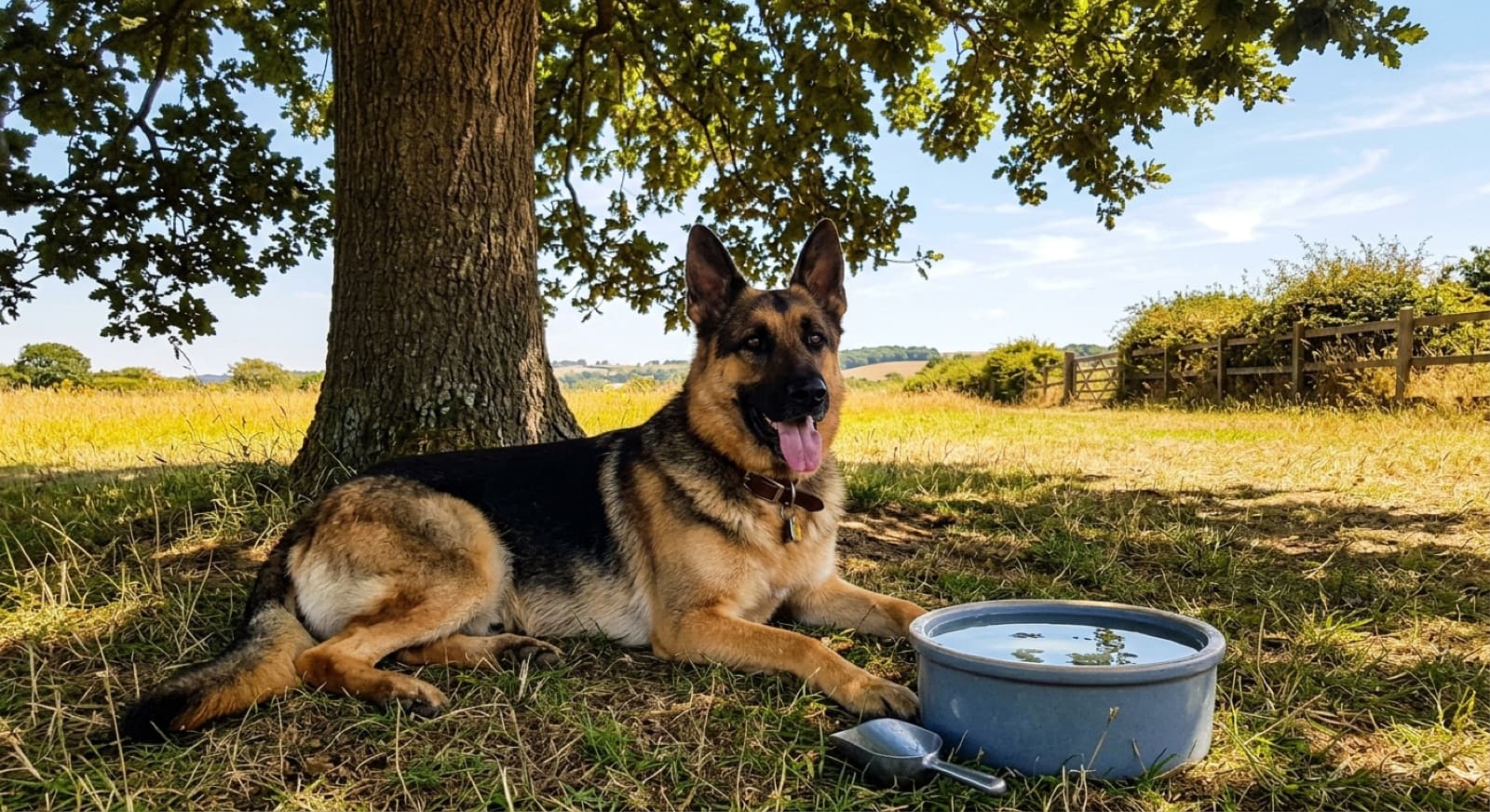
Brisbane's humid summer heat is hard on a dense-coated dog, because a panting dog cools less efficiently in humid air, so a Shepherd can overheat faster than you expect. The management is straightforward:
- Exercise in the cool hours only. Early morning and late evening on a hot day, and no hard exercise in the middle of a scorcher. A Shepherd's exercise needs are real, so shift them to the cool part of the day rather than dropping them.
- Do the seven-second ground test. Press the back of your hand to the pavement; if you cannot hold it there, it is too hot for paw pads.
- Provide shade, water and a cool surface. A cool tiled indoor space, constant fresh water and shade are essentials in the SEQ summer; a Shepherd left outside in a heatwave is at real risk.
- Use water play and enrichment on the worst days. A shaded swim, a hose or paddling pool session, and food puzzles or training give a working dog an outlet without the heat load.
- Never leave a dog in a parked car, even briefly; it heats up dangerously fast.
Learn the signs of heat stress: heavy or frantic panting, thick drool, bright red gums, wobbliness, vomiting or collapse. If you see them, move the dog to shade, wet it with cool (not icy) water, offer small drinks, and get to a vet immediately, because heatstroke is a genuine emergency. One breed-specific note for sunny Queensland: Shepherds can be prone to an eye condition called pannus that is aggravated by ultraviolet light, so mention any change in the eyes to your vet. For the full health picture, see the German Shepherd health guide.
Frequently Asked Questions
Should I shave my German Shepherd in the Brisbane summer?
No. It is the most common German Shepherd coat mistake and it makes the dog worse off, not better. The double coat is not just insulation against cold; it insulates against heat too, shades the skin from a fierce Queensland sun, and lets air circulate to help the dog regulate its temperature. Shaving it removes that protection, exposes the skin to sunburn, and the coat often grows back patchy or with a changed texture. What actually cools a Shepherd is removing the dead undercoat by brushing, not removing the coat. If a coat is severely matted a groomer may need to clip parts of it, but that is a last resort, not a summer routine.
How often should I brush a German Shepherd?
A few times a week as a baseline, and daily during the two big seasonal coat blows when the undercoat sheds out in earnest. Regular brushing with a slicker brush and an undercoat rake pulls out the dead undercoat that would otherwise trap heat and mat, keeps the skin able to breathe, and is the real cooling tool in a hot climate. It also dramatically cuts the amount of hair around the house, because a Shepherd sheds a lot year-round. Build it into a calm routine, and check the skin, ears and paws while you are at it.
How do I know when it is too hot to walk my German Shepherd in Brisbane?
Use two checks. First, the time of day: on a hot, humid SEQ day, walk only in the cool of early morning or evening and skip the walk in the middle of a scorcher, because a dense-coated dog overheats faster than you would expect and humidity makes panting less effective. Second, the ground: press the back of your hand to the pavement for seven seconds, and if you cannot hold it there comfortably it is too hot for paw pads. A missed walk on a very hot day is far safer than a heat-stressed dog, and mental enrichment or a shaded water play session replaces the exercise.
Do German Shepherds shed a lot?
Yes, heavily and year-round, with two bigger seasonal coat blows on top when the undercoat comes out in clumps. It is one of the biggest day-to-day realities of the breed. You cannot stop it, but regular brushing controls it: it captures the loose hair before it lands on the floor and removes the dead undercoat before it mats and traps heat. A good slicker brush, an undercoat rake and a decent vacuum are the tools that make living with the coat manageable, and the brushing doubles as the dog's main cooling aid in the Brisbane climate.
Keep reading
German Shepherd Adoption in Brisbane
Where to find a rescue Shepherd, real costs vs a breeder, and what to expect.
German Shepherd Health Issues
Hip and elbow dysplasia, degenerative myelopathy, bloat, EPI, and the vet budget.
Adoptable German Shepherds in Brisbane
Live listings with foster carer notes on temperament and coat.
Brisbane Adoption Resources
Guides on adopting, costs, council rules and settling a rescue dog in Brisbane.