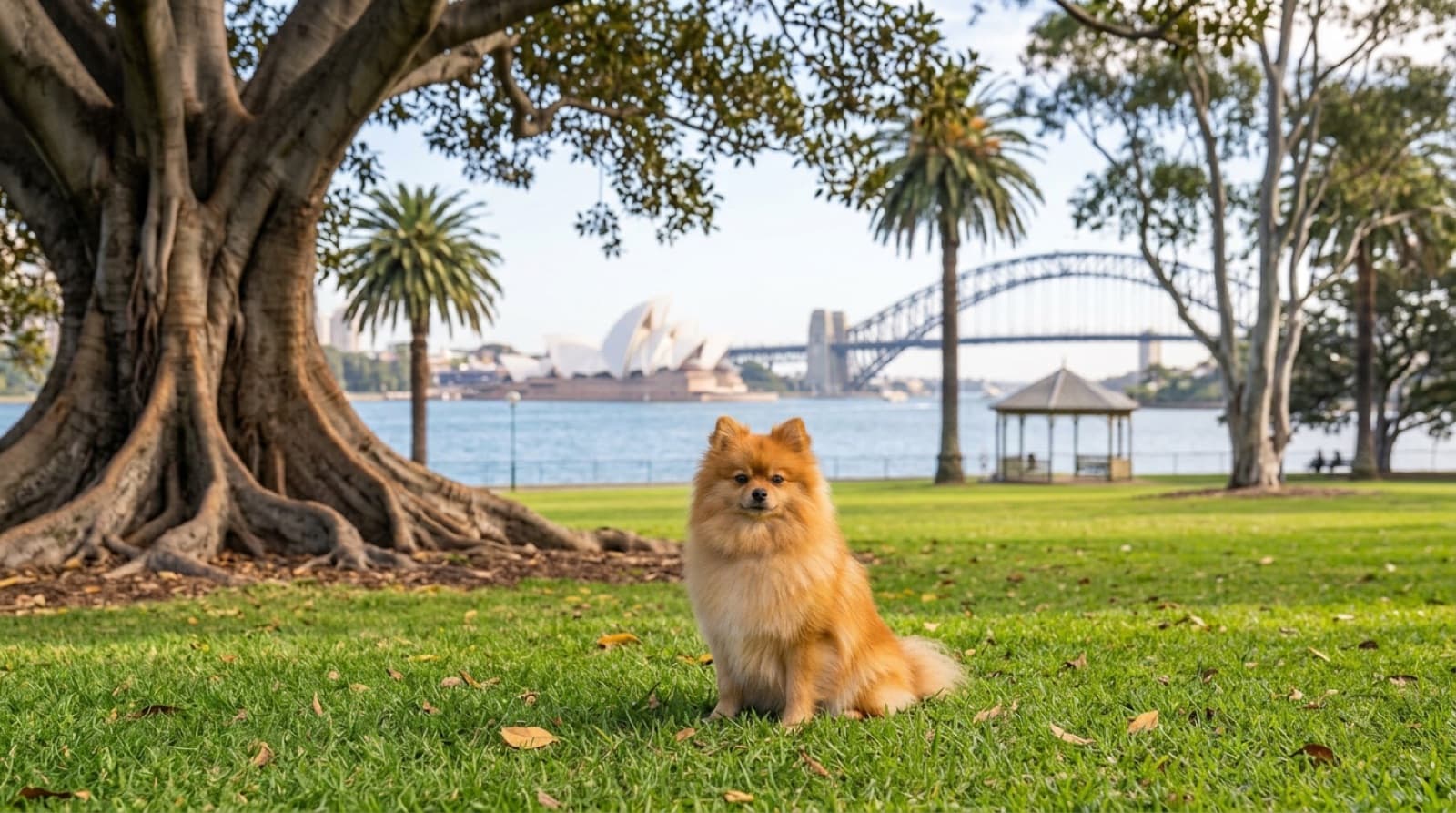
The short answer
Do not shave your Pomeranian. RSPCA Victoria says a double coat helps keep a dog warm or cool and the top coat prevents sunburn, and removing it can cause permanent post-clipping alopecia. The right summer approach is brushing out the undercoat thoroughly, never clipping the topcoat. Routine: brush 3 to 4 times a week with a pin brush plus slicker brush, daily during coat blow (spring and autumn), professional groom every 6 to 8 weeks. Budget for each professional groom, plus a modest one-off cost for a quality home grooming kit. Use a harness for walks, never a collar; tracheal protection matters more than coat aesthetics.
How the Pomeranian double coat actually works
The Pomeranian is descended from larger Nordic spitz-type dogs bred for cold climates. The double coat is one of the breed's defining features and it serves several specific functions that get lost in puppy photos.
The outer coat (guard hairs).
Longer, slightly coarser hairs that form the visible outer layer. The guard hairs block UV radiation, deflect rain and water, and create the visible "fluffy" silhouette. Functionally, they provide sun protection for the skin and the air-gap that traps cooler air close to the body.
The undercoat.
Soft, dense, woolly hairs underneath the guard hairs. The undercoat is the actual insulation: it traps a layer of air against the skin that slows heat transfer in both directions. In winter, the trapped air retains body warmth. In summer, the trapped air slows external heat from reaching the skin.
The two layers work together. Removing one without removing the other does not work; the coat's thermal function depends on the structure as a whole. This is why brushing out the undercoat (which preserves the topcoat) is the correct summer move, and shaving (which removes both) is harmful.
Why shaving is a mistake
The intuition seems sound: a thick coat must be hot, so cutting it short must help. The biology disagrees. Five specific things shaving does:
- Removes UV protection. The Pomeranian's skin underneath is pale and never normally sees sun. Shaved Poms can sunburn, particularly on the back and ears (RSPCA Victoria: the top coat prevents sunburn).
- Removes thermal insulation. The air-gap that slowed heat transfer is gone. A shaved Pomeranian is directly exposed to radiant heat from concrete, walls and footpaths.
- Does not improve cooling efficiency. Dogs cool mainly by panting, and RSPCA Victoria warns that a regrowing undercoat can make a dog even hotter.
- Risks post-clipping alopecia. Pomeranian coats are particularly vulnerable to coat failure after shaving. The undercoat may come back patchy, the guard hairs may grow back finer and softer than original, and the coat texture and colour may never recover. It is seen most often in northern, double-coated breeds.
- Removes the visible breed character. The Pomeranian look depends on the intact coat. A shaved Pom looks like a different dog, and many never look the same again.
The one legitimate exception: if a vet directs a shave for medical reasons (severe matting requiring shave-down, surgery prep, skin treatment), follow that advice. Otherwise the answer is no, every summer.
The brushing routine that prevents matting
Pomeranian coats mat easily when brushing falls behind. The good news: a consistent routine prevents the problem entirely.
Three to four times a week (10 to 15 minutes each session):
- Pin brush through the body coat, working from head to tail, brushing in the direction of hair growth
- Slicker brush over areas prone to matting: behind ears, armpits, chest, under collar, tail base
- Metal comb finish to catch tangles the pin brush missed
- Quick face wipe if needed
- Check ears for cleanliness
Daily during coat blow (spring and autumn, 2-4 weeks each):
- Undercoat rake through the full body coat, raking out the loose undercoat
- Pin brush and slicker brush as normal
- Expect handfuls of soft undercoat per session
- Bath once during the heaviest shed week to help release loose hair
Every 4 to 6 weeks (45 minutes at home):
- Full bath with dog-safe shampoo and conditioner
- Towel-dry then blow-dry on cool setting while brushing (prevents the coat curling tight as it dries, which causes new mats)
- Trim any obvious overgrowth around eyes, feet and sanitary area
Every 6 to 8 weeks (professional groomer):
- Bath and full blow-out
- Tidy trim around feet and sanitary area
- Ear clean, nail trim
- Coat shaping (a Pom-experienced groomer maintains the breed silhouette without removing structural coat)
The matting hotspots
Pomeranian matting starts in predictable places. Knowing where to look prevents most of the problem.
- Behind the ears. A common matting spot. Warm, slightly moist, fine hair, the dog scratches there frequently.
- Inside ear flaps. The leather rubs against the body coat, creating friction tangles.
- Armpits. Constant skin-on-coat friction during walking and running.
- Chest, especially under harness contact points. A daily harness rubbing through the coat creates matting at the contact areas. Inspect after every walk.
- Under collar. If you use a collar for ID only (not for active walking), remove it weekly and brush the underneath.
- Belly and groin. Moisture and friction.
- Around the bottom. Hair traps faecal matter; trim regularly to keep clean.
- Tail base. The coat changes direction here and tangles easily.
- Between back legs (perineum). Moisture and friction.
Browse Pomeranians available in Sydney rescue
Rescue Poms arrive with a known coat state. Foster carer notes flag any matting or coat issues that need attention.
See Available Poms →Sydney summer routine for an intact coat
You can keep your Pomeranian cool through Sydney summer without removing any coat. The routine:
Brushing is also when you find ticks. The paralysis tick lives in Sydney bushland, including on the Northern Beaches, so part the coat and check the head, neck and chest after walks. The RSPCA guidance on tick paralysis lists the warning signs, and RSPCA advice on heatstroke covers hot days. If you find a tick, or your Pom pants hard and will not settle, SASH runs 24/7 emergency care.
- Walk at dawn and dusk. 6 to 8 AM and after 7 PM during heatwave weeks. Cool air, cool footpaths, lower humidity.
- Seven-second footpath test. Press the back of your hand to the bitumen for seven seconds before any walk. If too hot for your hand, too hot for the dog's paws.
- Indoor cool space during the day. Aircon, fan, or tile floor in shade. Pomeranians actively seek cool spots.
- Cooling mat. The gel-filled mats stay several degrees below ambient and many Poms voluntarily lie on them.
- Fresh water always available. Refresh twice daily; ice cubes are not necessary but cold water is fine.
- Brush more frequently. Daily through the worst of summer to keep the undercoat thinned out. The brushed-out version of the coat insulates much better than the matted version.
- Bath with cool (not iced) water during heatwave days to lower body temperature.
- Avoid car parking in sun. A parked car heats up dangerously within minutes. Never leave a Pom in a car alone.
The tools that actually work
The home grooming kit for a Pomeranian:
- Pin brush. Long metal pins through the topcoat without damaging the structure.
- Slicker brush (small to medium, metal pins). For tangles, matting hotspots and finishing.
- Metal greyhound comb. For finishing, checking for mats, and detail work around face and feet.
- Undercoat rake. Essential during coat blow. Pulls out loose undercoat without damaging topcoat.
- Small grooming scissors (rounded tips). For tidy-ups around eyes, feet and sanitary area.
- Detangling spray. Helps with knotted areas.
- Dog-safe shampoo and conditioner. Avoid heavily perfumed products; Pomeranian skin is often sensitive.
- Microfibre dog towel. Faster drying than cotton.
- Ear-cleaning solution. Weekly use prevents the ear issues that hairy-eared breeds get.
A quality starter kit is a modest one-off cost, and the tools last years. Avoid the cheap dual-purpose brushes from supermarkets; they damage coat structure and create more matting than they remove.
What a Sydney professional groom actually involves
A standard 6 to 8 week visit to a Sydney groomer should include:
- Bath with appropriate Pom-safe shampoo.
- High-velocity blow-out to remove loose undercoat and dry the coat properly. This is the part that takes the longest and matters the most.
- Sanitary trim around the back end and tummy.
- Foot tidy trimming hair between paw pads and around the foot shape.
- Ear clean including hair removal from ear canals if needed.
- Nail trim.
- Coat shaping to maintain the breed silhouette without taking length off the structural coat.
What a Sydney groomer should NOT do:
- Full body shave or short clip on a healthy Pomeranian
- "Summer cut" that takes guard hairs off
- Aggressive face shaving (the Pom face shape depends on the coat structure)
- Use of heated dryers above warm setting; high heat damages coat
Ask the groomer at the booking call: "Do you regularly groom Pomeranians and what is your approach in summer?" The right answer is "I see Poms weekly and I never shave them." Anything else, try another groomer.
If your Pom comes from rescue matted
Puppy mill rescues and surrendered Poms sometimes arrive heavily matted. The honest reality: severely matted coats often need a full shave to start over, and the post-clipping alopecia risk is real. In this specific case the shave is medically justified; the matting itself is causing pain and skin problems.
The rescue will usually handle this before adoption. If you adopt a freshly-shaved Pom:
- Expect a long regrowth. The coat may not return to full original quality.
- Protect the skin from sun. Dog-safe sunscreen on exposed areas during outdoor time. Limit midday sun exposure.
- Provide warmth in winter. A small dog jumper during cooler weeks.
- Start the proper brushing routine immediately as the coat regrows. Daily through the first few months catches new tangles before they become mats.
- Schedule regular professional grooming visits from 8 weeks post-shave to maintain shape as it grows back.
Frequently Asked Questions
Should I shave my Pomeranian in summer?
No. RSPCA Victoria's advice for double-coated dogs is to groom, but not shave: a double coat helps keep a dog warm or cool, the top coat prevents sunburn, and shaving can permanently change the coat. Worse: shaved Pomeranian coats often grow back patchy or never fully recover, a condition called post-clipping alopecia. The right approach for Sydney summer is brushing out the undercoat thoroughly, not removing the topcoat.
What is post-clipping alopecia in Pomeranians?
Post-clipping alopecia is when a Pomeranian's coat fails to regrow properly after being shaved. The undercoat may come back patchy, the guard hairs may grow back finer and softer than before, and the coat texture and colour may never return to the original. Some affected dogs regrow coat fully after a long wait; some never do. Many experienced groomers will not shave a healthy Pomeranian to the skin.
How often does a Pomeranian need professional grooming?
Every 6 to 8 weeks for most Poms, plus weekly to daily brushing at home in between. A standard groom includes bath, blow-out, sanitary trim, ear clean, nail trim and tidy-up around the feet. The professional groom maintains the coat shape without damaging the structure; do not request a full shave or short summer clip on a Pomeranian.
How much does Pomeranian grooming cost in Sydney?
The price of a full groom for a Pomeranian in Sydney depends on salon and location. Ask for a quote, and note that add-ons (de-matting, teeth brushing, anal gland expression) are priced separately.
How often should I brush my Pomeranian at home?
Three to four times a week minimum, daily during spring and autumn coat blow. A full body brush takes 10 to 15 minutes with the right tools. Skip brushing for more than a week and matting develops, particularly behind the ears, in the armpits and around the collar. The undercoat shedding is significant; you will fill a brush in a single session during peak shed.
What tools do I need for Pomeranian coat care?
A pin brush for everyday brushing, a slicker brush for tangles and undercoat, a metal greyhound comb for finishing and finding mats, and an undercoat rake for shed season. Plus small grooming scissors for face and feet touch-ups, dog-safe shampoo and conditioner for baths, and a microfibre towel for drying. A quality starter kit is a modest one-off cost. Skip the cheap dual-purpose tools; they do not work on a Pom double coat.
What is "coat blow" and when does it happen?
Coat blow is the heavy seasonal shedding when a Pomeranian releases their winter undercoat (spring blow) or their summer coat (autumn blow). Sydney is moderate enough that coat blow is less intense than in colder climates, but Poms still shed heavily for 2 to 4 weeks twice a year. During coat blow, daily brushing with an undercoat rake is essential; you can rake out handfuls of soft undercoat. Skipping brushing during coat blow creates large mats fast.
Keep reading
Adoptable Poms in Sydney
Live listings with coat condition notes from foster carers.
Pomeranian Adoption Sydney
Where to find one, why so many in rescue, real cost vs breeder.
Pomeranian Health Issues
Tracheal collapse, knee surgery, dental, alopecia X, insurance.
Best Dog Rescues in Sydney
The 5 main Sydney rescues compared.